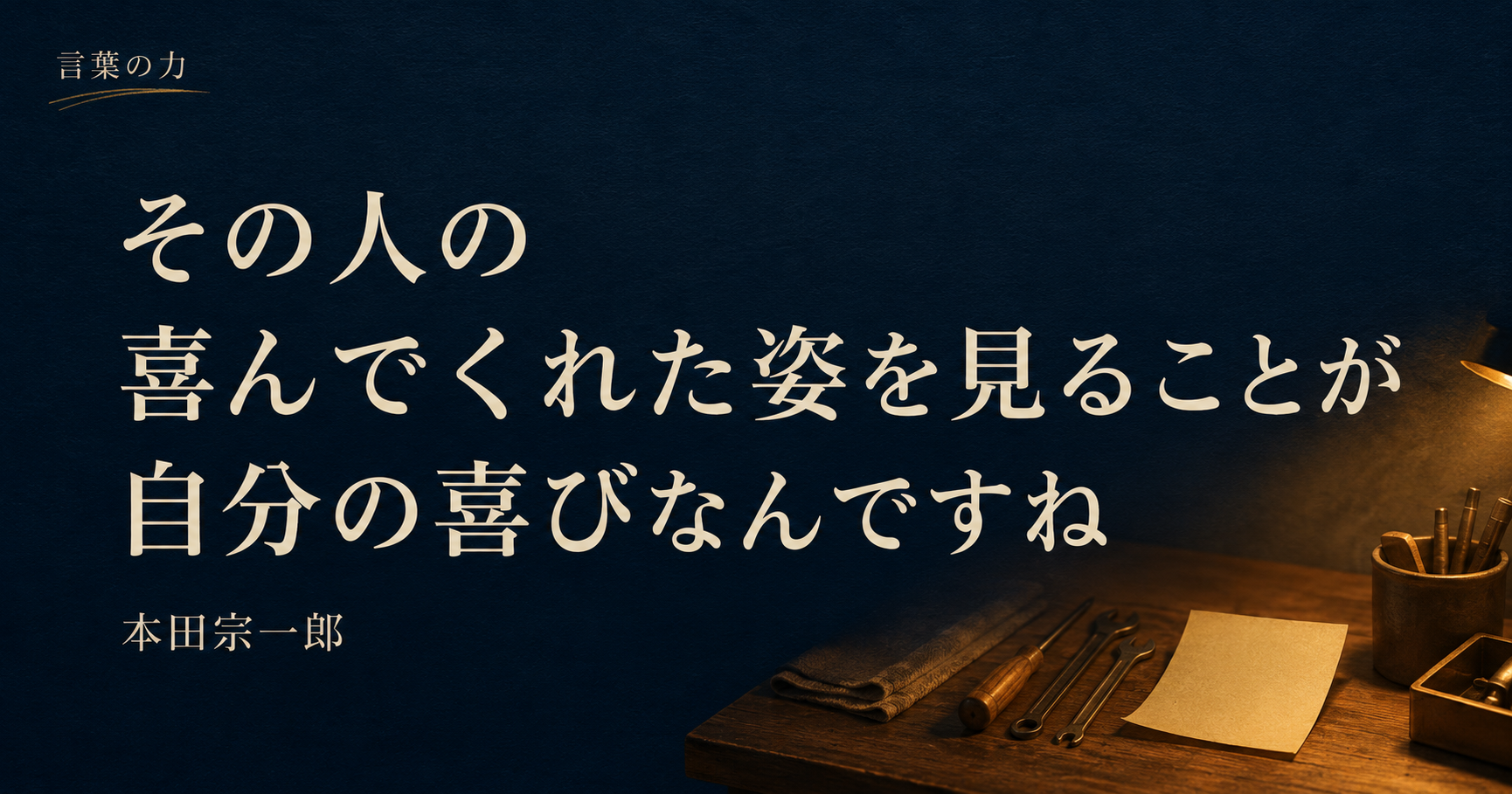
言葉の力|本田宗一郎「その人の喜んでくれた姿を見ることが自分の喜び」——仕事の手応えが見えない日に

※本記事にはアフィリエイト広告が含まれます。

今日も忙しかった。でも、何をしたかと聞かれると説明しにくい。

確認の連絡を返した。道具を補充した。次の人が困らないよう、引き継ぎのメモを残した。

大きな成果はない。会議で拍手されるような仕事でもない。そんな一日は、自分の働きまで小さく見えてしまうことがあります。

今日の名言

その人の 喜んでくれた姿を見ることが 自分の喜びなんですね

本田宗一郎

出典:Honda公式「受け継がれる思想」。同ページでは、買い出しに苦労する妻を思って開発した自転車用エンジンの話とともに、この言葉が紹介されています。

ここからは、この言葉から考えたこと

自分の成果を、相手の変化から見てみる

仕事の手応えを、売上や評価だけで探すと、見つけにくい日もあります。けれど、自分がしたことで、誰かの作業が少し楽になった場面はないでしょうか。

たとえば、引き継ぎのメモ。「いつもの場所にあります」ではなく、「棚の上から二段目、青い箱の中です」と書いておく。たったそれだけでも、次の人があちこち探さずに済むかもしれません。

「助かりました」が返ってきたら、その反応も、今日した仕事の一つの手応えとして受け取ってよいのだと思います。

気遣いは、仕事を増やすことだけではない

誰かのために、と考えると、つい仕事を引き受ける方向へ進みがちです。「自分が残れば終わるから」「断ったら困るだろうから」。でも、この言葉を、自分を削り続ける理由にはしたくありません。

相手の助けになる方法は、引き受ける以外にもあります。「今日はここまでならできます」と範囲を伝える。分からないことを曖昧にせず、担当者へつなぐ。毎回聞かれることを、一枚の案内にまとめる。

その場を何とかするだけでなく、次から困りにくい形に変える。それも、一つの気遣いではないでしょうか。

反応がなくても、すべてが無意味ではない

もちろん、いつも感謝が返ってくるとは限りません。相手が忙しくて気づかない日もあれば、自分の意図と相手の必要がずれることもあります。

だから、「喜ばれなかった自分には価値がない」とまで考えなくていい。

大切にしたいのは、相手の反応を自分の採点表にすることではなく、「何があれば助かるだろう」と、仕事の向こう側にいる人を思い浮かべることです。

今日の行動|次の人が迷うところを、一つ減らす

今日の仕事を一つだけ選び、次に受け取る人が困りそうな点を考えてみてください。ファイルの場所。確認してほしい箇所。返事が必要な期限。

説明を一行足すだけで済むことなら、そこを整えて終える。派手な成果ではなくても、誰かの「探さなくて済んだ」「すぐ分かった」につながるかもしれません。

自分の仕事が見えにくい日は、何を達成したかに加えて、誰の何を少し楽にしたかも思い出してみたいですね。

今の気持ちから探す:人とのつながりを考えたいときに

あわせて読みたい

フランクリン:うまく言えない日も、誠実な行動は残る
宮沢賢治「イツモシヅカニワラッテヰル」——いつも笑えなくても、やわらかく戻れる場所を

出典

Honda公式「受け継がれる思想」。引用と、その後の独自の考察を分けて掲載しています。

暮らしにも、小さなきっかけを

自分では後回しにしがち。でも、もらうとうれしい暮らしの道具などを、楽天ROOMで紹介しています(*^^*)。必要なものを探すときに、よかったらのぞいてみてください。

公開前チェック〈編集用・公開前に削除〉

下書き限定。公開・予約日時は未設定。先に確認した既存記事一覧では人物の重複なし。共通タグ3個、つながり、誠実を設定。人物タグ「本田宗一郎」は未作成・未設定のため追加確認が必要。カテゴリを確認する。英語版作成後に日英相互リンクを追加する。関連記事の公開状態とリンク、スマホ表示、引用表記・権利を確認する。引用の初出・発言日時は未特定のため推測で追記しない。検索需要は未検証。具体例は例示であり、運営者の実体験ではない。本文を最終確認し、この編集用欄を削除してから本人が公開・予約を判断する。

アイキャッチ未生成・未設定。制作指定:横長1200×630px。以前のシリーズ同様、かわいすぎない上品で遊び心のあるエディトリアルイラスト。深いネイビー、温かなアイボリー、琥珀色。右下に整えられた作業台、道具と小さな引き継ぎメモ。人物の肖像・企業ロゴは不要。最も大きく載せる名言は「その人の 喜んでくれた姿を見ることが 自分の喜びなんですね」。人物名「本田宗一郎」、シリーズ名「言葉の力」は小さく配置。本文と語句・表記を一致させ、改行のみ調整。省略・言い換え・句読点の追加はしない。名言を主役にし、十分な余白と可読性を確保。生成後に画像の文字と人物名を一文字ずつ照合する。現時点で生成画像の照合は未実施。

The Power of Words | Soichiro Honda: When Your Work Feels Hard to See

Disclosure: This article includes affiliate links.

You were busy all day. Yet when someone asks what you accomplished, it is surprisingly difficult to explain.

You answered a question, replenished supplies, and left a handover note so the next person would not get stuck.

No spectacular result. Nothing that earned applause in a meeting. On days like these, your own contribution can begin to look small.

Words for today

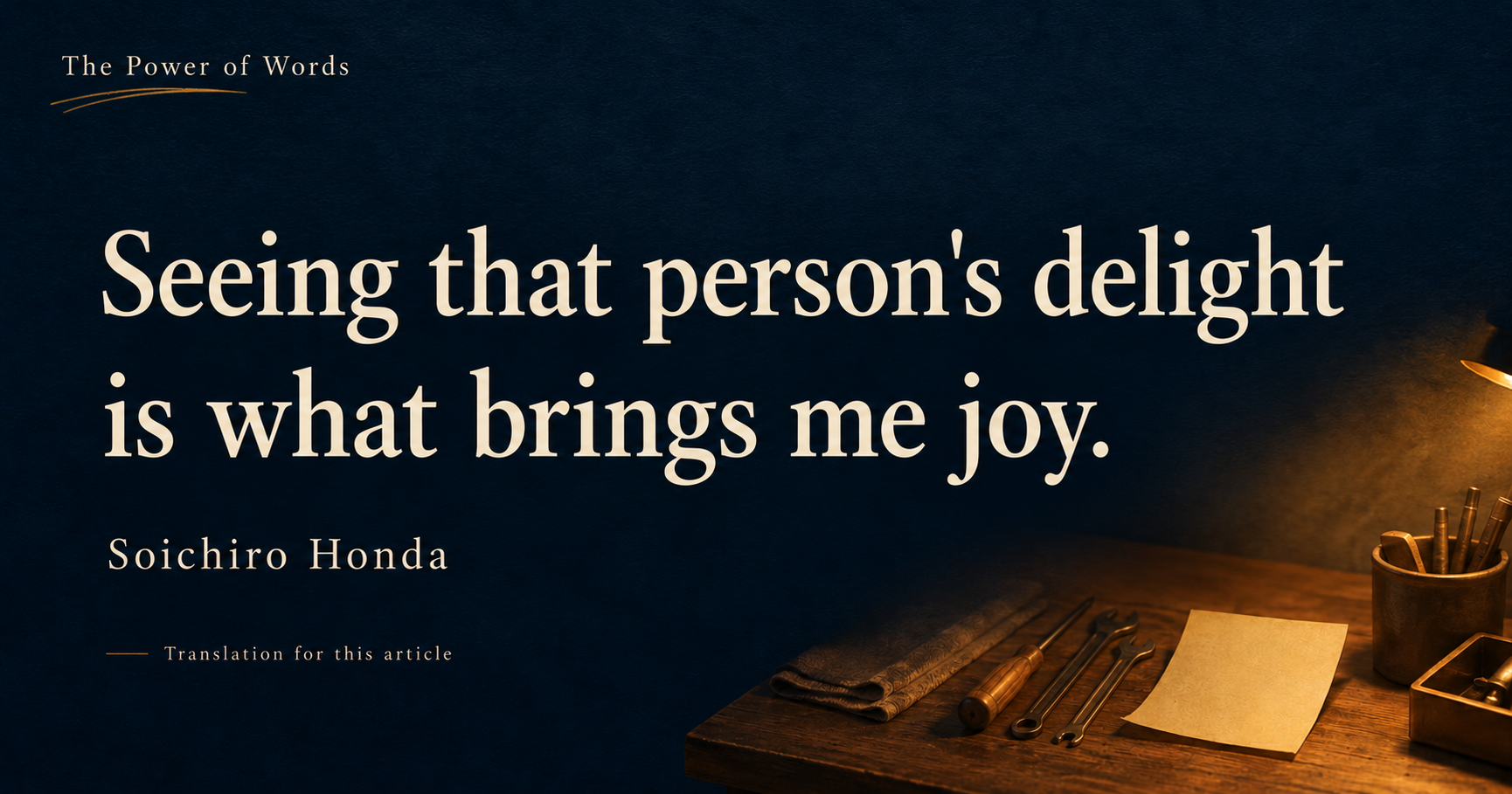
Seeing that person’s delight is what brings me joy.

Soichiro Honda — translated for this article

Original: その人の 喜んでくれた姿を見ることが 自分の喜びなんですね. Honda’s official Japanese page about its inherited philosophy presents these words alongside the story of a bicycle engine developed with his wife’s difficult shopping trips in mind. The English quotation above is this article’s translation, not an official Honda translation.

An everyday reflection on these words

Notice what changed for someone else

If you look for the value of your work only in sales figures or formal recognition, some days offer little evidence. But did something you did make another person’s task easier?

Consider a handover note. Instead of saying that something is in its usual place, you write: second shelf from the top, inside the blue box. That small detail may save the next person a search.

If they tell you it helped, you can accept that response as one sign of useful work. The following reflection applies the quotation to ordinary situations; it does not claim that Honda was speaking about these particular examples.

Care does not always mean taking on more

Thinking about others can easily turn into accepting another task. You could stay late. They might struggle if you refuse.

But this quotation need not become a reason to wear yourself down.

There are other ways to help: explain what you can finish today, connect a question to the right person instead of guessing, or turn a repeated explanation into a short guide.

Helping someone avoid the same difficulty next time is a form of consideration too.

A lack of thanks does not erase everything

Appreciation does not arrive every time. Someone may be too busy to notice. What you intended to help with may not be what they actually needed.

That does not make your worth depend on their reaction.

The point is not to turn other people’s gratitude into a scorecard. It is to picture the person on the other side of the task and ask what would genuinely help.

One thing for today: remove one point of confusion

Choose one piece of work and consider what the next person might have trouble finding or understanding: the file location, the section that needs checking, or the deadline for a reply.

If one extra sentence would clarify it, add that sentence and stop there.

It may not be a dramatic achievement. Still, someone may spend less time searching or understand what to do immediately.

When your contribution feels invisible, remember not only what you completed but whose day you made a little easier.

How are you feeling? Explore more words for connection.

Related reading

Benjamin Franklin: Your Quiet Actions Still Count
Kenji Miyazawa: A Gentle Place to Return To
日本語版を読む

Source

Honda’s official page: inherited philosophy (Japanese). The quotation, this article’s translation, and the original reflection are presented separately.

A little inspiration for everyday living

In my Rakuten ROOM, I share everyday items we might put off buying for ourselves but would be happy to receive as gifts. Feel free to browse when you need something. (*^^*)

Shopping from outside Japan? Rakuten Global Express offers international forwarding from Japan. Please check supported destinations, shipping fees, and item restrictions before using the service.

Pre-publication checklist — remove before publishing

Draft only; no publication date or schedule requested. Three common English tags, Connection and Integrity applied. The Soichiro Honda person tag remains to be created and assigned after confirmation. Check the category. Add the reciprocal English link to Japanese post 284 after this draft receives an ID. Verify related articles’ publication status, all links, quotation rights, translation, and mobile layout. The quotation’s original publication and date have not been established; do not invent them. Search demand has not been validated. Examples are illustrative, not claimed experiences of the site owner. Review and remove editorial notes before the owner decides to publish.

Featured image not generated or assigned. Prompt: landscape 1200×630; sophisticated, quietly playful adult editorial illustration matching the Japanese version; deep navy, warm ivory and amber; tidy workbench, tools and a handover note at lower right; no portrait or corporate logo. Largest quotation must be exactly: Seeing that person’s delight is what brings me joy. Smaller text: Soichiro Honda; The Power of Words; Translation for this article. Preserve wording and punctuation; adjust line breaks only. No article headline or invented slogan. Keep generous margins and readable text. Compare the generated image with this English quotation letter by letter before use; image verification has not yet been performed.

言葉の力|上杉鷹山「なせば成る」——先延ばしの仕事を、今日少しだけ動かす

※本記事にはアフィリエイト広告が含まれます。

やらなければいけない仕事ほど、なぜか机の上を片づけたくなる。

資料を作る前にメールを確認して、メールの前に予定を確認して、気づけばお昼。「準備はしていた」と、自分にだけ通じる説明をしたくなる日があります。

難しそうな仕事は、手をつける前がいちばん大きく見えるのかもしれません。

今日の名言

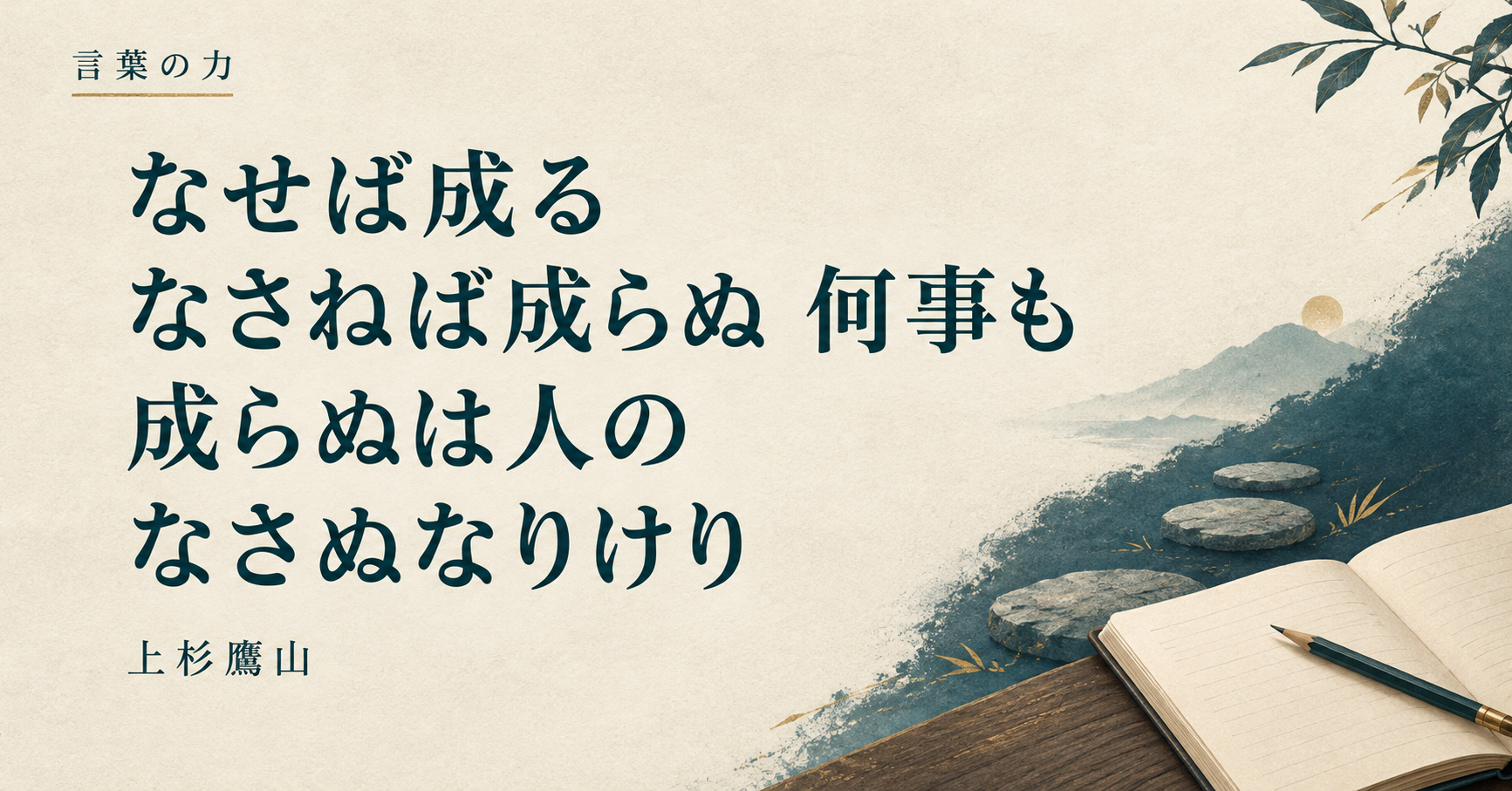
なせば成る なさねば成らぬ 何事も
成らぬは人のなさぬなりけり

上杉鷹山

出典:米沢市「なせば成る!上杉鷹山公の歴史」。鷹山が隠居所へ移った際、当時の嗣子・顕孝に仕える家臣へ示した心得の「壁書」に記されていた言葉として紹介されています。

ここからは、この言葉から考えたこと

「できるかどうか」の前に、一度触ってみる

この言葉は、行動することの大切さを強く伝えています。ただし、ここでは「努力すれば何でも必ず成功する」「できない人は努力不足だ」と、他人や自分を追い込むためには使いません。

日常に持ち帰るなら、まだ始めていないことについて、頭の中だけで不可能と決めていないか。その確認に使いたいと思います。

たとえば、来週までに必要な資料。「完成させる」と考えると重い。でも、「ファイルを開いて、見出しを三つ書く」ならどうでしょう。

書いてみると、案外すぐ埋まる部分があるかもしれません。反対に、必要な情報が足りないと分かることもあります。どちらも、考えているだけのときには見えなかったことです。

「始める」を、作業の名前に変える

「そろそろ本気を出す」は、予定表に書いても実行しにくい言葉です。何をすれば本気を出したことになるのか、自分でも判定できません。

そこで、やることを目に見える動きへ変えてみます。資料作成なら、最初のページに目的を書く。片づけなら、机の上の空き箱を一つ捨てる。勉強なら、問題を一問だけ読む。

小さすぎるようでも、今日はそこからで構いません。

始めてから「これは一人では難しい」と分かれば、相談する材料もできます。「できません」だけでなく、「ここまでは分かりましたが、この条件を確認したいです」と伝えられるからです。

今日の行動|先延ばしを一つ、動作にする

気になっていることを一つ選び、最初の動きを具体的に書いてみてください。「転職について考える」なら、「求人を一件開く」。「家計を見直す」なら、「今月の明細を開く」。今日は、結論まで出さなくてもいい。

「なせば成る」を、大きな結果を約束する言葉ではなく、まだ触れていない仕事へ手を伸ばすきっかけにする。机をきれいにするのは、そのあとでも間に合いそうです。

今の気持ちから探す:一歩踏み出すのがこわいときに

あわせて読みたい

老子:遠くへ進みたい日は、足元の一歩から
鳥井信治郎「やってみなはれ」——準備が終わるのを、いつまで待とう

出典

米沢市「なせば成る!上杉鷹山公の歴史」。引用と、その後の独自の考察を分けて掲載しています。

暮らしにも、小さなきっかけを

自分では後回しにしがち。でも、もらうとうれしい暮らしの道具などを、楽天ROOMで紹介しています(*^^*)。必要なものを探すときに、よかったらのぞいてみてください。

公開前チェック〈編集用・公開前に削除〉

下書き限定。公開・予約日時は未設定。既存一覧で人物の重複を確認済み。共通タグ3個と関連タグを設定。人物タグ「上杉鷹山」は未作成・未設定のため追加確認が必要。カテゴリを確認する。英語版の作成後に日英相互リンクを追加する。関連記事の公開状態と各リンク、スマホ表示、引用表記・権利を確認する。検索需要は未検証。具体例は例示であり、運営者の実体験ではない。本文を最終確認し、この編集用欄を削除してから本人が公開・予約を判断する。

アイキャッチ未生成・未設定。制作指定:横長1200×630px。以前のシリーズ同様、かわいすぎない上品で遊び心のあるエディトリアルイラスト。深い青緑と生成り、控えめな金色。右下に開いた仕事のノートと一本の鉛筆、小さな一歩を連想させる踏み石。人物の肖像は不要。最も大きく載せる名言は「なせば成る なさねば成らぬ 何事も 成らぬは人のなさぬなりけり」。人物名「上杉鷹山」、シリーズ名「言葉の力」は小さく配置。名言は本文と同一で改行のみ調整可。省略・言い換え・句読点の追加はしない。背景より文字を優先し、十分な余白を設ける。画像生成後に文字と人物名を一文字ずつ照合する。現時点で生成画像の照合は未実施。

The Power of Words | Uesugi Yozan: Give That Postponed Task a Small Beginning

Disclosure: This article includes affiliate links.

Why does a difficult task suddenly make tidying your desk feel so urgent?

Before starting the report, you check your email. Before answering the email, you check your calendar. Somehow it is lunchtime. You tell yourself you were preparing—which is technically a kind of activity.

A task can look largest before you have touched it.

Words for today

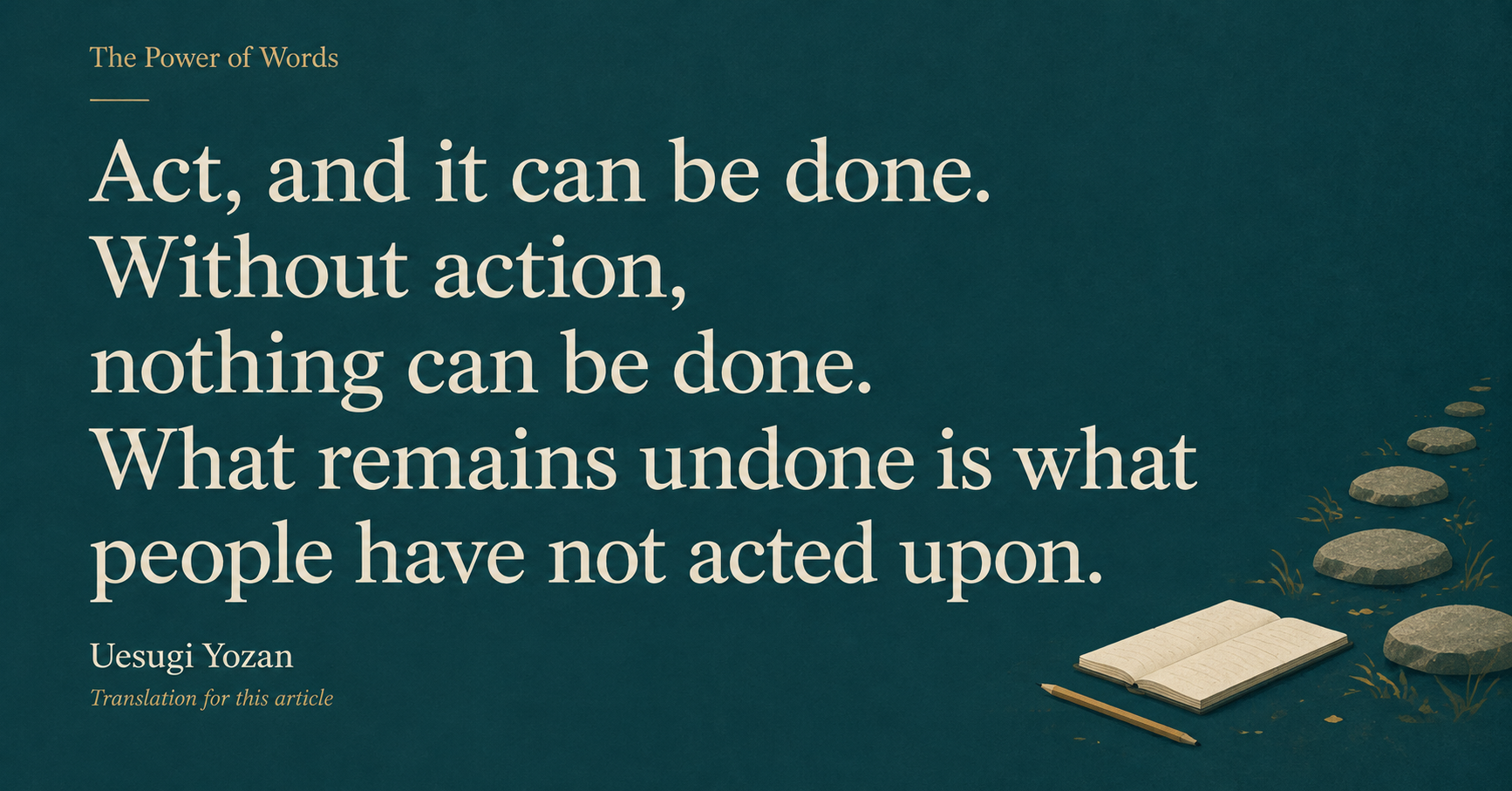
Act, and it can be done. Without action, nothing can be done. What remains undone is what people have not acted upon.

Uesugi Yozan — translated for this article

Original: なせば成る なさねば成らぬ 何事も 成らぬは人のなさぬなりけり. Yonezawa City’s account identifies these words in written guidance Yozan gave to retainers serving his heir, Akitaka, when Yozan moved to his retirement residence. The English wording above is this article’s translation, not an official English version.

An everyday reflection on these words

Touch the task before deciding it is impossible

The quotation places strong emphasis on action. Here, however, we will not use it to claim that effort guarantees success or that every unsuccessful person simply failed to try. The following is our own everyday application, not a complete account of Yozan’s intentions.

Instead, ask whether you have already declared something impossible without beginning it.

Consider a report due next week. Finishing it feels heavy. Opening the file and writing three headings is more concrete.

You might discover a section you can write immediately. Or you might find that essential information is missing. Either discovery gives you something that thinking alone did not.

Give beginning the name of an action

Get serious is difficult to put into a calendar. How would you know when you had done it?

Try naming a visible action instead. For a report, write its purpose at the top of the first page. For tidying, remove one empty box. For studying, read one question.

Small does not mean pointless.

If beginning reveals that you need help, you also gain a clearer question. Instead of saying only that you cannot do it, you can explain what you understand and which condition needs checking.

One thing for today: name your first move

Choose one postponed task and write its first physical action. Thinking about a new job becomes opening one listing. Reviewing your budget becomes opening this month’s statement.

You do not have to reach a final decision today. Let these words prompt a beginning rather than promise a result.

The desk can probably wait until afterward.

How are you feeling? Explore more words for courage.

Related reading

Laozi: A Long Journey Begins Where You Stand
Shinjiro Torii: Before Preparation Becomes a Place to Hide
日本語版を読む

Source

Yonezawa City: Uesugi Yozan’s history (Japanese). The quotation, this article’s translation, and the original reflection are presented separately.

A little inspiration for everyday living

In my Rakuten ROOM, I share everyday items we might put off buying for ourselves but would be happy to receive as gifts. Feel free to browse when you need something. (*^^*)

Shopping from outside Japan? Rakuten Global Express offers international forwarding from Japan. Please check supported destinations, shipping fees, and item restrictions before using the service.

Pre-publication checklist — remove before publishing

Draft only; no publication or schedule requested. Three common English tags and relevant existing tags applied. The Uesugi Yozan person tag remains to be created and assigned after confirmation. Check the category. Add the reciprocal English link to Japanese post 282 after this draft receives an ID. Verify related articles’ publication status, all links, quotation rights, translation, and mobile layout. Search demand has not been validated. Everyday scenes are illustrative, not the site owner’s claimed experiences. Review and remove these editorial notes before the owner decides to publish.

Featured image not generated or assigned. Prompt: landscape 1200×630; sophisticated, quietly playful adult editorial illustration, deep teal, warm ivory, muted gold; notebook, pencil and a small stepping stone at lower right; no portrait. Largest text must be exactly: Act, and it can be done. Without action, nothing can be done. What remains undone is what people have not acted upon. Smaller text: Uesugi Yozan; The Power of Words; Translation for this article. Change line breaks only; no shortening, paraphrasing or punctuation changes. Prioritize quotation readability and generous margins. The image quotation must match the English article, not the Japanese original or headline. Inspect the generated image letter by letter before use; image verification is not yet performed.

言葉の力|孔子:間違えた自分を責め続けるより、直せるところを一つ

今日の言葉

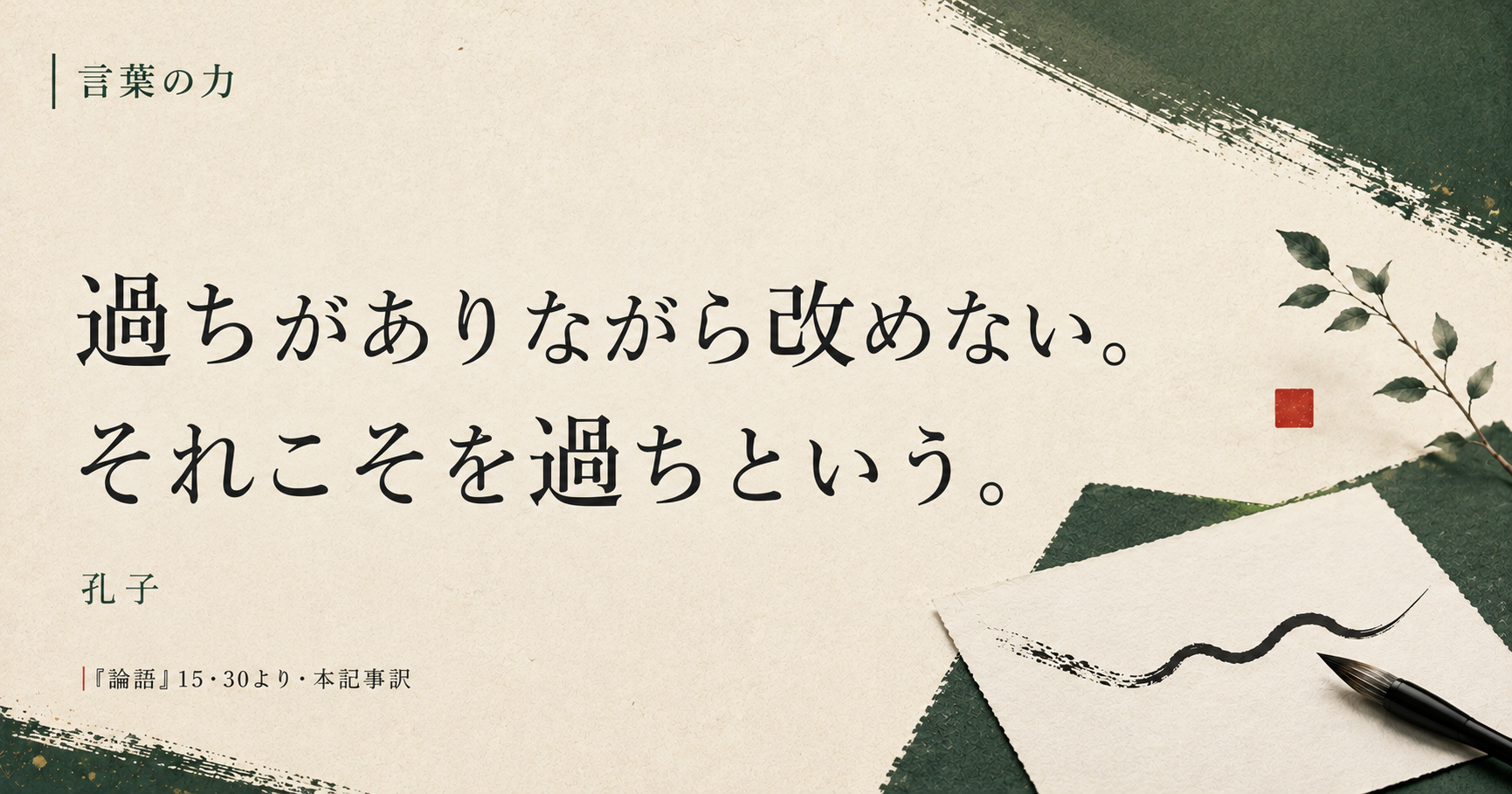
過而不改、是謂過矣。

出典:『論語』衛霊公篇15・30。孔子の言葉として記録されています。

現代語訳〈本記事訳〉:過ちがありながら改めない。それこそを過ちという。

ここからは、この言葉から考えたこと

昼間の失敗が、夜になって何度も浮かんでくることがあります。

確認を一つ忘れた。相手の話を最後まで聞かずに返事をした。言わなくてもよい一言を、口にしてしまった。

もうその場面は終わっているのに、頭の中だけで何度もやり直してしまう。思い返すたびに、「どうして自分は」と、自分への言葉が厳しくなっていく。

そんな夜、この『論語』の一節は、少し違う方向へ目を向けるきっかけになります。

ここからは、失敗した人を裁く言葉としてではなく、これからの行動を選ぶ言葉として読んでみたいと思います。

反省と、自分への判決は違う

「確認が足りなかった」と振り返ることと、「自分は何をしても駄目だ」と決めることは、同じではありません。

前者には、次の確認方法を考える余地があります。後者は、自分全体に大きな札を貼ってしまいます。

一つの出来事を、一人の人間のすべてに広げなくてもよいのではないでしょうか。

必要なのは、自分を長く責めた証拠ではなく、何が起きたのかを確かめること。そして、できる対応を選ぶことだと思います。

直すとは、なかったことにすることではない

謝る。訂正する。影響を受けた人に知らせる。次の手順に確認を一つ加える。

直すための行動は、出来事によって違います。すぐに解決しないことも、相手の気持ちがすぐには戻らないこともあるでしょう。

だからこそ、「謝ったのだから、もう終わり」と相手に区切りを求めないことも大切です。

自分にできる対応を続けることと、自分を責め続けることは別です。責任を引き受けながらも、自分への言葉まで乱暴にしなくてよいと思います。

また、自分の責任ではないことまで抱える必要もありません。起きた事実と、自分が直せる範囲を分けて考えたいですね。

今夜は、次の対応を一つ決める

もし夜中に同じ場面を繰り返してしまうなら、紙に一行だけ書いてみる。

「明日、ここを確認する」

「この件は、相手に訂正を伝える」

今すぐ連絡するのが適切でなければ、対応する時間を決めて、今日は休む。それも、明日の行動を大切にする選び方です。

昨日の出来事は消せなくても、そのあとに何をするかは、まだ決まっていません。

間違えなかった自分には戻れなくても、間違いに向き合う自分には、ここからなれます。

今夜は、責める言葉をもう一つ増やす代わりに、直せるところを一つ。その小さな具体性を、明日の自分へ渡しておきませんか。

今の気持ちから探す:人との関係に悩んでいる

出典

Chinese Text Project『論語』衛霊公篇。引用と本記事の現代語訳、その後の独自考察を分けて掲載しています。

※本記事には、アフィリエイト広告を含むリンクがあります。

暮らしにも、小さなきっかけを

言葉と出会って、少し気持ちが変わる。暮らしの道具との出会いにも、そんな小さなきっかけがあるかもしれません。

自分では後回しにしがち。でも、もらうとうれしい暮らしの道具などを、楽天ROOMで紹介しています(*^^*)
よかったら、のぞいてみてください。

Read this article in English →

公開前チェック〈編集用・公開前に削除〉

人物・引用の既存記事重複を照合する。共通タグ3個の名称とIDを確認して設定する。人物・テーマタグ案:孔子/やり直し/誠実。気分別リンクの表示を確認する。対応する英語版の保存後に日英相互リンクを追加する。公開日は既存予約と重ならないように決める(2日目01:27枠の候補。自動予約しない)。

アイキャッチ未作成・未設定。制作指定:夜の机の上に、一か所を丁寧に書き直したノート。消しゴムのかすを強調せず、柔らかなランプの光で再出発を表す。群青と淡い珊瑚色。画像内の言葉「過而不改、是謂過矣。」、小さく「言葉の力」「孔子|『論語』衛霊公篇」。文字の誤り・権利・スマホ表示を確認する。本文の最終校閲と編集用欄の削除後に、本人が公開・予約を判断する。

The Power of Words | Confucius: A Mistake Is Not the Whole of You

Words for today

過而不改、是謂過矣。

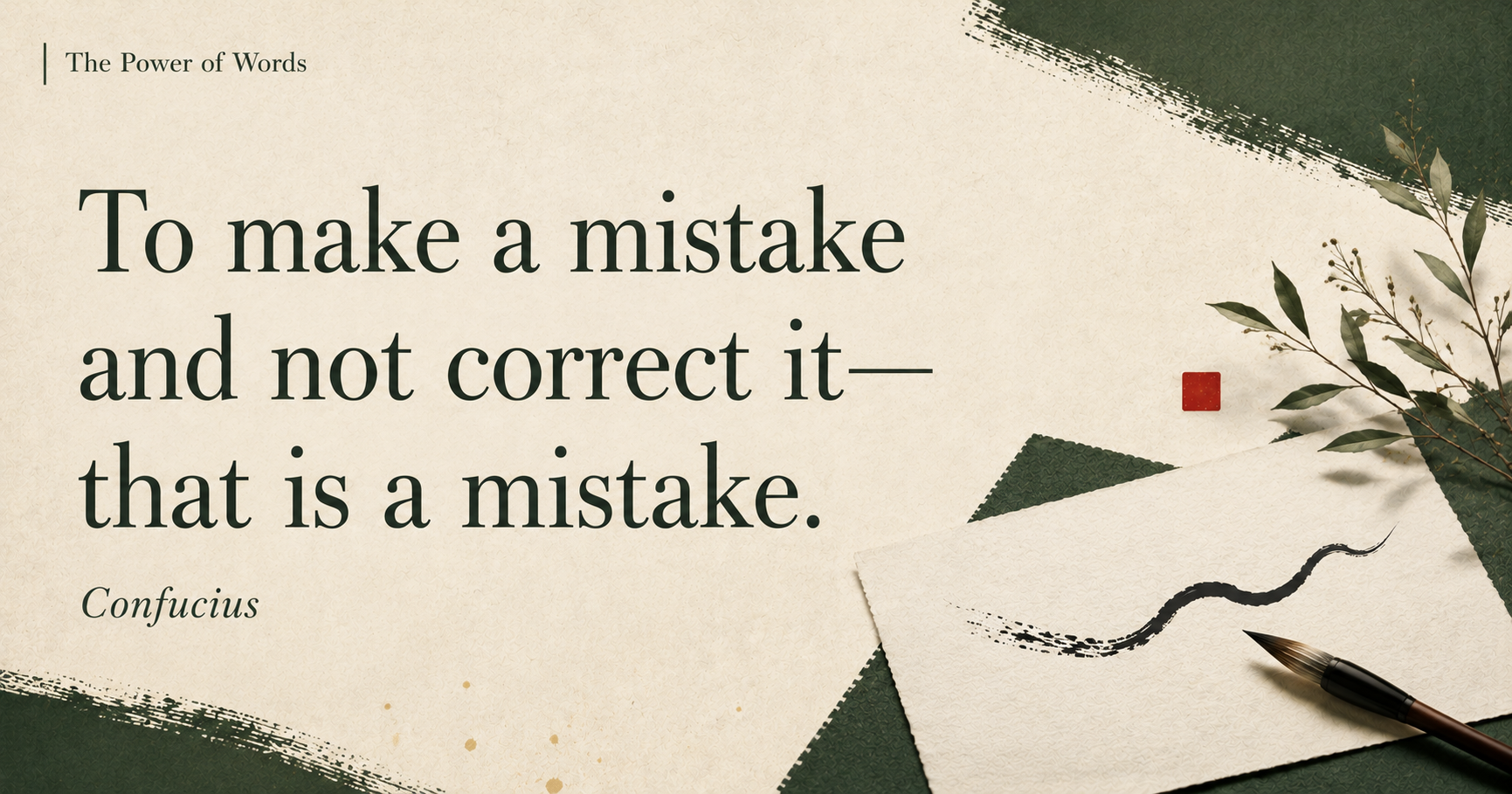
“To make a mistake and not correct it—that is a mistake.” — Confucius, Analects 15.30. Translation for this article.

Reflection

Sometimes a mistake returns long after the day has ended.

You missed a detail. Interrupted someone. Said something you wish you could take back. The scene repeats until “I made a mistake” becomes “There is something wrong with me.”

For this reflection, let us read the passage as a prompt toward correction, rather than a verdict on a person.

“I did not check carefully enough” leaves room for a different process. “I am useless” turns one event into a judgment about your entire self.

You do not have to make that leap.

What happened? Who was affected? What can you responsibly do now?

Perhaps you need to apologize, correct information, tell someone about an error, or add a check to your routine.

Correction does not erase what happened. An apology also does not require the other person to feel better immediately. Taking responsibility may involve continued attention and patience.

Still, responsibility and endless self-punishment are not the same thing. You can respond seriously without speaking cruelly to yourself.

Nor do you need to accept blame for things outside your responsibility.

Tonight, if the same scene keeps returning, write down one concrete response for tomorrow. If contacting someone now would be inappropriate, choose a suitable time.

Then allow the plan to wait until that time.

You cannot become someone who never made the mistake. But you can decide how to respond to it.

Instead of adding one more accusation, leave yourself one clear next step.

日本語版を読む

Source

Chinese Text Project: The Analects, Wei Ling Gong. The quotation, this article’s translation, and the original reflection are presented separately.

Disclosure: This article includes affiliate links.

A little inspiration for everyday living

A few words can offer a fresh perspective. Sometimes, a thoughtful everyday item can bring a small moment of joy, too.

In my Rakuten ROOM, I share everyday essentials we might put off buying for ourselves but would be happy to receive as gifts. Feel free to take a look! (*^^*)

Shopping from outside Japan? Rakuten Global Express offers international forwarding from Japan. Please check supported destinations, shipping fees, and item restrictions before using the service.

Pre-publication checklist — editorial notes; remove before publishing

Check existing articles for duplicate figures and quotations. Verify and apply the three common tags and the English series tag. Suggested tags: Confucius / Starting Again / Responsibility / en-power-of-words. Verify the English mood-category destination for relationship concerns before adding a link; do not present a Japanese-only collection as an English collection. Confirm that Japanese post 251 and this English post are published together, and add the reciprocal English link to post 251 after this post has an ID. No publication date is set. Intended slot: Day 2, 01:27 JST, subject to the owner’s review and existing schedule.

Featured image not created or assigned. Art direction: a notebook on a desk at night with one passage carefully corrected, soft lamplight, deep blue and pale coral, an atmosphere of beginning again rather than failure. Image quotation: “To make a mistake and not correct it—that is a mistake.” Small text: “The Power of Words · Confucius · Article translation”. Verify spelling, rights, and mobile readability. Review the complete article and remove editorial notes before the owner decides whether to publish or schedule.