The Power of Words | Laozi: A Long Journey Begins Where You Stand

Words for today

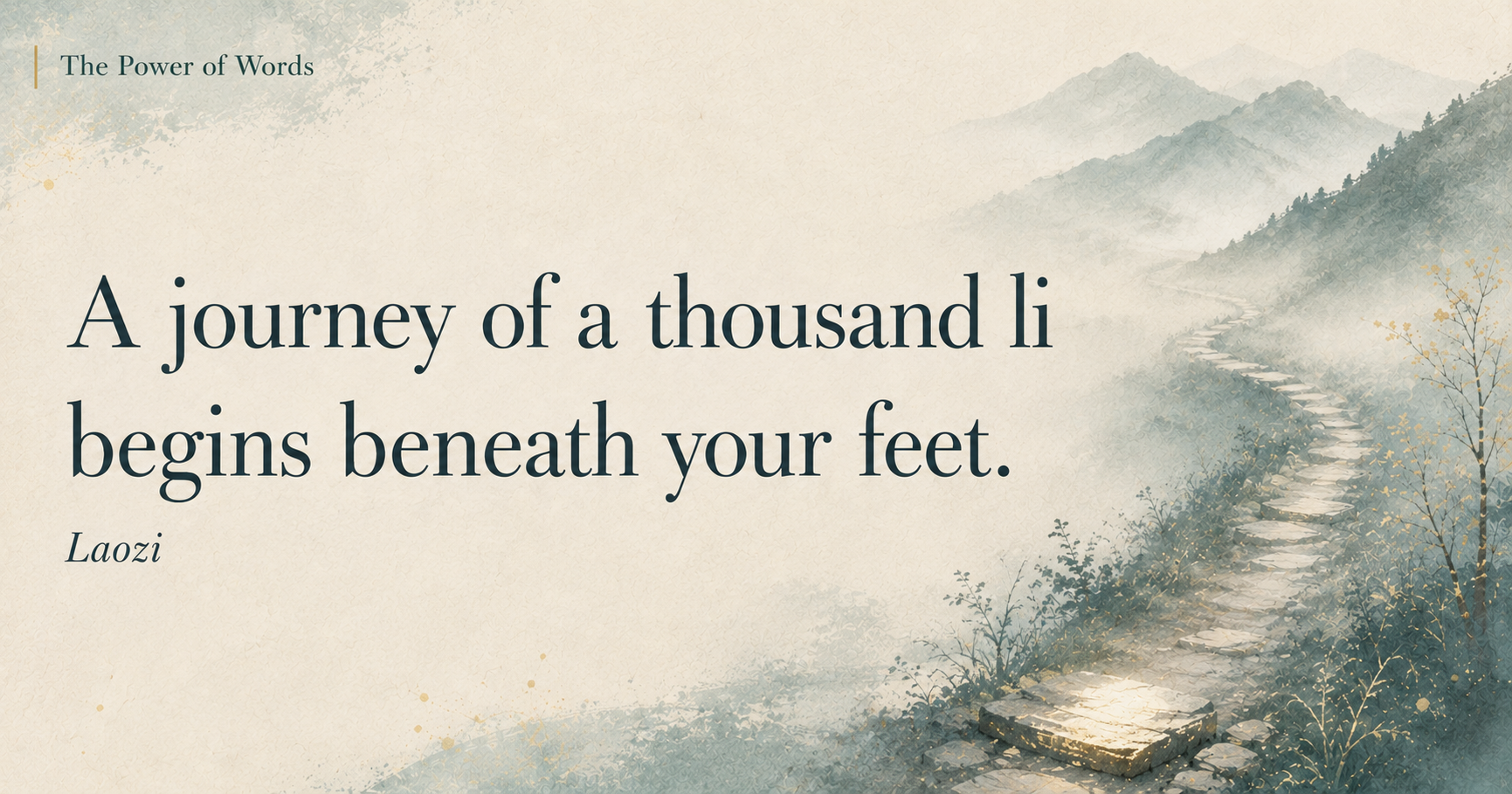
千里之行、始於足下。

“A journey of a thousand li begins beneath your feet.” — Dao De Jing, Chapter 64, traditionally attributed to Laozi. Translation for this article. The original uses li, a Chinese unit of distance.

Reflection

Sometimes you know what you want to do, yet beginning feels difficult.

You want to study, organize your home, or try something new at work. Then you think about everything the goal requires—and find yourself carrying the weight of the entire journey before taking a step.

This passage invites us to bring our attention back to where we stand.

If your goal is to read a book, today’s task does not have to be finishing it. Open it and read a paragraph. If you want a tidier home, begin with one object on your desk. If you need to prepare a proposal, write down one question it must answer.

A small beginning may seem insignificant. Yet touching the task can reveal something that thinking alone cannot: what you understand, what you need, and what might come next.

There is no need to turn this into another demand to be productive every day.

Your starting point changes. Some days you have energy; other days you need rest. Preparing your tools, asking for help, or choosing a sensible time to begin may be the right step for you.

Someone else’s pace does not have to determine yours.

Today, instead of asking, “How will I accomplish all of this?” try asking, “What small part can I touch?”

Leave a note. Read a page. Gather one thing you need. Make it easier for tomorrow’s version of you to continue.

A distant hope becomes connected to daily life through something close enough to do now.

日本語版を読む

Source

Chinese Text Project: Dao De Jing, Chapter 64. The reflection above is original commentary, separate from the quotation.

Disclosure: This article includes affiliate links.

A little inspiration for everyday living

A few words can offer a fresh perspective. Sometimes, a thoughtful everyday item can bring a small moment of joy, too.

In my Rakuten ROOM, I share everyday essentials we might put off buying for ourselves but would be happy to receive as gifts. Feel free to take a look! (*^^*)

Shopping from outside Japan? Rakuten Global Express offers international forwarding from Japan. Please check supported destinations, shipping fees, and item restrictions before using the service.

Advertisement / affiliate link. For readers who read Japanese: the book below is a Japanese-language edition sold by Rakuten Books in Japan. It is not the English translation quoted in this article. Check language, edition, availability and delivery conditions on the retailer’s page.

【広告】作品を本で読む(蜂屋邦夫訳注・岩波文庫):
『老子』を楽天で見る
※紹介する版の訳文・表記は、記事内の引用や本記事訳と異なる場合があります。
言葉の力|老子:遠くへ進みたい日は、足元の一歩から

今日の言葉

千里之行、始於足下。

出典:『老子』第64章。老子に伝統的に帰される文献に収められた言葉です。日本語でいう「千里の道も一歩から」のもとになった表現です。

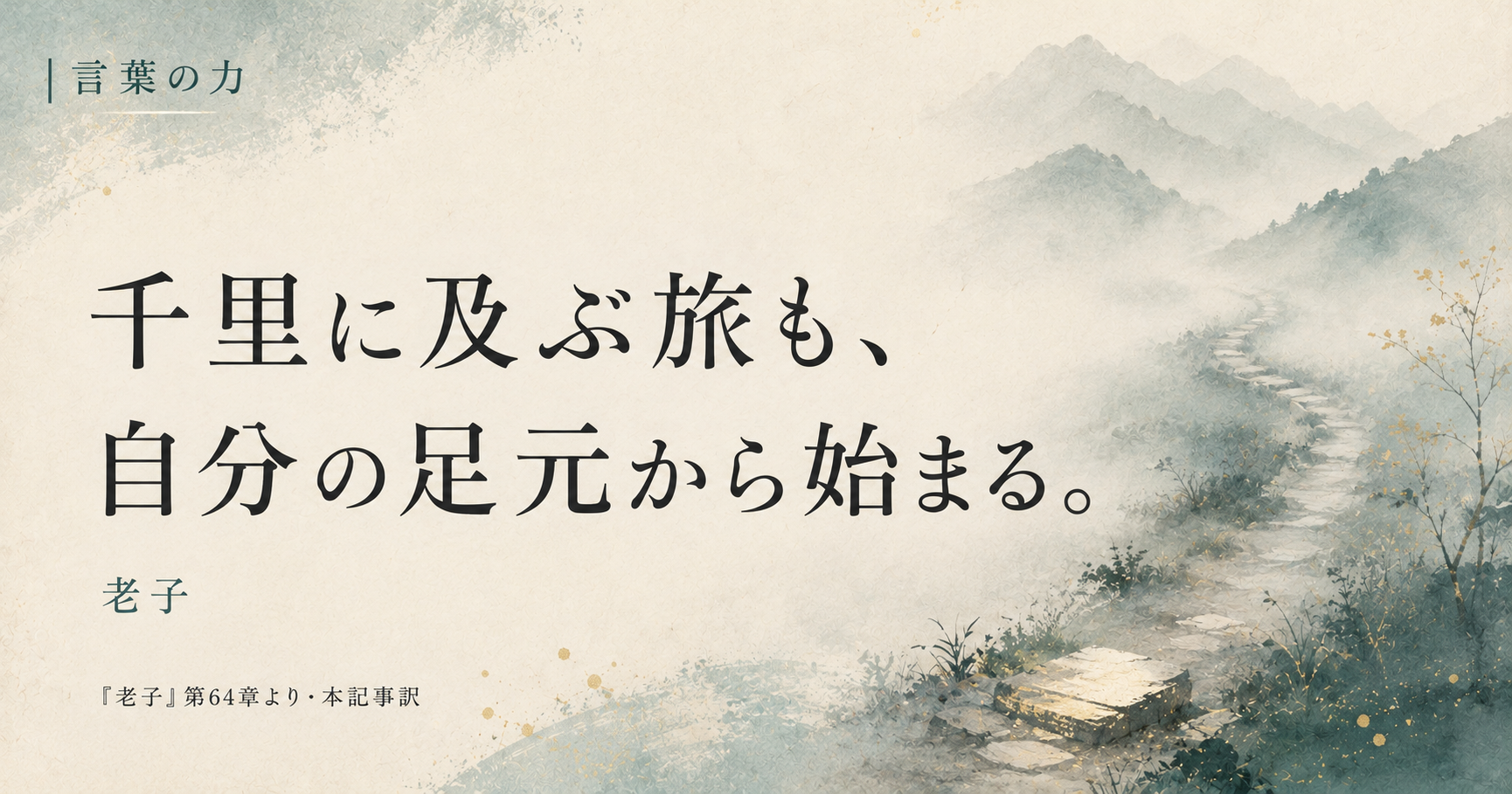
現代語訳〈本記事訳〉:千里に及ぶ旅も、自分の足元から始まる。

ここからは、この言葉から考えたこと

やりたいことはあるのに、なかなか手をつけられない。そんな日があります。

勉強を始めたい。部屋を整えたい。新しい仕事に挑戦したい。けれど、必要な時間や覚えることを考えるうちに、「今の自分には難しいかもしれない」と感じてしまう。

始める前から、目的地までの距離を全部背負ってしまうのですね。

『老子』のこの一節は、そんなとき、視線を遠くから足元へ戻してくれるように思います。

一歩目に、完成形はいらない

たとえば、本を一冊読むことが目標なら、今日必要なのは読み終えることではありません。まず本を開き、一段落だけ読む。それも立派な始まりです。

片づけなら、家全体ではなく机の上の一つ。仕事の準備なら、完璧な資料ではなく、確認したいことを一行だけ書く。

それだけでは何も変わらない、と感じるかもしれません。でも、「まだ始めていない」と「少し触れてみた」の間には、小さくても違いがあります。

実際に触れれば、分からないことも、意外とできることも見えてきます。考えているだけでは見えなかった次の一歩が、そこで初めて分かることもあるでしょう。

足元には、今日の自分の事情もある

ただし、この言葉を「どんな日も前進しなければ」と受け取る必要はないと思います。

疲れている日、時間がない日、気持ちが追いつかない日。出発地点は、毎日同じではありません。

今日は道具を出すだけ。相談する相手を決めるだけ。明日のために休むだけ。

それが自分にとって必要な準備なら、無理に大きな歩幅を選ばなくてもよいのではないでしょうか。

遠くの誰かが速く歩いていても、その人の一歩と自分の一歩を同じにする必要はありません。今いる場所から進むには、今の自分に合う大きさがあるはずです。

今日の一歩を、一つだけ

やりたいことを思い浮かべたら、「達成するには?」の前に、「今日、何に触れられる?」と問いかけてみる。

検索を一つする。メモを残す。必要なものを一つそろえる。

小さすぎるくらいで構いません。明日の自分が続きを始めやすい形にして、今日はそこで終えてもよいのです。

遠くへ進む力は、遠くばかりを見ることから生まれるとは限りません。

足元に置ける一歩を見つけること。それが、まだ形になっていない願いと、今日の暮らしをつなぐ最初の接点になるのかもしれません。

【広告】作品を本で読む(蜂屋邦夫訳注・岩波文庫):
『老子』を楽天で見る
※紹介する版の訳文・表記は、記事内の引用や本記事訳と異なる場合があります。
今の気持ちから探す:一歩踏み出すのがこわい

出典

Chinese Text Project『道徳経』第64章/誠文堂新光社「守微第六十四」

※本記事には、アフィリエイト広告を含むリンクがあります。

暮らしにも、小さなきっかけを

言葉と出会って、少し気持ちが変わる。暮らしの道具との出会いにも、そんな小さなきっかけがあるかもしれません。

自分では後回しにしがち。でも、もらうとうれしい暮らしの道具などを、楽天ROOMで紹介しています(*^^*)
よかったら、のぞいてみてください。

Read this article in English →

公開前チェック〈編集用・公開前に削除〉

人物・引用の既存記事重複を照合する。共通タグ3個の名称とIDを確認して設定する。人物・テーマタグ案:老子/はじめの一歩/勇気。気分別リンクの表示を確認する。対応する英語版の保存後に日英相互リンクを追加する。公開日は既存予約と重ならないように決める(1日目01:27枠の候補。自動予約しない)。

アイキャッチ未作成・未設定。制作指定:朝霧の山道。手前の一枚の踏み石に柔らかな光。青緑と生成りを基調に、遠景は淡くする。画像内の言葉「千里之行、始於足下。」、小さく「言葉の力」「老子|『老子』第64章」。文字の誤り・権利・スマホ表示を確認する。本文の最終校閲と編集用欄の削除後に、本人が公開・予約を判断する。

言葉の力|フランクリン:うまく言えない日も、誠実な行動は残る

今日の言葉

Well done is better than well said.

出典:ベンジャミン・フランクリン『Poor Richard』1737年版。米国国立公文書館のFounders Onlineで原文を確認できます。

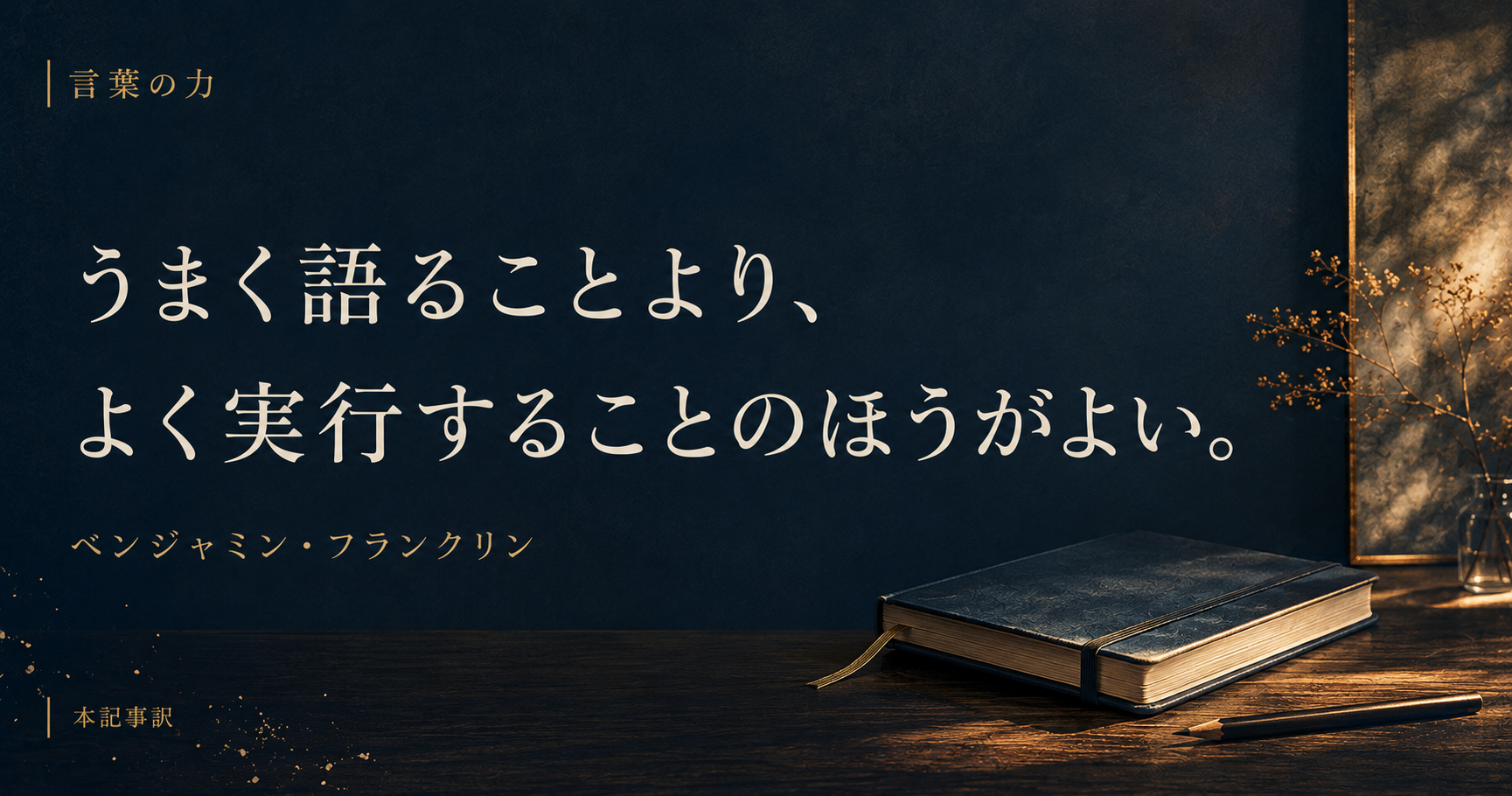
日本語訳〈本記事訳〉:うまく語ることより、よく実行することのほうがよい。

ここからは、この言葉から考えたこと

会議が終わったあと、「もっと分かりやすく話せたらよかった」と思うことはありませんか。

周りの人はすらすら説明できるのに、自分は言葉に詰まってしまう。感謝を伝えたいときも、気の利いた一言が見つからない。

そんなとき、話すのが得意ではない自分を、必要以上に小さく感じてしまうことがあります。

けれど、人に届くものは、言葉の上手さだけではないはずです。

フランクリンの短い言葉から、今回は「話せない分を努力で埋めよう」ではなく、「すでにしている誠実な行動にも目を向けよう」と考えてみたいと思います。

目立たない仕事にも、受け取る人がいる

頼まれたことを忘れずに返す。次の人が使いやすいよう、道具を元の場所へ戻す。分からないまま進めず、確認を一つ入れる。

どれも、大きな拍手をもらうような行動ではないかもしれません。

それでも、受け取った人には「助かった」が残ります。見えにくいところで誰かの負担が減ったり、安心して次の作業へ進めたりする。

華やかな説明がなくても、暮らしや仕事を支える行動はあります。

自分では当たり前すぎて、数えていなかったこと。その中に、自分なりの誠実さが含まれているのではないでしょうか。

言葉がいらない、という意味ではなく

もちろん、「行動しているのだから、説明しなくても伝わる」と決めつけるのは別の話です。

予定が遅れるなら連絡する。迷惑をかけたなら謝る。助けてもらったなら、お礼を伝える。

相手が安心するために必要な言葉もあります。黙って引き受けすぎて、自分だけが苦しくなる必要もありません。

言葉と行動は、勝ち負けをつけるものではなく、互いを確かめ合うものとして扱いたいですね。

「大切に思っています」という言葉に、小さな気遣いを添える。「対応します」という返事に、できる範囲と時期を添える。

立派な宣言より、相手が確かめられる小さな実行を。そのくらいの受け止め方でよいのだと思います。

今日、自分がしたことを一つ数える

帰り道、反省ばかりが浮かんだら、一つだけ思い出してみてください。

返事をした。確認した。片づけた。難しいことを、難しいと伝えた。

それは本当に「何もできなかった日」でしょうか。

うまく話せなかった場面があっても、一日のすべてが失敗になるわけではありません。

言葉が少し不器用でも、誠実にしたことは消えません。今日は、その一つまで見落とさずに帰れたら十分なのかもしれません。

今の気持ちから探す:つい、人と比べてしまう

出典

Founders Online, National Archives: Poor Richard, 1737

※本記事には、アフィリエイト広告を含むリンクがあります。

暮らしにも、小さなきっかけを

言葉と出会って、少し気持ちが変わる。暮らしの道具との出会いにも、そんな小さなきっかけがあるかもしれません。

自分では後回しにしがち。でも、もらうとうれしい暮らしの道具などを、楽天ROOMで紹介しています(*^^*)
よかったら、のぞいてみてください。

Read this article in English →

この言葉から、もう一冊

【広告】『フランクリン自伝』(ベンジャミン・フランクリン著/岩波文庫)

誠実さや日々の習慣を、フランクリンの生涯とあわせて考えたい方への関連書籍です。本記事で取り上げた名言の出典として紹介するものではありません。

価格・在庫・版・配送条件は、購入先でご確認ください。

公開前チェック〈編集用・公開前に削除〉

人物・引用の既存記事重複を照合する。共通タグ3個の名称とIDを確認して設定する。人物・テーマタグ案:ベンジャミン・フランクリン/誠実/行動。気分別リンクの表示を確認する。対応する英語版の保存後に日英相互リンクを追加する。公開日は既存予約と重ならないように決める(1日目12:07枠の候補。自動予約しない)。

アイキャッチ未作成・未設定。制作指定:整えられた木製の作業机。閉じた手帳と一本の鉛筆。琥珀色と紺を基調に、静かな午後の光。画像内の言葉「Well done is better than well said.」、小さく「言葉の力」「Benjamin Franklin|1737」。文字の誤り・権利・スマホ表示を確認する。本文の最終校閲と編集用欄の削除後に、本人が公開・予約を判断する。

The Power of Words | Benjamin Franklin: Your Quiet Actions Still Count

Words for today

Well done is better than well said.

— Benjamin Franklin, Poor Richard, 1737.

Reflection

After a meeting, you may find yourself thinking, “I wish I had explained that better.”

Other people seem fluent and confident. You hesitate, lose your place, or struggle to find the right words. It becomes easy to overlook everything else you brought to the day.

For this reflection, Franklin’s words are an invitation to notice your actions—not a demand to compensate for imperfect speech by working harder.

You remembered to reply. You checked a detail rather than guessing. You returned a tool so the next person could find it.

These actions may attract little attention. Still, someone benefits from them. A task becomes easier. An uncertainty is resolved. A person has one less thing to worry about.

Quiet usefulness deserves recognition too.

This does not mean words are unnecessary. If you are running late, communicate. If you have caused harm, apologize. If someone has helped you, thank them. Nor should you silently accept more work than you can manage.

Words and actions can support each other.

A promise becomes clearer when you explain what you can do and when. Appreciation becomes tangible when you add a thoughtful gesture.

On your way home, try remembering one thing you did with care.

Perhaps you responded, checked, organized, or honestly said that you needed help. Does that really add up to a day in which you did nothing?

An awkward conversation does not erase the rest of your efforts.

Your words may not have been polished. Your care was still real.

日本語版を読む

Source

Founders Online, National Archives: Poor Richard, 1737. The reflection above is original commentary, separate from the quotation.


Advertisement / Affiliate disclosure: We may earn a commission if you purchase through the book link below.

Related reading: フランクリン自伝 (Japanese-language edition). This is a related book, not the source of the English wording quoted above.

This book and the shop page are in Japanese. Check the edition, availability, price and delivery conditions before ordering.

Disclosure: This article includes affiliate links.

A little inspiration for everyday living

A few words can offer a fresh perspective. Sometimes, a thoughtful everyday item can bring a small moment of joy, too.

In my Rakuten ROOM, I share everyday essentials we might put off buying for ourselves but would be happy to receive as gifts. Feel free to take a look! (*^^*)

Shopping from outside Japan? Rakuten Global Express offers international forwarding from Japan. Please check supported destinations, shipping fees, and item restrictions before using the service.

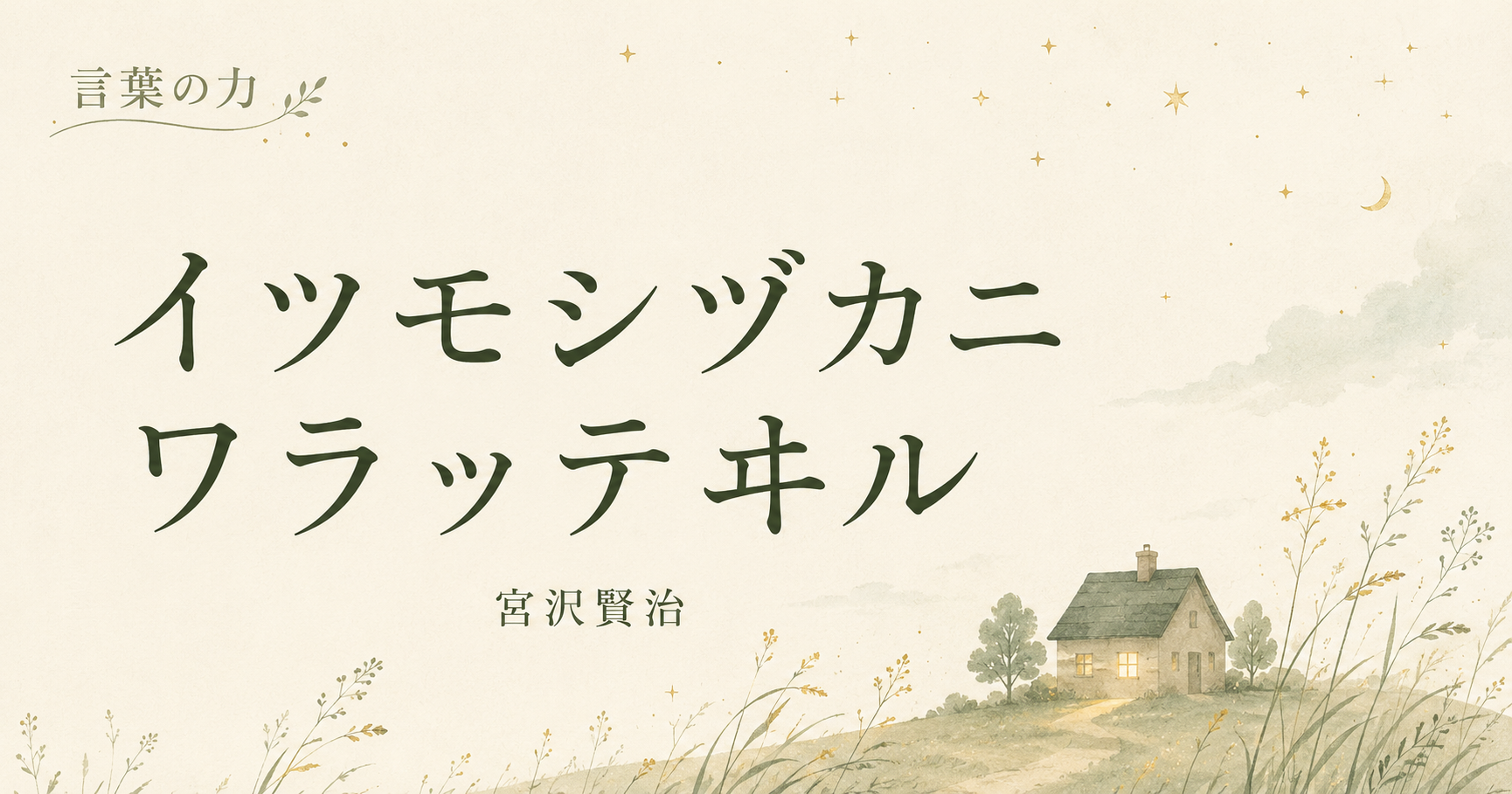
言葉の力|宮沢賢治「イツモシヅカニワラッテヰル」——いつも笑えなくても、やわらかく戻れる場所を

※本記事にはアフィリエイト広告が含まれます。

「イツモシヅカニワラッテヰル」

宮沢賢治「〔雨ニモマケズ〕」より

朝から少し、言い方が強くなってしまった。

急いでいたし、考えることも多かった。理由はあるけれど、あとになって、自分の声だけが頭の中で再生されます。

もっと普通に言えたな。

そう思うと、一日の最初につまずいたような気持ちになることがあります。

そんなとき、この静かな一節を思い出します。

笑顔を、もう一つの義務にしない

「イツモシヅカニワラッテヰル」。

詩には、賢治が「サウイフモノニ/ワタシハナリタイ」と記す願いもあります。

ここからは、私自身の受け止め方です。

この言葉を、「どんなときも笑顔でいなければならない」と自分に言い聞かせるためには使いたくありません。

疲れているときも、困っているときもあります。笑えない日まで、笑顔の出来栄えを採点したら、少し苦しい。

むしろ、余裕をなくした自分が、戻ってきたい姿として持っておく。

それくらいの距離で、この言葉に触れていたいと思います。

一度きつく言ったら、その日が終わるわけではない

朝の言葉を取り消すことはできなくても、そのあとに別の言葉を足すことはできます。

「さっきは、言い方がきつかったね」
「急いでいて、ごめん」
「もう一度、聞かせて」

大げさな反省会にしなくても、短い一言で向き直ることはできます。

相手がすぐに笑ってくれるとは限りません。それでも、自分の態度を整え直すことには意味があると思うのです。

機嫌のよさより、扱い方のやさしさ

いつも明るく、話が面白く、誰にでも気が利く。

そんな人になれたら素敵ですが、毎日その全部を用意するのは大変です。

今日は、返事を少し丁寧にする。相手が話し終えるまで待つ。疲れているなら、無理に会話を続けず、そのことを伝える。

笑顔そのものではなく、相手と自分を雑に扱わないことから始めてもいいのでしょう。

今日はずっと穏やかではなかった。

それでも、次の一言は選べる。

この詩の一節を、失敗しないための規則ではなく、やわらかく戻ってくるための目印にしたいと思います。

引用・詩の出典:青空文庫:宮澤賢治「〔雨ニモマケズ〕」

今、どんな気分?

人との関係に悩んでいる——同じ気持ちに寄り添う言葉を読む

この言葉から、もう一冊

【広告】『雨ニモマケズ』(宮沢賢治・柚木沙弥郎/ミキハウスの絵本)

記事で触れた詩を、絵とともにゆっくり読みたい方へ。詩「雨ニモマケズ」を一冊の絵本にした作品です。

価格・在庫・版・配送条件は、購入先でご確認ください。

The Power of Words | Kenji Miyazawa: A Gentle Place to Return To

Disclosure: This article contains affiliate advertising.

“Always smiling quietly.”

Kenji Miyazawa

Translated for this article from “イツモシヅカニワラッテヰル” in Miyazawa’s “〔雨ニモマケズ〕.” This is not an official English translation.

You spoke a little sharply this morning.

You were busy. There were reasons. Still, your own voice keeps replaying in your mind: “I could have said that differently.”

Do not make smiling another obligation

The poem also expresses the wish to become such a person.

My own reading is not that we must smile regardless of how we feel.

Some days are difficult. Grading our smiles on those days would only add another burden.

Instead, I want to hold the image as somewhere to return when I have lost my patience.

One sharp moment does not have to define the day

We cannot remove what we said, but we can add something different.

“I sounded harsh earlier.”
“I was rushing. I’m sorry.”
“Could you tell me again?”

The other person may not respond warmly straight away. Even so, we can take responsibility for how we speak next.

Begin with gentleness, not cheerfulness

Answer carefully. Let someone finish. If you are tired, say so rather than forcing a conversation.

We do not need to be entertaining or endlessly upbeat to treat others—and ourselves—with care.

Today was not perfectly calm.

The next sentence is still yours to choose.

Quotation and poem source: Aozora Bunko: Kenji Miyazawa, “〔雨ニモマケズ〕” (Japanese).

How are you feeling today?

Struggling with relationships? Explore more words for connection.


Advertisement / Affiliate disclosure: We may earn a commission if you purchase through the book link below.

Related reading: 雨ニモマケズ (Japanese-language edition). This is a related book, not the source of the English wording quoted above.

This book and the shop page are in Japanese. Check the edition, availability, price and delivery conditions before ordering.

Shopping from outside Japan? Rakuten Global Express offers international forwarding from Japan. Please check supported destinations, shipping fees, and item restrictions before using the service.

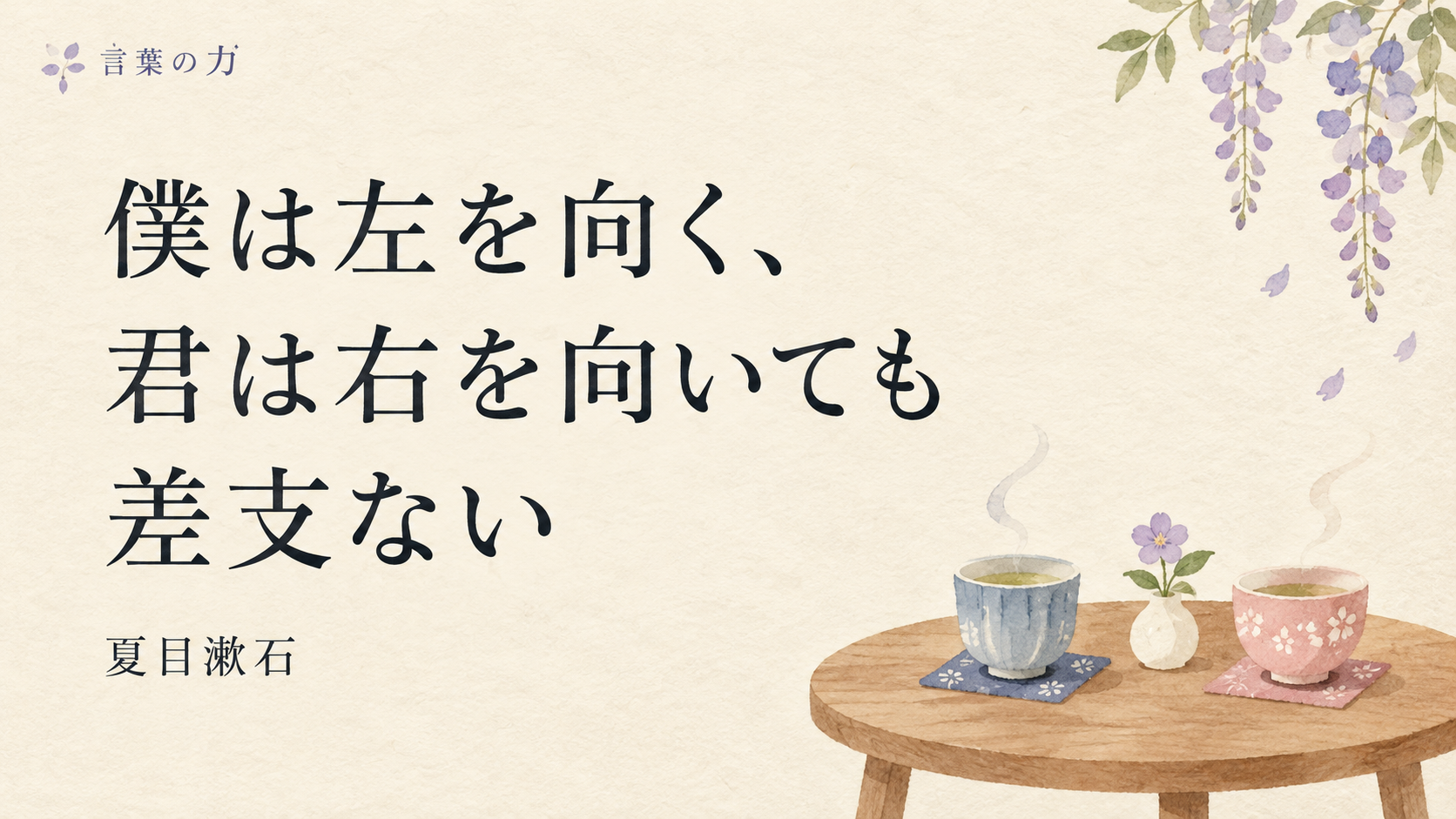
言葉の力|夏目漱石「僕は左を向く、君は右を向いても差支ない」——違う意見を、すぐに距離へ変えない

※本記事にはアフィリエイト広告が含まれます。

「僕は左を向く、君は右を向いても差支ない」

夏目漱石「私の個人主義」より

前後では、他への影響に触れながら、自分にも他人にも自由を認めることが述べられています。

自分がよかったと思ったものを、相手はそうでもないと言う。

映画でも、休日の過ごし方でも、仕事の進め方でも。

ただ好みが違っただけなのに、少しだけ、自分まで否定されたような気がすることがあります。

「そうなんだ」と言いながら、心の中では小さな説明会が始まる。

いや、でも、ここがよくてね。

気づけば、感想を話していたはずが、説得に変わっているのです。

同じ感想でなくても、話は続けられる

漱石の文章にある「僕は左を向く、君は右を向いても差支ない」という表現を、日常の会話に重ねてみます。

ここからは私自身の受け止め方です。

同じものを好きになってもらえるとうれしい。

でも、それだけを会話の成功にしなくてもいいのでしょう。

「どのあたりが合わなかった?」
「そういう見方もあるんだね」

相手の感想を変えるためではなく、違う見方を知るために聞いてみる。

一致しないままでも、話が深くなることはあるはずです。

自分の好きを、説明しすぎなくてもいい

反対に、自分の好きなものを分かってもらえないときもあります。

そんなとき、相手が納得するまで、自分の好きを弁護し続けなくてもいい。

「私はここが好きなんだ」。

そこまで伝えて、いったん置くこともできます。

相手に同じ感想を求めないことは、自分の気持ちを引っ込めることとは違います。

自分の好きを大切にしながら、相手の違いも残しておく。その両方を持ちたいのです。

尊重することと、何でも受け入れることは別

もちろん、違いを認めることは、相手を傷つける行為まで、そのまま認めることではありません。

共同作業には約束も必要ですし、困ることには境界線を引いてよいと思います。

そのうえで、好みや考えが違うだけの場面まで、勝ち負けにしなくてもいい。

今日、誰かと意見が分かれたら、「違うんだな」のあとに、少し間を置いてみる。

すぐに説得しない。すぐに嫌われたと決めない。

同じ方向を向いていなくても、同じ場所で話せる。

そんな関係を、大切にしていきたいと思います。

引用・背景の出典:青空文庫:夏目漱石「私の個人主義」

今、どんな気分?

人との関係に悩んでいる——同じ気持ちに寄り添う言葉を読む

この言葉から、もう一冊

【広告】『私の個人主義』(夏目漱石著/講談社学術文庫)

自分と相手の自由について、漱石の講演を通して考えたい方へ。「私の個人主義」など五つの講演を収録しています。

価格・在庫・版・配送条件は、購入先でご確認ください。

The Power of Words | Natsume Soseki: Different Opinions Do Not Have to Become Distance

Disclosure: This article contains affiliate advertising.

“I may face left, and you may face right.”

Natsume Soseki

Translated for this article from an excerpt of Soseki’s “私の個人主義.” This is not an official English translation. The surrounding passage discusses freedom for oneself and others, with a qualification concerning effects on others.

You recommend a film you loved. The other person was not impressed.

It is only a difference in taste. Yet it can feel as if they rejected a small part of you.

Soon, sharing your enjoyment becomes a presentation designed to change their mind.

Here is my own everyday reflection on Soseki’s words.

Agreement is not the only successful ending

It feels good when someone enjoys what we enjoy.

But a conversation can continue without matching conclusions.

“What didn’t work for you?”
“I hadn’t seen it that way.”

Ask to understand, rather than to win agreement.

Your enjoyment does not need endless defending

You can also say, “This is the part I love,” and leave it there.

Not demanding agreement does not mean withdrawing your own feelings.

There can be room for your enjoyment and their different response.

Respect still leaves room for boundaries

Respecting differences does not require accepting harmful behavior. Shared work needs agreements, and difficulties may need clear boundaries.

But a difference in taste does not always need a winner.

Next time opinions diverge, pause before persuading—or assuming you have been disliked.

You can face different directions and still remain in conversation.

Quotation and background source: Aozora Bunko: Natsume Soseki, “私の個人主義” (Japanese).

How are you feeling today?

Struggling with relationships? Explore more words for connection.


Advertisement / Affiliate disclosure: We may earn a commission if you purchase through the book link below.

Related reading: 私の個人主義 (Japanese-language edition). This is a related book, not the source of the English wording quoted above.

This book and the shop page are in Japanese. Check the edition, availability, price and delivery conditions before ordering.

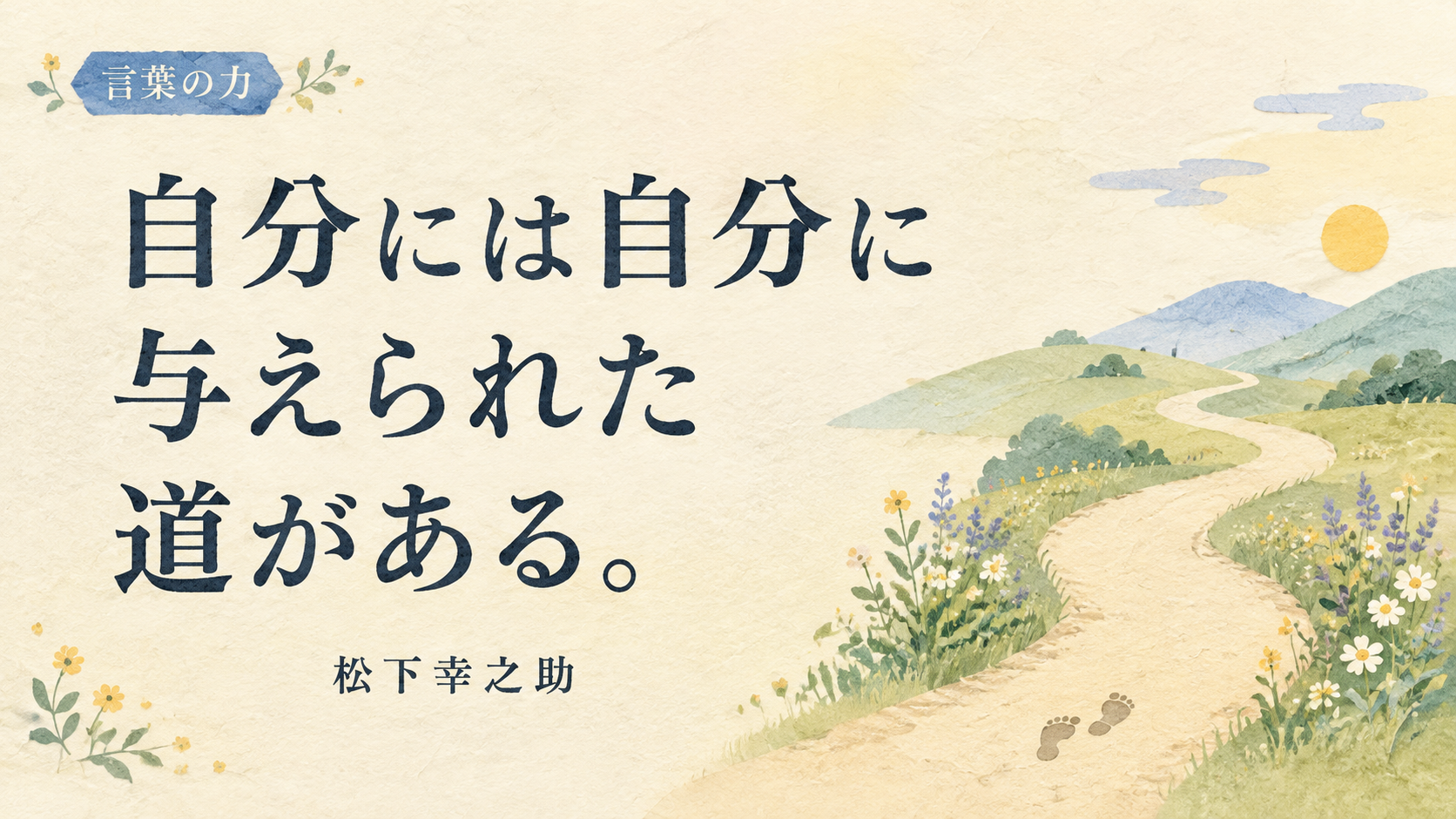
言葉の力|松下幸之助「自分には自分に与えられた道がある。」——人の速さで、自分の歩みを測らない

※本記事にはアフィリエイト広告が含まれます。

「自分には自分に与えられた道がある。」

松下幸之助『道をひらく』「道」より

同じくらいの時期に始めたはずなのに、あの人はもう先へ進んでいる。

仕事でも、趣味でも、何かを続けていると、そんなふうに感じる日があります。

昨日までは自分なりに進んでいたのに、誰かの成果を見た途端、急に立ち止まっていたような気がする。

実際には一歩も戻っていないのに、気持ちだけが後ろへ下がってしまうのです。

そんな日に読み返したいのが、この言葉です。

見えているのは、道の一部分

『道をひらく』では、道には広いときも狭いときも、上りも下りもあると綴られています。

ここからは、その言葉を私たちの日常に重ねて考えてみます。

人の成果は見えても、その前にどれだけ準備したのか、どんな助けがあったのかまでは、分からないことがあります。

こちらにも、仕事の事情や家族との時間、その日に使える力があります。

違う条件で歩いているのに、到着した場所だけを比べれば、自分の歩みが頼りなく見えることもあるでしょう。

だから、比べる前に一度だけ、自分が歩いてきた部分を見ておきたいのです。

続け方を変えても、歩みは消えない

以前は毎日できたことが、今は週に一度しかできない。

そんな変化があると、続けられていない気がします。

でも、回数が減ったことと、大切にする気持ちがなくなったことは同じではありません。

今の暮らしに合わせて、少し小さく続ける。難しい時期はいったん離れて、戻れる場所を残しておく。

これは引用の原意を断定するものではなく、私自身が持っておきたい考え方です。

道を大切にすることを、自分を追い込む理由にはしたくありません。

今日の自分が動かせるところへ

誰かに追いつこうとすると、目線が遠くなります。

でも、今日できることは、案外手元にあります。

途中だった文章を一段落書く。分からなかったことを一つ調べる。道具を片づけて、次に始めやすくする。

目立たなくても、それは自分の歩みです。

人の速さで測り続けると、自分が進んだ分を見落としてしまいます。

今日は、昨日の自分から動いたところを一つ見つける。

小さくても、そこに足跡はあります。

この言葉を本で読む:
『道をひらく』を楽天ブックスで見る

引用・背景の確認元:PHP研究所『道をひらく』

今、どんな気分?

頑張っても、報われない気がする——同じ気持ちに寄り添う言葉を読む

The Power of Words | Konosuke Matsushita: Do Not Measure Your Journey by Someone Else’s Speed

Disclosure: This article contains affiliate advertising.

“I have a path of my own.”

Konosuke Matsushita

Translated for this article from “自分には自分に与えられた道がある。,” the opening of “The Path” in Michi o Hiraku. This is not an official translation.

Someone who began around the same time seems far ahead.

Yesterday, you felt you were making progress. Today, after seeing their achievement, you feel as though you have been standing still.

You have not actually moved backward. Yet your confidence has.

You see only part of their path

Matsushita describes a path with wide and narrow stretches, uphill and downhill sections.

Here is my own everyday application of that image.

We can see someone’s result without seeing all their preparation or support. We also have our own responsibilities, circumstances, and available energy.

Comparing destinations alone can hide how different the journeys have been.

Changing your pace does not erase your effort

Something you once did daily may now happen once a week.

That does not necessarily mean it has stopped mattering.

You can make an activity smaller, adapt it to your circumstances, or leave yourself a way back after a pause. This is my reflection, not a claim about the quotation’s original meaning.

Return to what is within reach

Write one unfinished paragraph. Look up one unanswered question. Put your tools in order for next time.

These may not look impressive, but they belong to your journey.

Today, notice one place where you have moved from yesterday.

A small footprint is still a footprint.

Quotation and background source: PHP Institute: Michi o Hiraku (Japanese).

How are you feeling today?

Feel like your efforts aren’t paying off? Explore more words for small steps.

Advertisement / affiliate link. For readers who read Japanese: the book below is a Japanese-language edition sold by Rakuten Books in Japan. It is not the English translation quoted in this article. Check language, edition, availability and delivery conditions on the retailer’s page.

この言葉を本で読む:
『道をひらく』を楽天ブックスで見る