The Power of Words | Tom Hanks: A Short Sentence for an Awkward Journey Home

This too shall pass. — Tom Hanks / 言葉の力

Imagine heading home after dinner with friends. You remember one thing you said. Perhaps you talked too much; perhaps that joke was unnecessary. There were good moments, too, but the few awkward seconds keep replaying in your mind.

Today’s quotation

This too shall pass.

Tom Hanks — from his remarks in the Actor Roundtable

What he wished his younger self had known

During The Hollywood Reporter’s Actor Roundtable, the participants were asked what advice they would give their younger selves. Tom Hanks said he wished he had known today’s phrase, then repeated the short sentence while speaking about feeling bad or angry.

This is a remark attributed to Hanks in the published discussion, not dialogue spoken by one of his film characters. It does not mean that he originated the expression.

The published exchange goes on to include another actor’s comment about stretching and Hanks’s own mention of flossing. Beside the large questions of a life sit the practical matters of looking after a back or a set of teeth. There is something gently disarming about that company.

A few awkward seconds, and the rest of the night

What follows is this article’s reflection.

One remark can seem unusually large on the way home. Even your reflection in the train window appears to have something to say. Perhaps it is simply the face of someone who is tired.

We should not turn today’s phrase into a promise that every problem will resolve without action. If you hurt someone, an apology may be needed. But responding to what happened is different from deciding that the embarrassment will always feel exactly this intense.

At home, you can take off your shoes and have a glass of water. There are still other small things left in the evening. A few clumsy seconds do not have to provide the whole account of the dinner—or of you.

No final verdict on the train

Hanks’s short sentence does not demand instant cheerfulness. At least, that is how this article chooses to receive it.

Tonight may still feel awkward. The train can reach the next station all the same. A sweeping verdict about yourself can wait a little longer.

Source and translation note

The Hollywood Reporter, “Anger Is Very Easy — The Other Stuff Feels Difficult”: Tom Hanks, Shia LaBeouf and the Actor Roundtable. See the closing exchange about advice to their younger selves.

The quotation reproduces one sentence from Hanks’s answer in the published English discussion, which was edited for length and clarity. This article does not attribute authorship of the expression to Hanks. The Japanese translation in the companion article is our own. The opening scene and everyday reflections are this article’s interpretation.

Related reading

Advertisement / Affiliate link: We may earn a commission from purchases made through this link.

For an evening read, you may wish to explore Tom Hanks’s short-story collection Uncommon Type in English. This is a separate work of fiction, not the source of the remark quoted above. The linked marketplace is in Japanese.

Search results may include different languages, editions, used copies, ebooks or audio formats. Check the language, format, seller, total price and delivery terms before ordering.


Advertisement / Affiliate disclosure: The link below leads to our Rakuten ROOM. Product links within the ROOM are affiliate links, and we may earn a commission from purchases.

You can browse our Rakuten ROOM for items to accompany an evening read or a quiet moment at home.

言葉の力|トム・ハンクスの短い言葉を、気まずさが残る帰り道に

これも過ぎ去る。 — トム・ハンクス / 本記事訳 / 言葉の力

食事会の帰り道、さっきの一言を思い出す。少し話しすぎた気がするし、あの冗談はいらなかったかもしれない。楽しかった場面もあるのに、頭の中では気まずい数秒ばかりが繰り返される。そんな夜を想像してみてください。

今日の名言

これも過ぎ去る。

トム・ハンクス(本記事訳/座談会での発言より)

若い自分に伝えたかったこと

The Hollywood Reporterの俳優座談会で、若いころの自分にどんな助言をするかという質問がありました。トム・ハンクスは、今日取り上げる言葉を知っていたかったと答え、嫌な気分や怒りに触れながら、この短い一文を口にしています。

ここで引用しているのは、映画の登場人物の台詞ではなく、座談会に掲載されたハンクス本人の発言です。ただし、この表現を彼が生み出したという意味ではありません。

掲載された問答には、別の俳優によるストレッチの話や、ハンクス自身のデンタルフロスへの言及も続きます。大きな人生の話のすぐ隣に、体や歯の手入れがある。その並びに、少し肩の力が抜けます。

気まずい数秒と、今夜の残り

ここからは本記事独自の考察です。

帰り道に思い出した一言が、必要以上に大きく感じられることがあります。電車の窓に映る自分まで、何か言いたそうに見える。実際には、ただ疲れている顔なのかもしれません。

今日の言葉を、何もしなくても問題が解決するという約束にはしたくありません。誰かを傷つけたなら、あとで謝ることが必要な場合もある。対応することと、今の気まずさがずっと同じ濃さで続くと決めることは、別の話です。

帰ったら靴を脱いで、水を飲む。今夜の残りには、まだ別の小さなこともあります。うまく言えなかった数秒だけで、食事会全体や自分自身の説明を終えなくてもよいのではないでしょうか。

結論を急がない帰り道

ハンクスの短い言葉は、今すぐ明るくなれとは言いません。少なくとも本記事では、そんなふうに受け取りたいと思います。

今夜はまだ気まずい。そのままでも、電車は次の駅に着く。自分について大きな結論を出すのは、もう少しあとでもよさそうです。

出典・参照

The Hollywood Reporter, “Anger Is Very Easy — The Other Stuff Feels Difficult”: Tom Hanks, Shia LaBeouf and the Actor Roundtable。本文末尾の、若い自分への助言についての問答を参照。

引用原文:This too shall pass.

日本語は本記事による独自訳です。ハンクスの回答から一文を抜粋しています。この表現の創作者がハンクスであるとは扱っていません。掲載された座談会本文は、長さと明瞭さのために編集されたものです。導入の日常場面とその後の考察は本記事独自のものです。

関連書籍のご案内

【広告】この書籍リンクはアフィリエイト広告です。リンク経由の購入で運営者に報酬が発生する場合があります。

帰宅後の読書に、トム・ハンクスが書いた短編集『変わったタイプ』(小川高義訳・新潮社)という選択肢もあります。今回の言葉の出典ではなく、別の作品としてのご案内です。

検索結果には別の版・言語、中古品、電子書籍、音声版などが含まれる場合があります。購入前に言語・商品形態・販売店・総額・発送条件をご確認ください。


【広告】この先は楽天ROOMへのご案内です。ROOM内の商品リンクにはアフィリエイト広告が含まれ、購入により運営者に報酬が発生する場合があります。

夜の読書や、帰宅後にひと息つく時間のお供を、楽天ROOMにまとめています。

The Power of Words | Simone Biles: When It Is Hard to Ask for a Hand

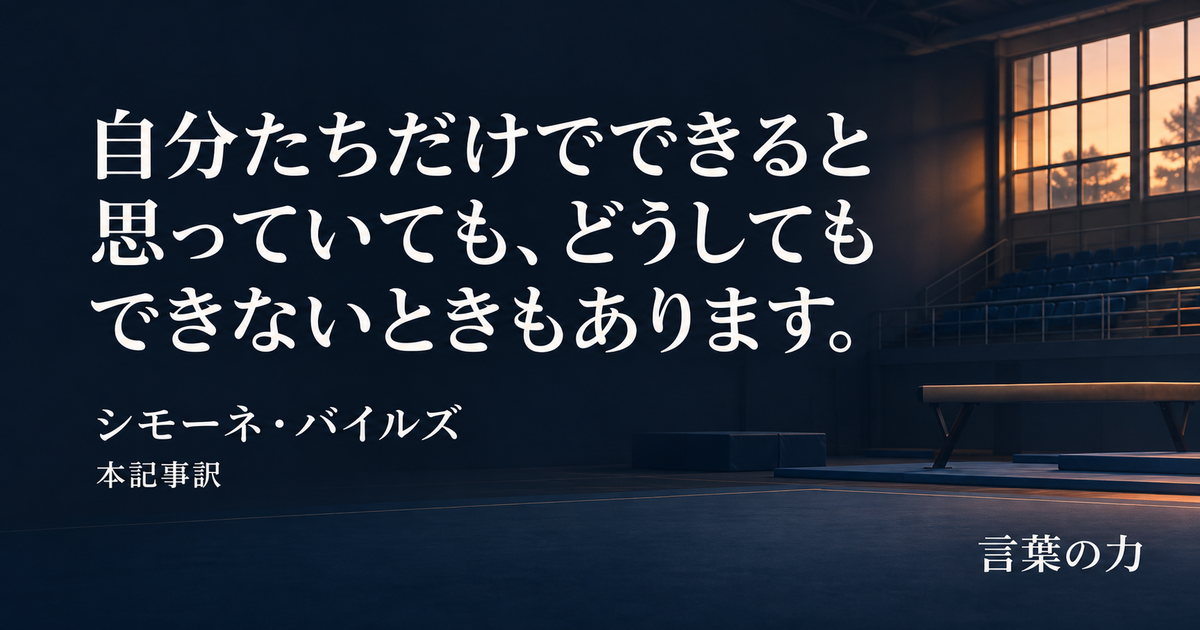
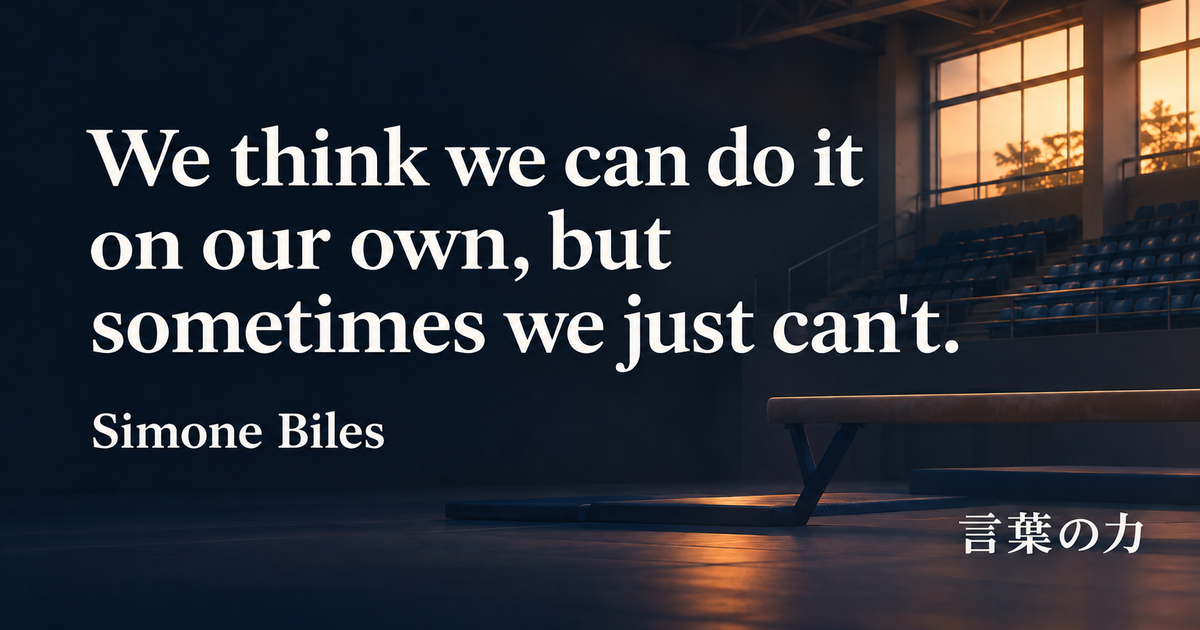
We think we can do it on our own, but sometimes we just can't. — Simone Biles / 言葉の力

Imagine cooking dinner when the washing machine beeps. The groceries are still in their bags. You could ask someone to take care of one thing, but instead you keep moving, thinking it would be quicker to do it yourself.

Today’s quotation

We think we can do it on our own, but sometimes we just can’t.

Simone Biles

Not as someone with every answer

Gymnast Simone Biles withdrew from several events at Tokyo 2020 to prioritize her physical and mental health. In an Olympics.com interview published in October 2021, she also spoke about the difficulty of finding herself at the forefront of a mental health conversation.

She was still going through her own experience, she explained, and different people go through that process differently. She was not speaking as someone who had found one answer for everyone.

In that conversation, she discussed relying on those close to her, including her parents, coaches, and her boyfriend at the time. Today’s sentence is an excerpt from her remarks about making use of that support.

One task, rather than the whole explanation

The following is this article’s reflection. A serious situation in elite sport is not equivalent to household chores. We are taking one idea—the fact that sometimes we cannot manage alone—and considering it in an everyday setting.

Asking for help can be difficult for several reasons. The other person seems busy. Explaining feels exhausting. You have already done half of it. Sometimes there is simply nobody nearby to ask.

Being told to “rely on people more” may not help much. Still, when someone is available, perhaps you can hand over one task instead of explaining the entire situation: carrying the laundry, or putting the chilled groceries away.

Finishing that task will not remove every demand. But it may create a moment when the person at the stove is not responsible for absolutely everything.

Today does not have to match yesterday

Managing on your own once does not mean you can always do so. Biles’s sentence leaves room for that difference.

If there is someone you can comfortably ask, one small request may be enough for now. If that is not possible today, there is no need to add blaming yourself to the work already waiting.

Source and translation note

Olympics.com / Scott Bregman, Exclusive! Simone Biles on sparking mental health conversation: We’re going through it together. October 10, 2021.

The quotation reproduces one sentence from the published English interview, conducted before the Anaheim performance of the Gold Over America Tour after Tokyo 2020. The Japanese translation in the companion article is our own. The household examples and reflections are this article’s interpretation, not advice Biles gave about household chores.

Related reading

Advertisement / Affiliate link: We may earn a commission from purchases made through this link.

For a fuller account of Biles’s life, you may wish to explore her English-language autobiography, Courage to Soar: A Body in Motion, a Life in Balance. It is a separate work, not the source of the interview quotation above. The linked marketplace is in Japanese.

Search results may include different languages, editions, used copies, ebooks or audio formats. Check the language, format, seller, total price and delivery terms before ordering.


Advertisement / Affiliate disclosure: The link below leads to our Rakuten ROOM. Product links within the ROOM are affiliate links, and we may earn a commission from purchases.

Our Rakuten ROOM includes everyday items for taking a quiet break. Browse at your own pace, if useful.

言葉の力|シモーネ・バイルズ——「手を貸して」が言いにくい夕方に

自分たちだけでできると思っていても、どうしてもできないときもあります。 — シモーネ・バイルズ / 本記事訳 / 言葉の力

夕飯を作りながら、洗濯機の終了音が鳴る。買ってきたものは、まだ袋の中。誰かに一つ頼めばよいのに、「自分でやったほうが早い」と動き続ける。そんな夕方を思い浮かべてみてください。

今日の名言

自分たちだけでできると思っていても、どうしてもできないときもあります。

シモーネ・バイルズ(本記事訳)

答えを全部持った人としてではなく

体操選手のシモーネ・バイルズは、東京2020大会で心身の健康を優先して複数の種目を棄権しました。その後、2021年10月に公開されたOlympics.comのインタビューで、メンタルヘルスについて発信する立場になった戸惑いも話しています。

自分自身もまだその過程にいること、人によって経験の仕方や合う方法が違うこと。彼女は、すべての人に通じる答えを得た人として話しているわけではありませんでした。

そのなかで語ったのが、両親やコーチ、当時の交際相手といった身近な支えを頼ることでした。今日の一文は、その支えを使う大切さについて話した部分からの抜粋です。

頼めることを、一つに分けてみる

ここからは本記事の考察です。競技上の深刻な状況と日常の家事を同じ重さとして扱うのではなく、「一人ではできないときがある」という一文を、身近な場面に重ねてみます。

助けを頼みにくいのは、相手も忙しそうだから、説明が面倒だから、途中までやったのだから。理由は一つとは限りません。頼める相手がすぐ近くにいない場合もあります。

だから「もっと人を頼りましょう」と言われるだけでは、かえって困ることもある。それでも頼める相手がいるなら、全部を説明する代わりに、今ある作業を一つだけ渡せるかもしれません。洗濯物を運んでもらう。袋の中の冷蔵品をしまってもらう。

その一つが片づいても、忙しさは残るでしょう。ただ、台所に立っている人だけが、すべてを引き受けなくてもよい時間にはなりそうです。

今日の分を、一人分に戻す

自分でできた日があるからといって、今日も同じようにできるとは限りません。バイルズの一文には、その違いを認める余地があります。

もし自然に頼める相手がいるなら、「これだけお願い」を一つ。いまはそれが難しいなら、頼めない自分にまで、さらに仕事を増やさずにいたいものです。

出典・参照

Olympics.com / Scott Bregman, Exclusive! Simone Biles on sparking mental health conversation: We’re going through it together.(2021年10月10日)

引用原文:We think we can do it on our own, but sometimes we just can’t.

日本語は本記事による独自訳です。原文の一文を抜粋しています。東京2020大会後のGold Over America Tourのアナハイム公演前のインタビューから引用しました。日常の具体例と考察は本記事独自のもので、本人が家事について助言したという意味ではありません。

関連書籍のご案内

【広告】この書籍リンクはアフィリエイト広告です。リンク経由の購入で運営者に報酬が発生する場合があります。

バイルズ自身の歩みをさらに知りたい方には、自叙伝『Courage to Soar: A Body in Motion, a Life in Balance』もあります。英語の書籍で、今回の引用元インタビューとは別の作品です。

検索結果には別の版・言語、中古品、電子書籍、音声版などが含まれる場合があります。購入前に言語・商品形態・販売店・総額・発送条件をご確認ください。


【広告】この先は楽天ROOMへのご案内です。ROOM内の商品リンクにはアフィリエイト広告が含まれ、購入により運営者に報酬が発生する場合があります。

ひと息つく時間に使える暮らしの品を、楽天ROOMにまとめています。必要なときに、ゆっくりご覧ください。

The Power of Words | Sakana-kun: Enjoying Something Without Getting Better at It

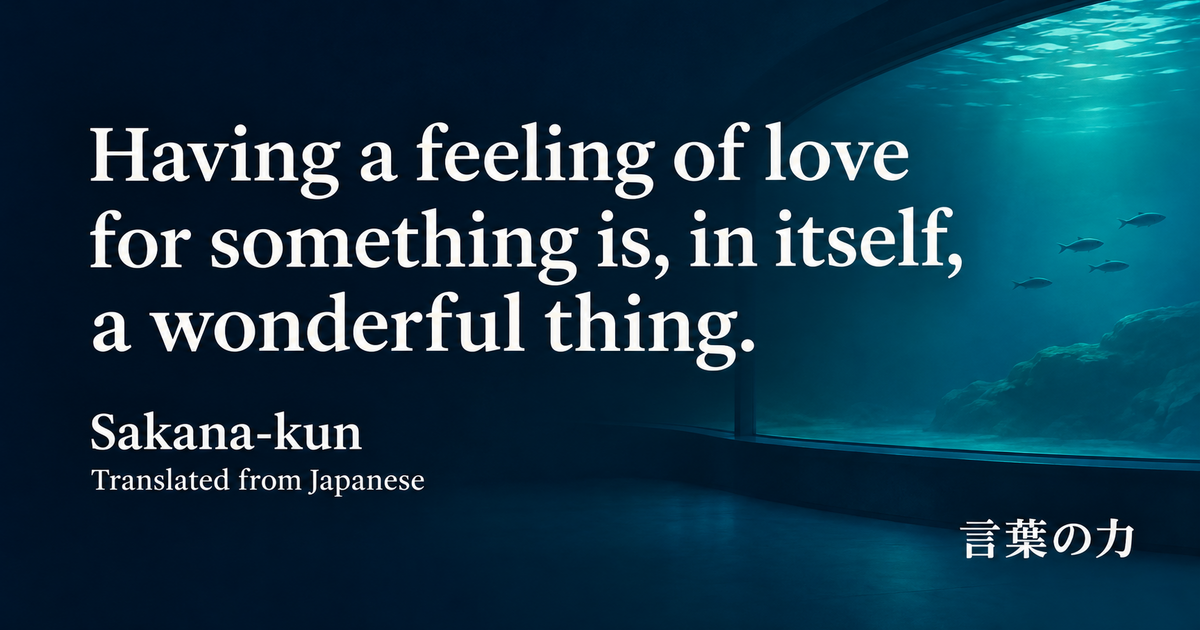
Having a feeling of love for something is, in itself, a wonderful thing. — Sakana-kun / Translated from Japanese / 言葉の力

Imagine being asked about your hobbies and pausing. You enjoy browsing new sweets, and you can spend ages in front of one aquarium tank. But you are not an expert, and you have nothing you have made to show for it. You find yourself beginning with, “Well, I wouldn’t really call it a hobby.”

Today’s quotation

Having a feeling of love for something is, in itself, a wonderful thing.

Sakana-kun — translated from Japanese by this article

Before fish came trucks and yokai

In a 2021 interview with Kodansha’s Cocreco, Sakana-kun said that trucks were his first great interest. He watched vehicles in the street and drew them. Later came Shigeru Mizuki’s yokai characters, then an octopus drawn by a school friend. His curiosity led him to real octopuses and eventually to fish.

This was not a story of choosing a future career and then pursuing fish from the beginning. First came the surprise of an interesting shape, the urge to look closer, and the wish to draw it.

Today’s quotation comes from his response to a question about children who seem unable to find an interest. He widened the conversation to food, pets, sports, and crafts, and mentioned his own love of sweets and musical instruments.

You can like it without being an expert

What follows is this article’s reflection on that idea in everyday life.

Sometimes, when we talk about something we enjoy, we feel obliged to prove our knowledge. If we like films, we should know directors. If we like flowers, we should identify varieties. If we like cooking, we should have a signature dish. We can end up setting ourselves an exam that nobody asked us to take.

But watching the faces of fish in an aquarium has its own pleasure. So does sharing and comparing two kinds of sweets. Not knowing every name does not erase the time we enjoyed.

Learning more can be a delight, too. We simply do not have to turn away a small pleasure before it has had the chance to grow.

One more fish to stop for

The next time someone asks about your hobbies, you may still have no polished answer. Even so, there are things your eyes keep returning to.

After reading Sakana-kun’s story, that small pull feels worth noticing. If a fish makes you stop in front of a tank, perhaps you will want to watch it a little longer.

Source and translation note

Kodansha Cocreco: Interview with Sakana-kun, Part 1, June 7, 2021. Interview and text by Sayuri Hoshino. Original article in Japanese.

English quotation translated from Japanese by this article; a single sentence excerpted from the interview. Sakana-kun did not make this statement in English in the cited source.

Related reading

Advertisement / Affiliate link: We may earn a commission from purchases made through this link.

If you would like to explore Sakana-kun’s life further, his autobiography さかなクンの一魚一会 ~まいにち夢中な人生!~ is published in Japanese by Kodansha. This is a separate reading suggestion, not the source of the quotation above. The linked marketplace is in Japanese.

Search results may include different languages, editions, used copies, ebooks or audio formats. Check the language, format, seller, total price and delivery terms before ordering.


Advertisement / Affiliate disclosure: The link below leads to our Rakuten ROOM. Product links within the ROOM are affiliate links, and we may earn a commission from purchases.

For moments spent enjoying the things you love, you can also browse a selection of small everyday pleasures in our Rakuten ROOM.

言葉の力|さかなクンと考える、上達しなくても好きな時間

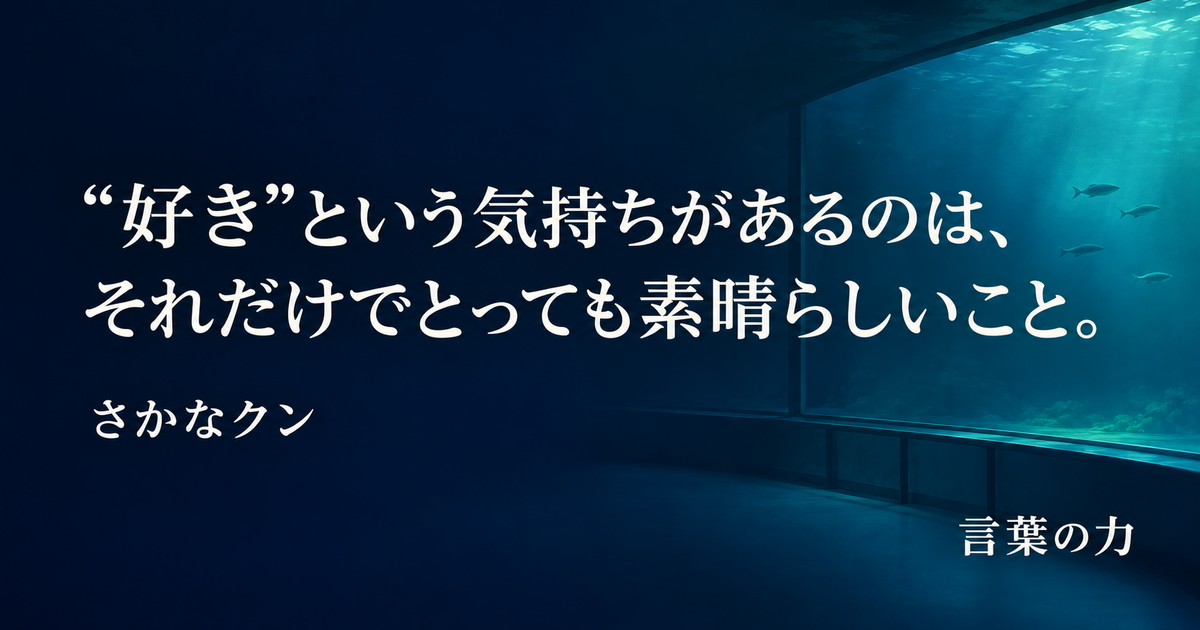
“好き”という気持ちがあるのは、それだけでとっても素晴らしいこと。 — さかなクン / 言葉の力

趣味を聞かれて、少し考える。お菓子の新商品を見るのは好きだし、水族館では同じ水槽の前に長くいる。でも、詳しいわけでも、何かを作れるわけでもない。「趣味と言うほどではないんですけど」と、つい前置きをしたくなる。そんな場面を想像してみてください。

今日の名言

“好き”という気持ちがあるのは、それだけでとっても素晴らしいこと。

さかなクン

魚の前は、トラックと妖怪だった

さかなクンは、2021年の講談社コクリコのインタビューで、最初に大好きになったのはトラックだったと話しています。街を走る車を見て絵を描き、その後は水木しげるさんの妖怪、そして友達が描いたタコの絵へ。そこから、本物のタコや魚への興味が広がっていったそうです。

最初から魚だけを見つめて、将来の仕事を決めていた、という話ではありません。目の前の形に驚き、もっと見たくなり、描きたくなる。その面白がり方が、先にあったことが伝わってきます。

今日の言葉が出てくるのは、好きなものが見つからない子どもについて尋ねられた場面です。さかなクンは食べ物やペット、スポーツや手芸にも話を広げ、自分もスイーツや楽器が好きだと答えています。

「詳しくないけど好き」のままで

ここからは、この言葉を日常に重ねた本記事の考察です。

好きなものを話すとき、私たちは時々、詳しさを証明しようとします。映画が好きなら監督の名前を、花が好きなら品種を、料理が好きなら得意料理を。聞かれてもいない試験を、自分で始めてしまうことがあります。

けれど、水族館で魚の顔を眺めている時間にも、好きなお菓子を半分ずつ食べ比べる時間にも、それぞれの楽しさがあります。名前を全部覚えなくても、その時間までなくなるわけではありません。

好きなことを深く学ぶ面白さも、もちろんある。ただ、深くなる前の小さな楽しみを、入口で追い返さなくてもよさそうです。

次の魚に、また足が止まる

次に趣味を聞かれたら、立派な説明が浮かばないかもしれません。それでも、自分の目がつい追ってしまうものはある。

さかなクンの話を読んだあとでは、その「つい」が少し楽しみに思えます。水槽の前で足が止まったら、今日はその魚を、もう少し眺めていたくなります。

出典・参照

講談社コクリコ「さかなクンインタビュー 子どもの“好き”の見つけ方・育て方/第1回」(2021年6月7日、取材・文:星野早百合)

英語は本記事による独自訳。原文の一文を抜粋。

関連書籍のご案内

【広告】この書籍リンクはアフィリエイト広告です。リンク経由の購入で運営者に報酬が発生する場合があります。

さかなクンの歩みに関心が湧いた方には、自叙伝『さかなクンの一魚一会 ~まいにち夢中な人生!~』(講談社)もあります。今回の名言を引用したインタビューとは別の書籍です。

検索結果には別の版・言語、中古品、電子書籍、音声版などが含まれる場合があります。購入前に言語・商品形態・販売店・総額・発送条件をご確認ください。


【広告】この先は楽天ROOMへのご案内です。ROOM内の商品リンクにはアフィリエイト広告が含まれ、購入により運営者に報酬が発生する場合があります。

好きなものを眺めたり、手を動かしたりする時間に。暮らしの小さな楽しみを楽天ROOMにもまとめています。

言葉の力|J.K.ローリング——短い返信の向こうに、まだ知らない一日がある

人は、想像の中で他の人の立場に身を置くことができます。 J.K.ローリング/本記事訳|言葉の力

友人から、今度の集まりには行けそうにないと連絡が来る。短い文面を見て、少しそっけないなと思う。けれど、こちらに見えているのは、その人の一日のうち、送信ボタンを押した数秒だけかもしれません。

自分の知らない事情に思いを向けること。『ハリー・ポッター』の作者、J.K.ローリングは、想像力を物語の中だけの力としては語りませんでした。

今日の名言

人は、想像の中で他の人の立場に身を置くことができます。

J.K.ローリング/ハーバード大学卒業式スピーチ、2008年6月5日(本記事訳)

魔法の物語を書く人が語った、もう一つの想像力

原文は “They can think themselves into other people’s places.”。直前の文にある人間を指す “They” を、日本語では「人は」と訳しています。

ローリングは卒業式のスピーチで、失敗と想像力という二つのテーマを選びました。想像力については、存在しないものを思い描く力だけでなく、自分が経験していないことを生きる人に共感する力でもある、と説明しています。

その背景として語ったのが、ロンドンのアムネスティ・インターナショナルで働いていた経験です。人権侵害の証言に触れ、また、同じ経験をしていない人々が支援のために行動する姿を知ったと述べています。

今回の一文は、その文脈にあります。空想すれば願いがかなう、という意味ではありません。他者の置かれた状況を理解しようとする想像力の話です。また、その力は人を操るためにも使えるとして、無条件に美化してはいません。

分からない部分を、決めつけで埋めない

ここからは、その大きな主題を身近な場面に重ねた、本記事独自の考察です。友人とのやりとりと、スピーチで語られた人権問題を同じ重さで扱うものではありません。

たとえば、集まりを断った友人には、疲れや家族の用事があるかもしれません。ただ、想像できるからといって、こちらが事情を当てられるわけではない。忙しいに違いない、気を使わせたに違いないと、別の物語で決めつけてしまうこともあります。

だから、この言葉を日常で受け取るなら、相手の事情が分かったつもりになるより、まだ見えていない部分があると気づく方が近い気がします。

残念に思う気持ちは、そのままでもいい。相手に必ず共感しなければ、と自分を追い込む必要もありません。自分の気持ちと、相手についてまだ知らないことは、両方あってよいのでしょう。

一通の連絡の向こうにも、一日がある

物語を読むとき、私たちは主人公が見ているものをたどります。実際の相手には、作者が説明してくれる地の文がありません。

短い連絡の向こうに、まだ読んでいない時間がある。その余白を残したまま、今回は残念、また会おうねと返す。そんなやりとりも、この想像力の小さな使い道かもしれません。

出典・参照

Harvard Gazette, Text of J.K. Rowling’s speech, June 5, 2008. スピーチ題目:The Fringe Benefits of Failure, and the Importance of Imagination。

引用原文:They can think themselves into other people’s places. 日本語訳は本記事による独自訳です。小説中の台詞ではなく、本人の卒業式スピーチの一文です。導入と友人の例は説明用の創作です。日常への読み替えは本記事独自の考察です。


※本記事にはアフィリエイト広告が含まれます。

暮らしの小さな楽しみを集めた、127のROOMもご覧いただけます。

The Power of Words | J.K. Rowling: The Unseen Day Behind a Short Reply

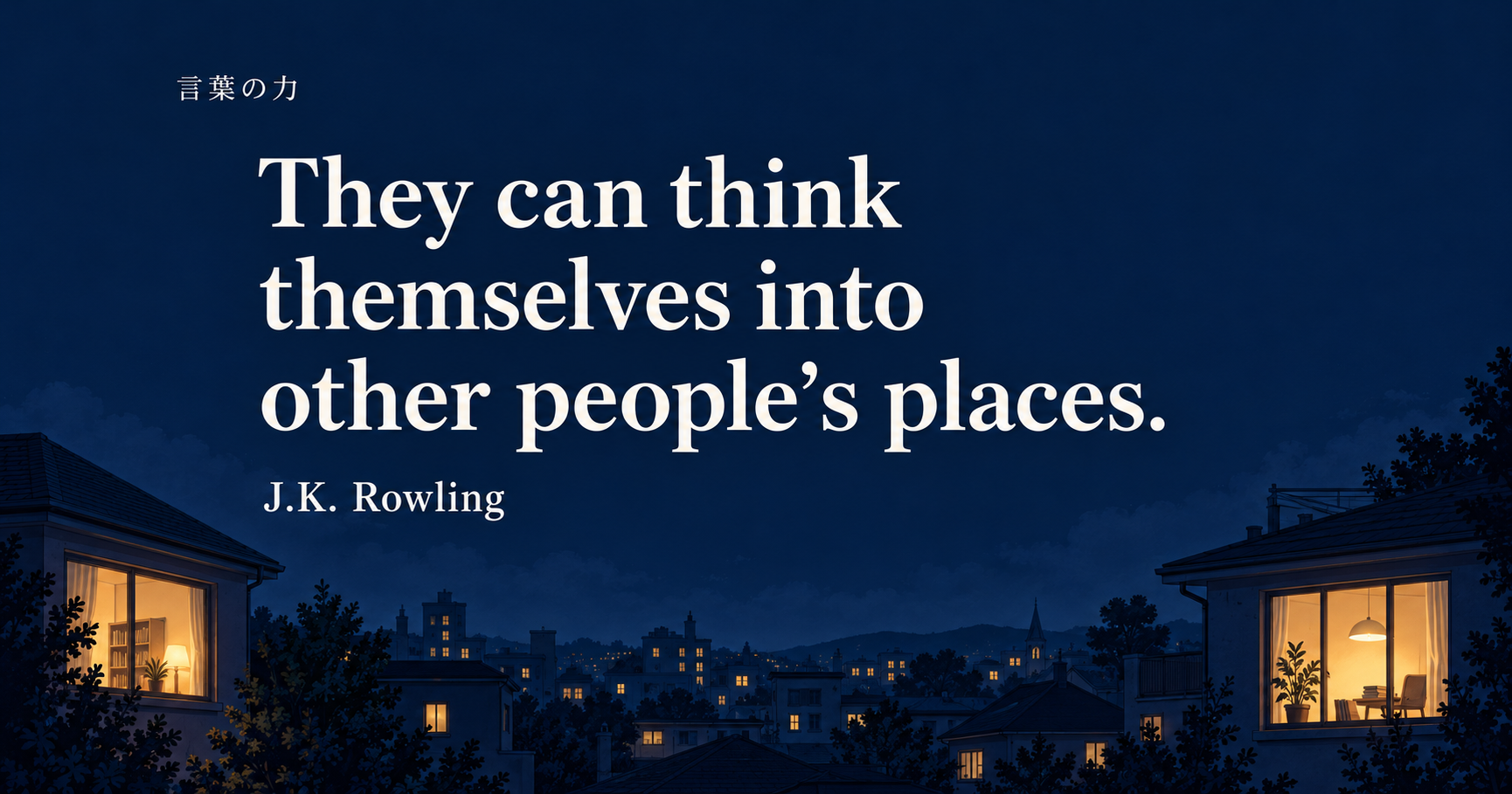
They can think themselves into other people’s places. J.K. Rowling|言葉の力

A friend sends a message saying they cannot make the next get-together. The wording is brief, and it feels a little distant. Yet what you can see may be only the few seconds in their day when they pressed send.

What about the circumstances you cannot see? J.K. Rowling, author of Harry Potter, spoke about imagination as a power that reaches beyond storytelling.

Today’s quote

They can think themselves into other people’s places.

J.K. Rowling / Harvard commencement address, June 5, 2008

Another kind of imagination

“They” refers to humans in the preceding sentence of the speech. The Japanese companion article makes that reference explicit in translation.

Rowling chose failure and imagination as the two themes of her commencement address. She described imagination not only as the ability to envision things that do not exist, but also as the capacity to empathize with people whose experiences we have never shared.

She connected this to her work at Amnesty International in London, where she encountered testimony about human rights abuses. She also described learning how people who had not endured those abuses could act on behalf of those who had.

The featured sentence belongs to that context. It is not a promise that imagining a wish will make it come true. It concerns trying to understand another person’s situation. Nor did Rowling idealize the power unconditionally: she noted that the same capacity could be used to manipulate people.

Leaving room for what we do not know

What follows is this article’s own everyday reflection on that larger subject. It does not equate a missed social gathering with the human rights issues discussed in the speech.

Perhaps the friend who declined is tired, or has family commitments. But being able to imagine possibilities does not mean we can correctly guess the circumstances. Assuming they must be busy, or must feel pressured, can simply replace one unsupported story with another.

An everyday reading of the quotation might therefore begin not with believing that we understand someone, but with noticing how much remains out of view.

You can still feel disappointed. There is no need to turn empathy into another demand on yourself. Your feelings and the things you do not yet know about the other person can both exist.

There is a day on the other side of a message

In a novel, we can follow what a character sees. In real life, there is no narrator explaining the other person’s circumstances.

Behind a brief message are hours we have not read. Leaving that space open, you might answer that you are sorry to miss them and hope to meet another time. Perhaps that, too, is a small use for imagination.

Source and translation notes

Harvard Gazette, Text of J.K. Rowling’s speech, June 5, 2008. Address title: The Fringe Benefits of Failure, and the Importance of Imagination.

The featured quotation reproduces the English wording of Rowling’s speech, not dialogue from a novel. The Japanese companion uses this article’s own translation: 人は、想像の中で他の人の立場に身を置くことができます。 The opening and friendship examples are fictional illustrations. The everyday application is the article’s interpretation.

Affiliate link — This link opens a Japanese shopping site.


Disclosure: This article contains affiliate links.

For small everyday discoveries, you can also explore 127’s ROOM.

The Power of Words | Jun Miura: Looking at Old Photos Without Keeping Score

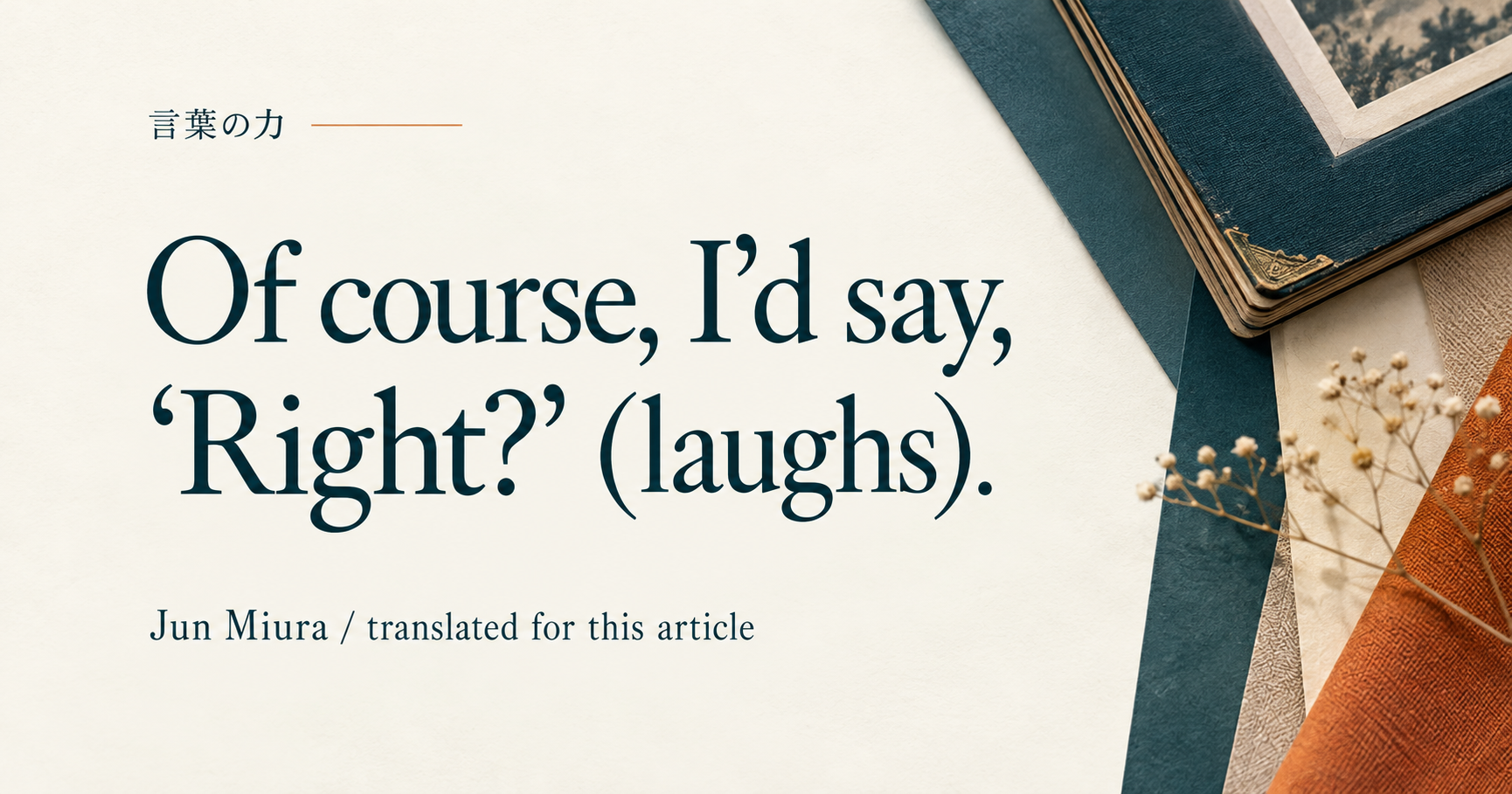
Of course, I’d say, ‘Right?’ (laughs). Jun Miura / translated for this article|言葉の力

Imagine looking through old photographs. First comes surprise at the hairstyle, then laughter at the clothes. After that, you notice how different your face looks now. Some days, nostalgia is not the only feeling that follows.

Changes with age often invite a familiar measure: do I still look young? Jun Miura finds a way to change the rules of that measurement.

Today’s quote

Of course, I’d say, ‘Right?’ (laughs).

Jun Miura / Hobonichi interview, November 13, 2024. Translated for this article.

An unexpected answer to “You look older”

This was not an account of something Miura had actually said to someone. In the interview, he was developing an imaginary exchange about how he would respond if told that he suddenly looked older.

He began with the descriptive names of old men in Japanese folk tales, including the old man who makes flowers bloom and the old man whose lump is removed. What label might fit him? He proposed the old man of personal enthusiasms, playing on the expression “my boom,” associated with his work. He shortened the Japanese label to “Maijii.”

From there, he jokingly described deliberately cultivating an older appearance to fit the character. Under those rules, being told that he looked older would mean his project was working. Hence the reply featured here. The joke continues: if someone heard his age and said he was still young, he would have to pretend that his efforts were not yet enough.

This is less a one-line cure for anxiety about aging than a playful reversal of an ordinary judgment.

No need to compete with your old photographs

What follows is this article’s own reflection on the exchange.

When an old photograph makes the present feel like the losing side, appearance may be doing most of the comparing. Yet today might also include a favorite restaurant you had not discovered then, or friends with whom you no longer need to put on a performance.

That does not mean changes in appearance stop mattering. But the same photograph can support another conversation: apparently I thought that hairstyle was an enormous success. A moment of comparison has room to become a story instead.

In Miura’s joke, even the compliment that he looks young misses the character he is trying to become. Change what counts as praise, and a familiar conversation suddenly resembles a comedy sketch.

Of course, some people do not want comments about their age or appearance. Nobody owes an amused answer to an unwelcome remark. This is not a universally correct response to copy, but one person’s playful way of looking at his own changes.

An album is not a scorecard

Once the photograph is put away, the face in the mirror is your present one. You may not return to the old hairstyle, but you do have this present moment in which to laugh about it.

Miura’s reply has the lightness of stepping away, briefly, from waiting to be judged or praised. Perhaps our changes need not be viewed through the same old measure every time.

Source and translation notes

Hobonichi, “Miura Jun ni Kike! Out-Rou Hen,” part 2, “My Boom Jiisan,” November 13, 2024 (Japanese). Read the interview.

Original: もちろん、「でしょ?」と返しますね(笑)。 The featured English wording is this article’s own translation, not an English statement by Miura. The source exchange is hypothetical, not a reported incident. The photograph scenes are fictional illustrations; the everyday reflections are the article’s interpretation.

Affiliate link — This link opens a Japanese shopping site.


Disclosure: This article contains affiliate links.

For small everyday discoveries, you can also explore 127’s ROOM.

言葉の力|みうらじゅん——昔の写真と、今の自分を比べてしまう日に

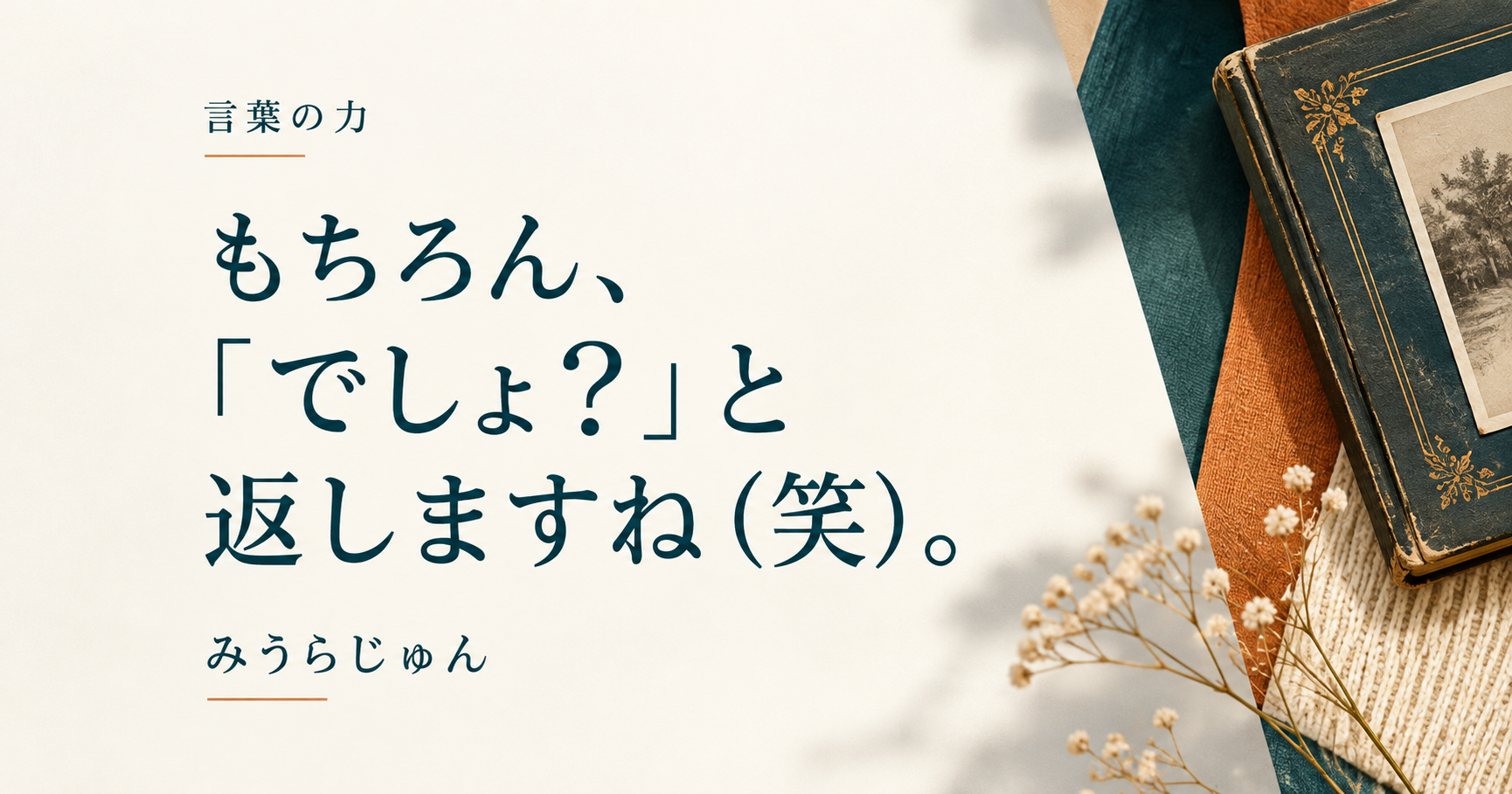
もちろん、「でしょ?」と返しますね(笑)。 みうらじゅん|言葉の力

昔の写真を見返して、まず髪形に驚く。こんな服を着ていたのかと笑って、それから、今とはずいぶん顔が違うことに気づく。懐かしいだけでは済まない日もあるかもしれません。

年齢の変化を前にすると、若く見えるかどうかの物差しを持ち出しがちです。みうらじゅんさんは、その物差しの使い方から、ひょいと変えてみせます。

今日の名言

もちろん、「でしょ?」と返しますね(笑)。

みうらじゅん/ほぼ日「みうらじゅんに訊け! アウト老編」第2回、2024年11月13日

「老けた?」への、意外な返し方

この言葉は、誰かに実際に言い返した体験談ではありません。インタビューで、もし最近急に老けたと言われたらどうするか、という仮の会話を展開した場面での発言です。

みうらさんは、昔話の「花さかじいさん」や「こぶとりじいさん」を引き合いに、自分ならどんな呼び名になるかを考えます。「マイブームじいさん」、縮めて「マイジー」。そして、その人物像に合わせて、あえて老けて見えることを楽しむ「老けづくり」を始める、という話になるのです。

その設定なら、老けたと言われても、取り組みが伝わったことになる。そこで出てくるのが、今日の返答です。さらに、年齢を答えて若いと言われたら、まだ足りないというふりをするところまで、冗談は続きます。

老いの悩みを一言で解決する助言というより、ふだんの評価をひっくり返す、みうらさんらしい言葉遊びです。

写真の中の自分と、勝負しなくても

ここからは、このやりとりを日常に重ねた本記事独自の考察です。

昔の写真を見て、今の自分が負けたように感じるとき、比べているのは主に見た目かもしれません。でも、その写真の頃には知らなかった好きな店や、気を張らずに会える友人が、今はいることもあります。

外見の変化が気にならなくなる、という話ではありません。ただ、同じ写真を見ながら、あの頃はこの髪形が大成功だと思っていたんだな、と別の話もできる。比較の時間が、思い出話に変わる余地はありそうです。

みうらさんの冗談では、若く見えるという褒め言葉さえ、目指す人物像とは違うということになる。何をよい評価とするかが変わると、いつもの会話が急にコントのように見えてきます。

もちろん、年齢や容姿について言われたくない人もいます。嫌な言葉に笑って返す義務はありません。この返答は、誰にでも勧める受け答えの正解ではなく、本人が自分の変化を面白がるための一例です。

アルバムは、採点表ではない

写真を閉じたあと、鏡に映るのは今の自分です。昔の髪形には戻らなくても、昔の写真を笑って見られる今の時間はあります。

みうらさんの「でしょ?」には、ほめられる側の席から、いったん降りてみるような軽さがあります。自分の変化を、いつもの物差しだけで眺めなくてもいい。そんな余韻が残ります。

出典・参照

ほぼ日「みうらじゅんに訊け! アウト老編」第2回「マイブームじいさん。」、2024年11月13日。掲載インタビュー。

引用は掲載インタビューの日本語原文です。英語版の確定訳は “Of course, I’d say, ‘Right?’ (laughs).”(本記事独自訳)。本人が英語で述べた言葉ではありません。仮の会話と実際の体験談を区別しています。写真の導入や日常例は本記事の創作で、本人の体験ではありません。


※本記事にはアフィリエイト広告が含まれます。

暮らしの小さな楽しみを集めた、127のROOMもご覧いただけます。