言葉の力|宮沢賢治「イツモシヅカニワラッテヰル」——いつも笑えなくても、やわらかく戻れる場所を

※本記事にはアフィリエイト広告が含まれます。

「イツモシヅカニワラッテヰル」

宮沢賢治「〔雨ニモマケズ〕」より

朝から少し、言い方が強くなってしまった。

急いでいたし、考えることも多かった。理由はあるけれど、あとになって、自分の声だけが頭の中で再生されます。

もっと普通に言えたな。

そう思うと、一日の最初につまずいたような気持ちになることがあります。

そんなとき、この静かな一節を思い出します。

笑顔を、もう一つの義務にしない

「イツモシヅカニワラッテヰル」。

詩には、賢治が「サウイフモノニ/ワタシハナリタイ」と記す願いもあります。

ここからは、私自身の受け止め方です。

この言葉を、「どんなときも笑顔でいなければならない」と自分に言い聞かせるためには使いたくありません。

疲れているときも、困っているときもあります。笑えない日まで、笑顔の出来栄えを採点したら、少し苦しい。

むしろ、余裕をなくした自分が、戻ってきたい姿として持っておく。

それくらいの距離で、この言葉に触れていたいと思います。

一度きつく言ったら、その日が終わるわけではない

朝の言葉を取り消すことはできなくても、そのあとに別の言葉を足すことはできます。

「さっきは、言い方がきつかったね」
「急いでいて、ごめん」
「もう一度、聞かせて」

大げさな反省会にしなくても、短い一言で向き直ることはできます。

相手がすぐに笑ってくれるとは限りません。それでも、自分の態度を整え直すことには意味があると思うのです。

機嫌のよさより、扱い方のやさしさ

いつも明るく、話が面白く、誰にでも気が利く。

そんな人になれたら素敵ですが、毎日その全部を用意するのは大変です。

今日は、返事を少し丁寧にする。相手が話し終えるまで待つ。疲れているなら、無理に会話を続けず、そのことを伝える。

笑顔そのものではなく、相手と自分を雑に扱わないことから始めてもいいのでしょう。

今日はずっと穏やかではなかった。

それでも、次の一言は選べる。

この詩の一節を、失敗しないための規則ではなく、やわらかく戻ってくるための目印にしたいと思います。

引用・詩の出典:青空文庫:宮澤賢治「〔雨ニモマケズ〕」

今、どんな気分?

人との関係に悩んでいる——同じ気持ちに寄り添う言葉を読む

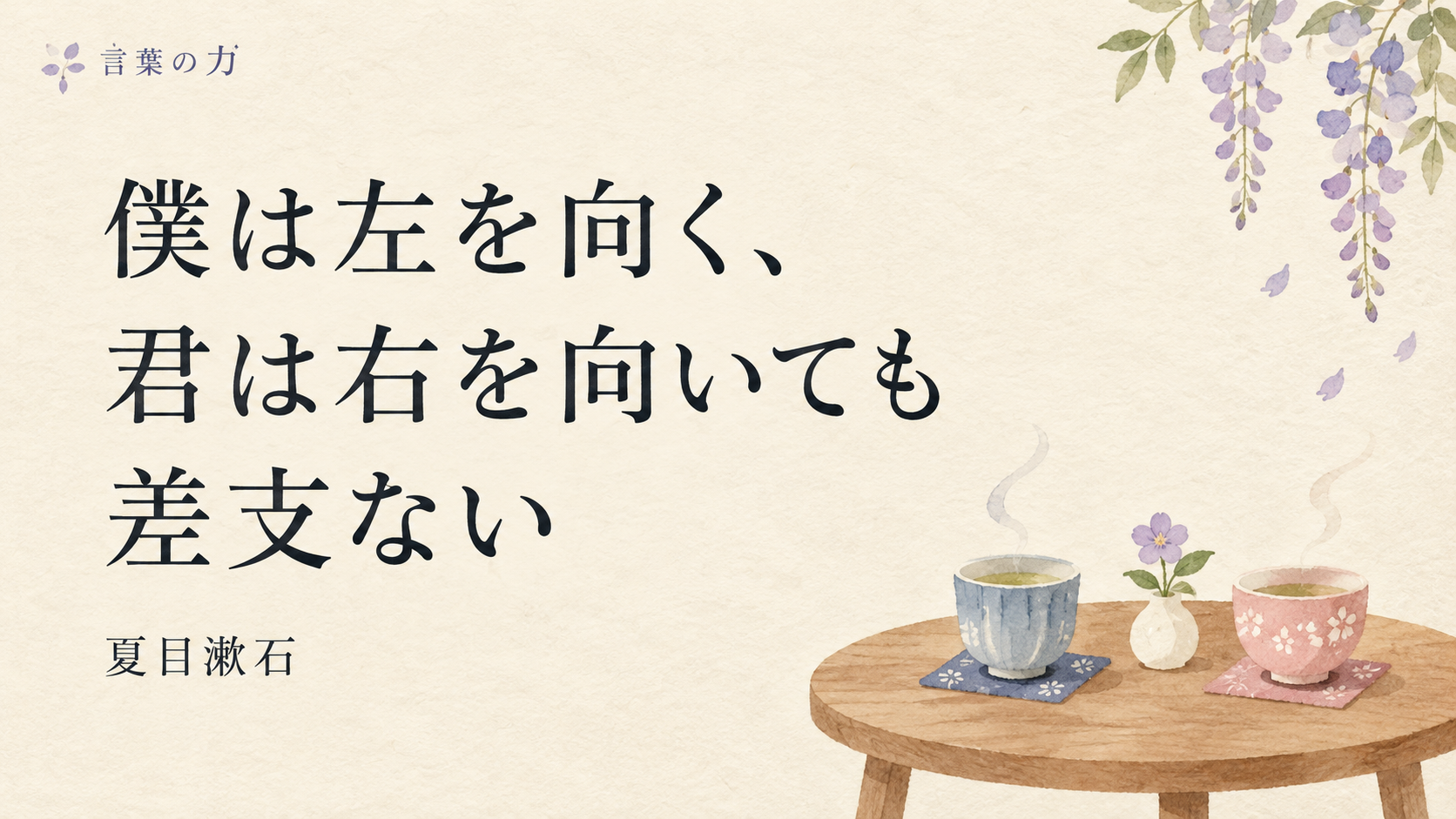
言葉の力|夏目漱石「僕は左を向く、君は右を向いても差支ない」——違う意見を、すぐに距離へ変えない

※本記事にはアフィリエイト広告が含まれます。

「僕は左を向く、君は右を向いても差支ない」

夏目漱石「私の個人主義」より

前後では、他への影響に触れながら、自分にも他人にも自由を認めることが述べられています。

自分がよかったと思ったものを、相手はそうでもないと言う。

映画でも、休日の過ごし方でも、仕事の進め方でも。

ただ好みが違っただけなのに、少しだけ、自分まで否定されたような気がすることがあります。

「そうなんだ」と言いながら、心の中では小さな説明会が始まる。

いや、でも、ここがよくてね。

気づけば、感想を話していたはずが、説得に変わっているのです。

同じ感想でなくても、話は続けられる

漱石の文章にある「僕は左を向く、君は右を向いても差支ない」という表現を、日常の会話に重ねてみます。

ここからは私自身の受け止め方です。

同じものを好きになってもらえるとうれしい。

でも、それだけを会話の成功にしなくてもいいのでしょう。

「どのあたりが合わなかった?」
「そういう見方もあるんだね」

相手の感想を変えるためではなく、違う見方を知るために聞いてみる。

一致しないままでも、話が深くなることはあるはずです。

自分の好きを、説明しすぎなくてもいい

反対に、自分の好きなものを分かってもらえないときもあります。

そんなとき、相手が納得するまで、自分の好きを弁護し続けなくてもいい。

「私はここが好きなんだ」。

そこまで伝えて、いったん置くこともできます。

相手に同じ感想を求めないことは、自分の気持ちを引っ込めることとは違います。

自分の好きを大切にしながら、相手の違いも残しておく。その両方を持ちたいのです。

尊重することと、何でも受け入れることは別

もちろん、違いを認めることは、相手を傷つける行為まで、そのまま認めることではありません。

共同作業には約束も必要ですし、困ることには境界線を引いてよいと思います。

そのうえで、好みや考えが違うだけの場面まで、勝ち負けにしなくてもいい。

今日、誰かと意見が分かれたら、「違うんだな」のあとに、少し間を置いてみる。

すぐに説得しない。すぐに嫌われたと決めない。

同じ方向を向いていなくても、同じ場所で話せる。

そんな関係を、大切にしていきたいと思います。

引用・背景の出典:青空文庫:夏目漱石「私の個人主義」

今、どんな気分?

人との関係に悩んでいる——同じ気持ちに寄り添う言葉を読む

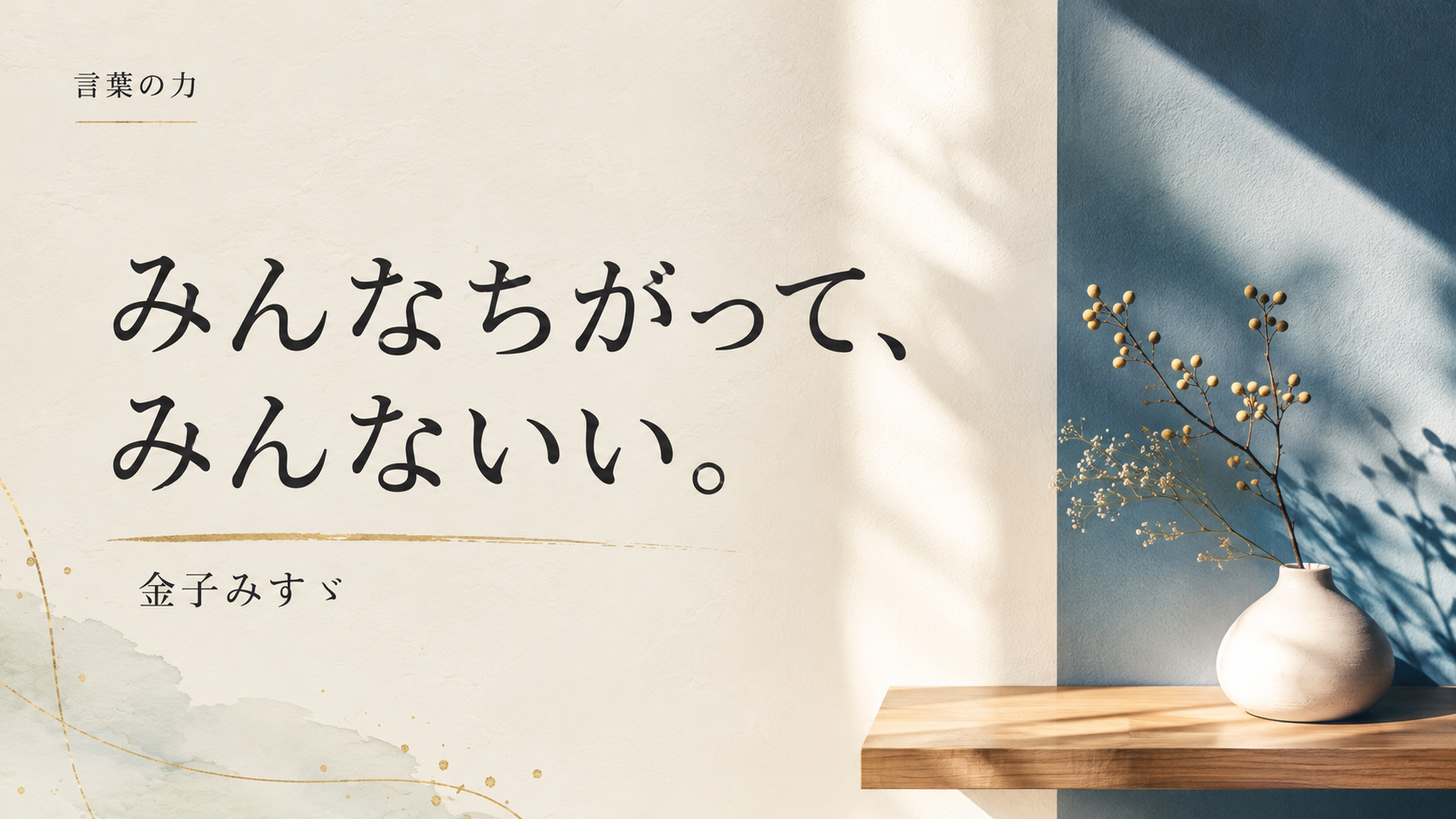
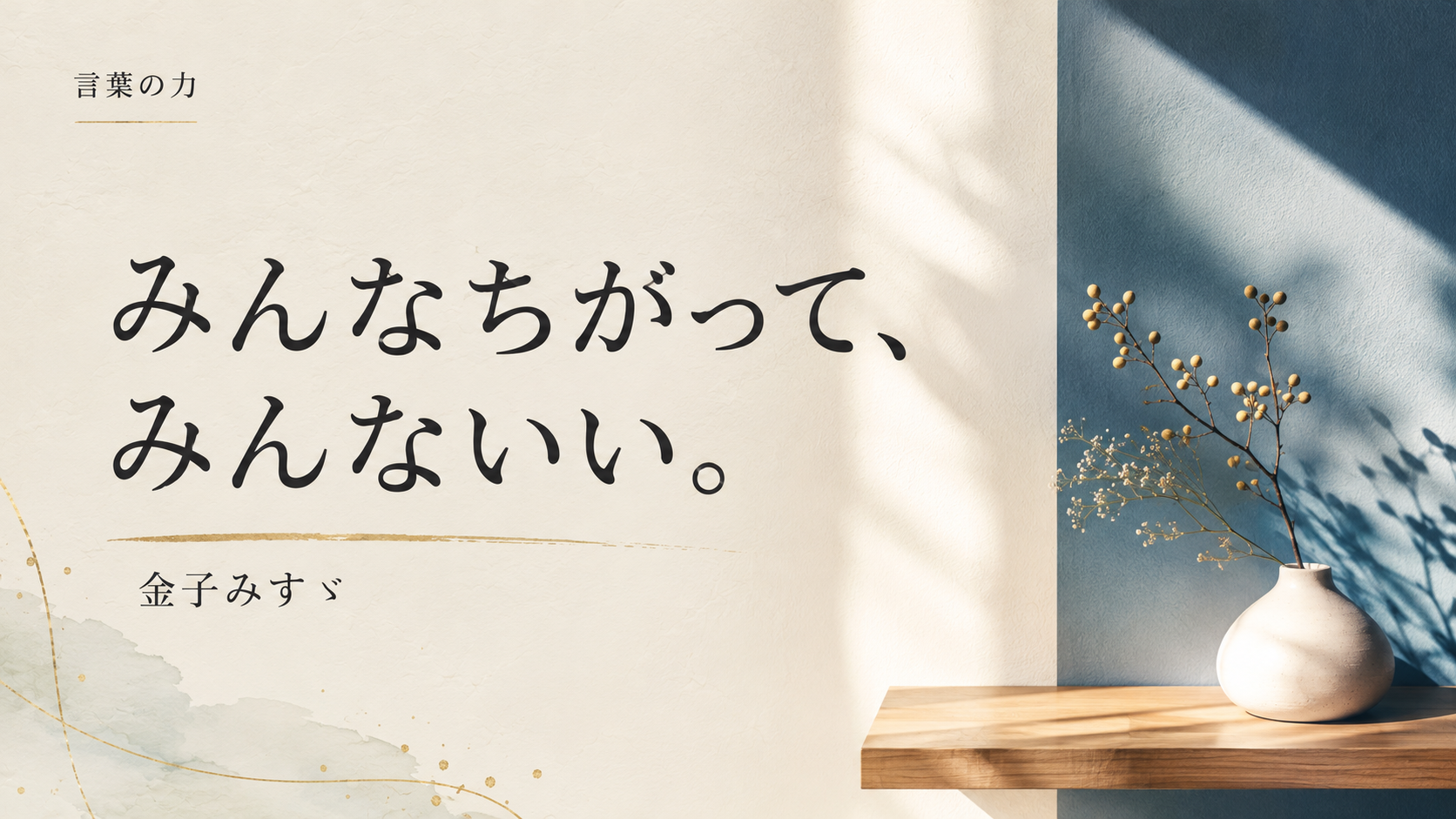
言葉の力|金子みすゞ「みんなちがって、みんないい。」——得意な人の隣で、自分を小さくしない

※本記事にはアフィリエイト広告が含まれます。

「みんなちがって、みんないい。」

金子みすゞ「私と小鳥と鈴と」より

誰かの得意なことを見ると、自分にないものが急に気になることがあります。

あの人は話がうまい。
仕事が速い。
初めての人とも、すぐ打ち解ける。

それに比べて自分は、と考え始めると、自分の長所だけが上手に隠れてしまう。

そんな日に、金子みすゞの「みんなちがって、みんないい。」を読み返したくなります。

詩には、空を飛ぶ小鳥、音を鳴らす鈴、そして「私」が登場します。それぞれにできることと、できないことが描かれています。

ここからは、その詩を日常に重ねた私自身の受け止め方です。

誰かの得意を、自分の欠点に変えない

話のうまい人を見て、「自分は話すのが遅い」と思う。

でも、その人のよさを認めることと、自分を悪く評価することは、本来別のはずです。

「説明がわかりやすいな」で止めてもいい。
「そのやり方は参考になるな」と受け取ってもいい。

相手を褒めるたびに、自分を一段下げなくてもかまいません。

誰かの得意が、自分の価値を減らすわけではない。そのことを、忘れずにいたいものです。

目立たない働き方も、確かにある

会議ですぐ意見を言える人もいれば、話を聞いたあとで、抜けていた点に気づく人もいます。

勢いよく始められる人もいれば、続けやすい形に整えるのが得意な人もいる。

目立つ場面が違えば、評価されやすさも変わるでしょう。

だから、自分を確かめるときは、「人前で目立てたか」だけでなく、「何を支えたか」も見てみたいと思います。

小さな確認をした。
相手の話を整理した。
次の人が困らないよう、ひと言残した。

そういう働きまで、なかったことにしなくていいのです。

違っていてよいことと、見直してよいこと

この言葉を、「何も変えなくていい」という意味に狭めたくはありません。

苦手なことを練習してもいいし、困っている習慣を直してもいい。

ただ、その出発点を「今の自分は駄目だから」にしなくてもいいのだと思います。

自分を否定しなくても、変わることはできます。

そして、他人との違いを大切にすることは、相手の困りごとを無視したり、傷つける行為をそのまま認めたりすることとも違います。

今日、誰かがまぶしく見えたら、その人のよさを一つ認める。

そのあとで、自分が今日できたことも一つ拾ってみる。

同じでないから、足りないのではない。

そんな見方を、机の隅に置く小さな言葉のように、持っておきたいと思います。

引用・詩の出典:長門市・金子みすゞ記念館 矢崎節夫館長コラム「私と小鳥と鈴と」

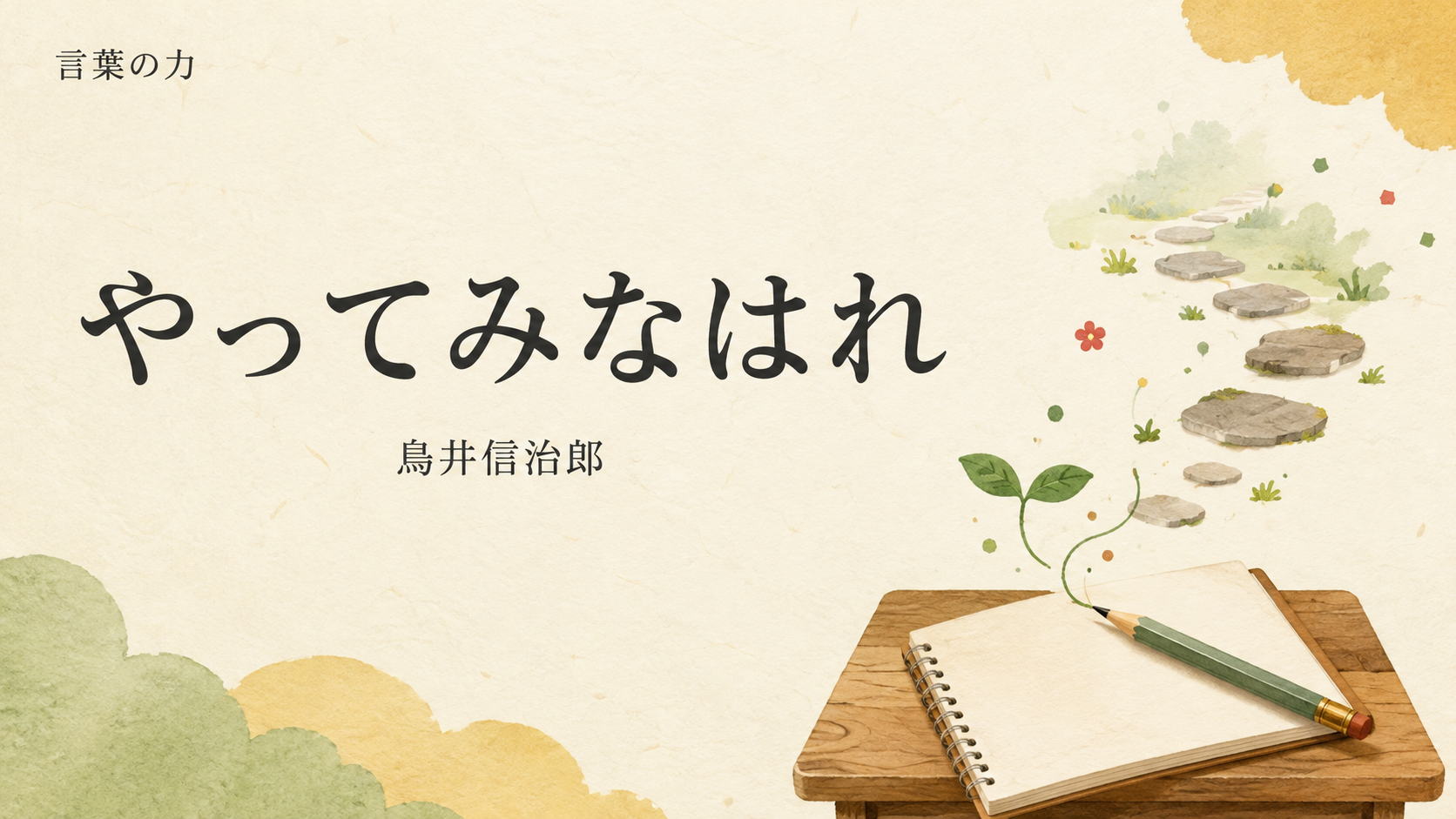
言葉の力|鳥井信治郎「やってみなはれ」——準備が終わるのを、いつまで待とう

※本記事にはアフィリエイト広告が含まれます。

「やってみなはれ」

鳥井信治郎

何かを始めようと思って、まず調べる。

必要なものを確認して、評判を読んで、失敗しない方法を探す。気づけば、始めるために開いたスマートフォンを見たまま、時間だけが過ぎています。

準備は進んだ。
比較表もできた。
でも、まだ一度もやっていない。

そんな日に思い出したいのが、「やってみなはれ」という言葉です。

サントリーの公式紹介では、この言葉は創業者・鳥井信治郎の口癖であり、未知の分野に挑む精神と結び付けられています。ここからは、その言葉を日常に重ねた私自身の受け止め方です。

調べることで、安心まで手に入れようとしていないか

始める前に確認することは大切です。

けれど、必要な情報を集めることと、不安が完全になくなるまで調べることは、少し違うのかもしれません。

文章を書きたいのに、書き方の解説ばかり読む。
散歩を始めたいのに、歩くための道具ばかり探す。
部屋を整えたいのに、収納の実例だけが増えていく。

調べたことを無駄にしないためにも、どこかで一度、実物に触れてみたいものです。

最初の一回を、小さくする

「やってみる」と聞くと、大きく踏み出さなければならない気がします。

でも、最初から立派な挑戦にしなくてもいいでしょう。

記事を一本書く前に、最初の三行だけ書く。
部屋全体を片づける前に、机の右端だけ空ける。
毎日運動すると決める前に、今日は家の周りを五分歩く。

始める大きさを小さくすると、試したあとに考え直す余地も残ります。

これは、言葉の原意を断定するものではなく、暮らしの中で私が取り入れたい方法です。

やってみた結果を、自分の採点だけに使わない

実際にやると、思ったより難しいこともあります。

だからといって、「やっぱり自分は駄目だった」で終わらせるのは、少し惜しい気がします。

どこで手が止まったのか。
何が足りなかったのか。
反対に、意外と楽しかったのはどこか。

やってみたからこそ、次に考える材料が生まれます。

もちろん、安全や健康、大きな出費に関わることまで、勢いだけで決める必要はありません。確認や相談が必要な場面は分けて考えたいものです。

今日は、失敗しない自分を完成させるより、小さく試せることを一つ選ぶ。

準備中のままになっている何かに、五分だけ触れてみる。

「やってみなはれ」を、自分を急かす掛け声ではなく、最初の一回を軽くする言葉として持っておきたいと思います。

引用・背景の出典:サントリー「やってみなはれ」の歴史

The Power of Words | Shinjiro Torii: Before Preparation Becomes a Place to Hide

Disclosure: This article contains affiliate advertising.

“Give it a try.”

Shinjiro Torii — translated for this article from “やってみなはれ”; not an official translation.

Suntory’s official history presents the phrase as an expression of its founder’s pioneering spirit.

We decide to begin something—and first, we research.

We check what we need, read reviews, and search for ways to avoid mistakes. Before long, the time we set aside for beginning has disappeared into the phone in our hands.

The preparation has advanced.
The comparison chart is ready.
But we have not tried it once.

That is when I want to remember these words: “Give it a try.”

What follows is my personal reflection on applying them to everyday life.

Are we gathering information—or waiting for certainty?

Checking things before we begin matters.

But collecting the information we need is different from researching until every uneasy feeling disappears.

We want to write, yet keep reading about writing. We want to take walks, yet keep comparing equipment. We want to tidy a room, yet keep saving pictures of storage ideas.

At some point, we can give that preparation somewhere to go by trying the activity itself.

Make the first attempt smaller

Trying something does not have to mean making a grand commitment.

Before writing an article, write three opening lines. Before tidying a room, clear one corner of the desk. Before promising to exercise every day, walk around the neighborhood for five minutes.

A smaller beginning leaves room to reconsider after the attempt.

This is my own everyday application of the quotation, not a claim about its original meaning.

Let the result become information, not just a verdict

Once we try, something may be harder than expected.

But stopping at “I knew I was no good at this” seems to lose part of what we learned.

Where did we get stuck? What was missing? What was unexpectedly enjoyable?

The attempt gives us something more concrete to work with.

Of course, decisions involving safety, health, or significant spending should not be made on enthusiasm alone. Some situations call for careful checks and advice.

Today, instead of preparing to become someone who never fails, choose one small thing you can safely test.

Give five minutes to something that has been waiting in preparation.

Let “Give it a try” make the first attempt lighter, rather than make you feel hurried.

Quotation and background source: Suntory’s history of “Yatte Minahare” (Japanese).

The Power of Words | Misuzu Kaneko: Someone Else’s Strength Does Not Make You Smaller

Disclosure: This article contains affiliate advertising.

“We are all different, and each of us is good.”

Misuzu Kaneko, “私と小鳥と鈴と” (“Me, the Little Bird, and the Bell,” title translated for this article).

The quotation is translated here from the Japanese text published in the Kaneko Misuzu Memorial Museum director’s column on Nagato City’s website; this is not an official English translation.

Someone else’s strengths can make us suddenly notice everything we think we lack.

They speak confidently. Work quickly. Feel at ease with people they have just met.

Once we begin comparing, our own strengths seem remarkably good at hiding.

On days like that, I want to return to Misuzu Kaneko’s words.

Her poem brings together a little bird, a bell, and the speaker, describing things each can and cannot do.

What follows is my personal reflection on everyday life.

Do not turn someone’s strength into your shortcoming

We hear someone explain something well and immediately think, “I am too slow when I speak.”

But appreciating them and judging ourselves are separate acts.

We can stop at “That was clear.” We can think, “There is something I could learn from that.”

We do not have to lower ourselves every time we praise someone else.

Their strength does not reduce our worth.

Some contributions are quieter

One person offers an idea immediately. Another notices something missing after listening carefully.

One person gets a project moving. Another makes it easier to sustain.

Different situations make different contributions more visible.

When reflecting on your day, ask not only, “Did I stand out?” but also, “What did I help support?”

You checked a detail. Organized someone’s thoughts. Left a note so the next person would not struggle.

Those contributions do not have to disappear because they were quiet.

Being different and choosing to grow can coexist

I do not want to narrow this quotation into “Nothing ever needs to change.”

We can practice a difficult skill or reconsider a troublesome habit.

But we do not have to begin with the belief that our present selves are worthless.

We can change without rejecting ourselves. Respecting differences also does not mean ignoring someone’s needs or accepting harmful behavior.

If someone seems especially impressive today, acknowledge one good thing about them.

Then notice one thing you did, too.

Being different does not automatically mean being deficient. I would like to keep that thought close, like a small note at the corner of a desk.

Quotation and poem source: Nagato City: Kaneko Misuzu Memorial Museum director Setsuo Yazaki’s column, “私と小鳥と鈴と” (Japanese).

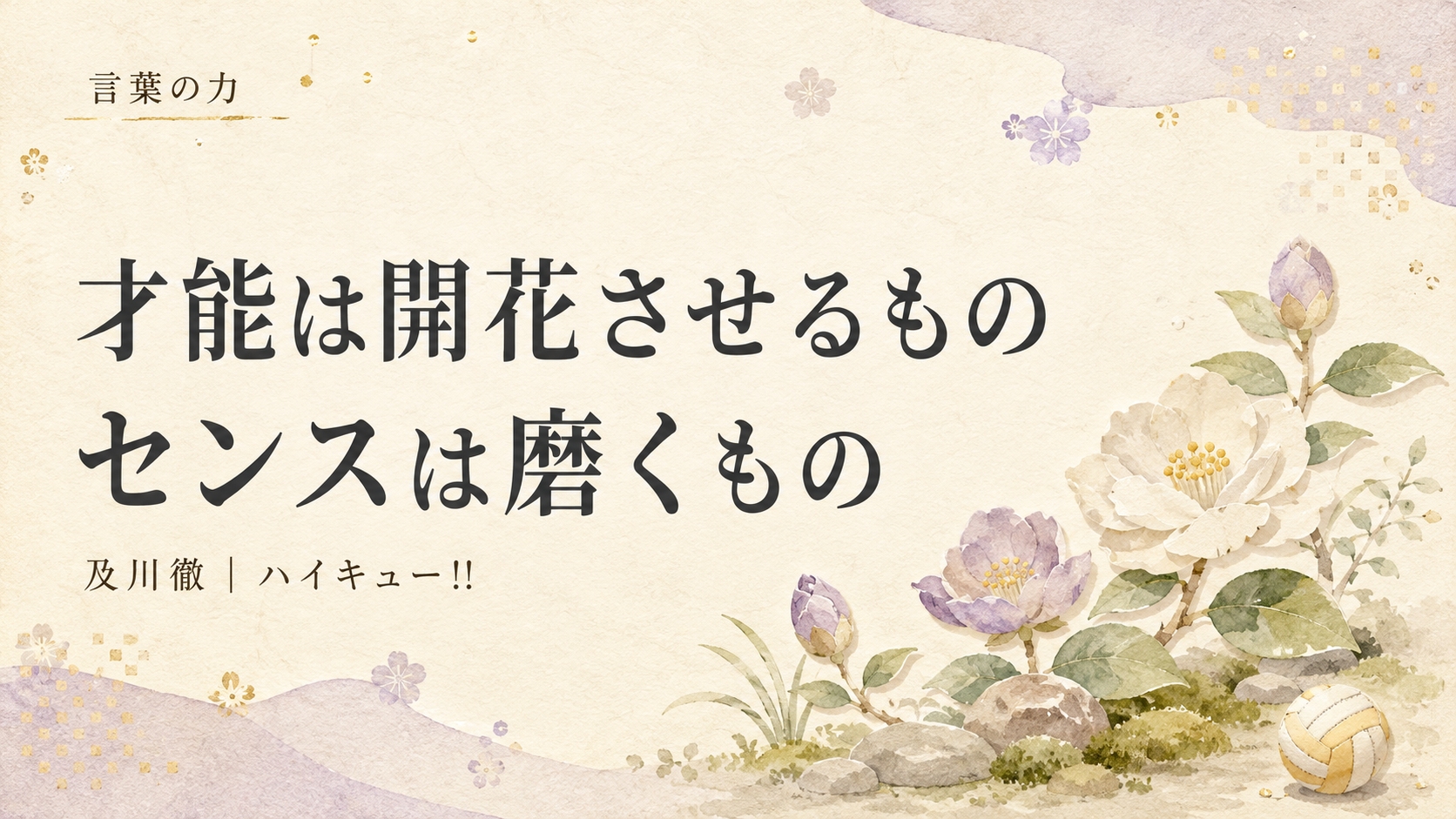
言葉の力|及川徹「才能は開花させるもの センスは磨くもの」——向いていないと決める前に

※本記事にはアフィリエイト広告が含まれます。

「才能は開花させるもの センスは磨くもの」

古舘春一『ハイキュー!!』の及川徹の言葉。名言の杜と名セリフ紹介で確認した表記です。原作の語句・句読点・場面は公開前に最終照合が必要です。

誰かが上手にできている姿を見ると、自分との間に、越えられない差があるように感じることがあります。

あの人は、もともと才能がある。
自分にはセンスがない。
頑張っても、ここまでなのかもしれない。

そんなふうに、今の出来栄えから、自分の未来まで決めてしまう。

及川徹のこの言葉で私が気になるのは、「才能」や「センス」という名詞だけではありません。

「開花させる」「磨く」という、動きのある言葉です。

ここからは、作品から離れた私自身の解釈です。

今できないことを、性質にしない

文章がうまく書けなかったとき、「今回の文章は伝わりにくい」と考えることはできます。

でも、「自分には文章の才能がない」と言い切ると、直せる場所まで見えなくなりそうです。

何が伝わりにくかったのか。
説明が足りないのか。
順番がわかりにくいのか。

具体的にできるほど、次に試すことが見つかります。

もちろん、努力すれば誰でも同じ結果に届くとは限りません。環境や時間、得意不得意にも違いがあります。

それでも、今の結果を自分の固定された性質として扱わないことには、意味があると思います。

「もっと頑張る」より、一つ磨く

うまくなりたいと思うと、練習の量を増やしたくなります。

でも、ただ回数を重ねるだけでは、同じところで困り続けることもあります。

今日は、最初の一文だけ直してみる。
前回間違えた問題を、一つ説明してみる。
誰かに、わかりにくかった場所を聞いてみる。

全部を一度に変えるより、一つの部分を丁寧に見る。

私には、それが「磨く」という言葉に近く感じられます。

育てる時間には、休む時間も含めたい

結果が見えない時期は、何も変わっていないように思えます。

けれど、続けるかどうかを考えるときには、成果だけでなく、自分の負担も確かめたいものです。

睡眠を削っていないか。
生活のほかの部分が苦しくなっていないか。
今の方法を少し変えられないか。

自分を追い詰めることと、力を育てることは同じではありません。

「向いていない」と決める前に、今日一つだけ、磨けるところを探す。

誰かの完成した姿ではなく、自分の次の変化を見る。

この言葉を、そんな小さな練習のきっかけにしたいと思います。

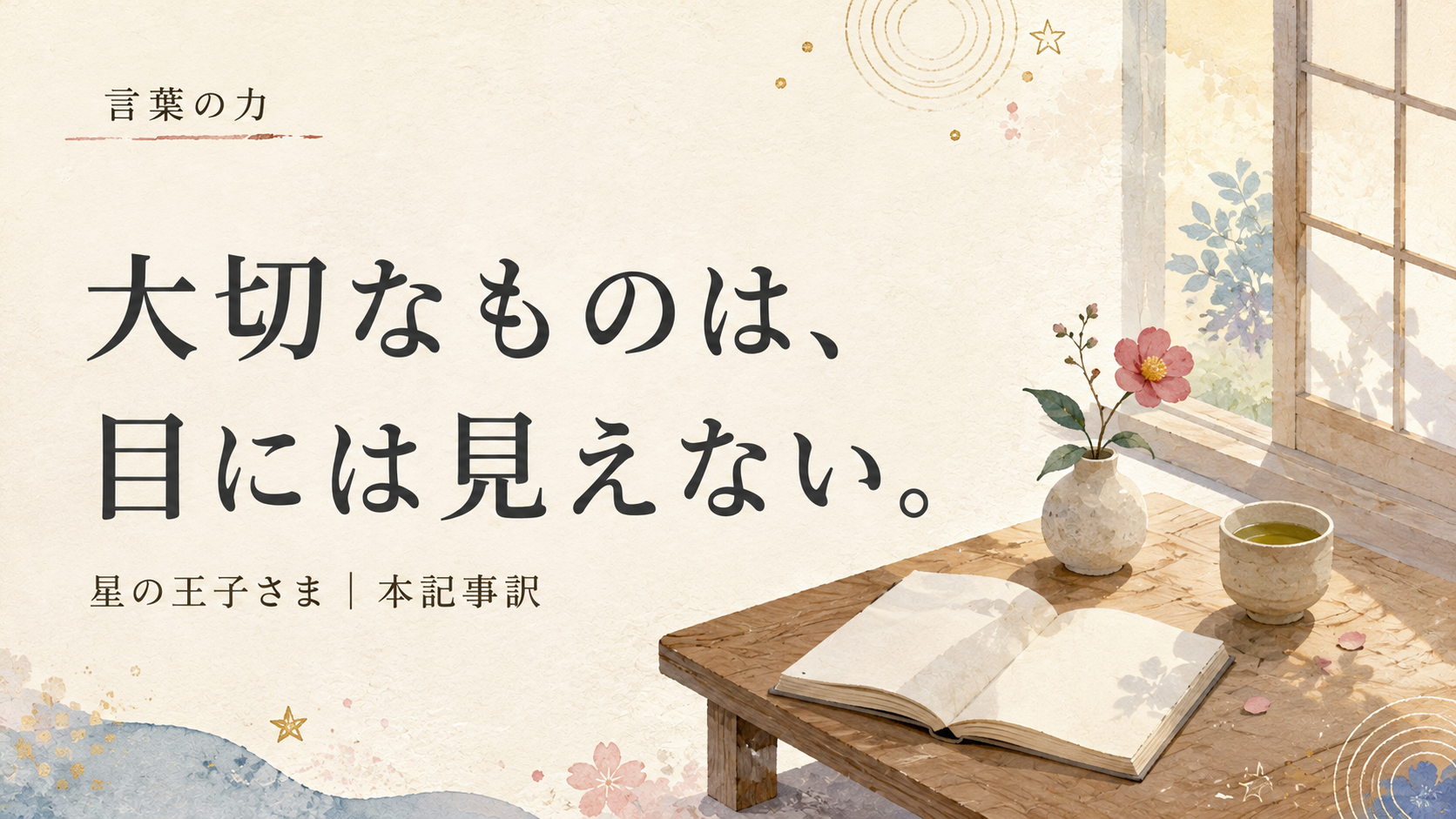
言葉の力|『星の王子さま』「大切なものは、目には見えない」——数字にならない一日を、なかったことにしない

※本記事にはアフィリエイト広告が含まれます。

“What is essential is invisible to the eye.”

「大切なものは、目には見えない。」(本記事訳)

サン=テグジュペリ『星の王子さま』。英語の引用表記は作品公式サイト掲載のものです。日本語は特定の既刊翻訳からの引用ではありません。

一日の終わりに、何をしたのか数えたくなることがあります。

終わった仕事はいくつか。
読んだページは何枚か。
投稿に反応はあったか。

数字にすると、確かめやすいものがあります。

でも、その数字が少ない日に、「今日は何もできなかった」と言ってしまうのは、少し急ぎすぎかもしれません。

『星の王子さま』のこの言葉から、私は、数えやすいものだけで一日を判断しなくてもいいのだと考えます。

ここからは、私自身の日常への重ね方です。

見える成果の手前にも、時間がある

すぐには形にならないことがあります。

相手の話を、最後まで聞いた時間。
送る前に、言い方を考え直した時間。
無理をしないために、予定を減らした時間。

どれも、終わった仕事の件数には入らないかもしれません。

けれど、人との関わりや、自分の暮らしを支えている時間ではあります。

目に見える成果が少なくても、その手前にあったものまで消さなくていいでしょう。

見えないからこそ、確かめることも大切にする

この言葉を、「気持ちさえあれば、言葉にしなくても伝わる」という意味にはしたくありません。

大切に思っているなら、伝える。
助かったなら、お礼を言う。
すれ違っていると感じたら、確かめる。

見えないものを大切にすることと、相手の気持ちを想像だけで決めることは、別だと思います。

「きっとわかっているはず」と置いておくより、一言を渡すほうがよい場面もあるでしょう。

今日、守れたものを一つ思い出す

今夜、一日を振り返るなら、「何を増やせたか」だけでなく、「何を大切にできたか」も考えてみたいものです。

約束を守った。
疲れている自分に気づいた。
誰かを急かさず待った。
言いすぎる前に、少し立ち止まった。

派手な成果でなくても、そこには自分の選び方があります。

数字は役に立ちます。でも、数字だけに一日の意味を決めさせなくてもいい。

見えないものを理由に、現実の問題を曖昧にするのではなく、見える成果の外にも、大切な時間があったと認める。

今日が思ったほど進まなかった日でも、全部を「何もなかった」にしない。

そんな見方を、この言葉から受け取っておきたいと思います。

The Power of Words | The Little Prince: A Day Is More Than What You Can Count

日本語で読む | English

Disclosure: This article contains affiliate advertising.

“What is essential is invisible to the eye.”

Antoine de Saint-Exupéry, The Little Prince. English wording as presented on the work’s official website.

At the end of a day, we sometimes want to count what we accomplished.

How many tasks did we finish? How many pages did we read? Did anyone respond to what we shared?

Numbers can help us notice things. But when the numbers are small, calling the whole day empty may be too quick.

These words from The Little Prince invite me to look beyond what is easiest to measure. What follows is my personal reflection.

Some meaningful time comes before a visible result

Not everything immediately takes shape.

The time spent listening to someone. The care taken to rewrite a message before sending it. The decision to remove a plan because you needed rest.

None of these may appear in a completed-task count. Yet they can support our relationships and daily lives.

A day with few visible results does not have to erase everything that happened before those results.

What is invisible may still need to be expressed

I do not want to read this quotation as “If you care, you never need to say so.”

Tell someone they matter. Thank them for helping. Ask when you think something has been misunderstood.

Valuing what is invisible is different from assuming we know what another person feels.

Sometimes a small sentence matters more than leaving something unspoken.

Remember one thing you cared for today

Tonight, ask not only, “What did I add?” but also, “What did I take care of?”

You kept a promise. Noticed your tiredness. Waited without rushing someone. Paused before saying too much.

These may not be impressive achievements, but they reveal choices you made.

Numbers are useful. They do not have to define the entire meaning of a day.

This is not a reason to ignore practical problems. It is a way to acknowledge that meaningful time can exist outside visible accomplishments.

Even if today moved more slowly than you hoped, it does not have to become a day in which nothing mattered.

The Power of Words | Anne Frank: Something to Give, Even on an Ordinary Day

日本語で読む | English

Disclosure: This article contains affiliate advertising.

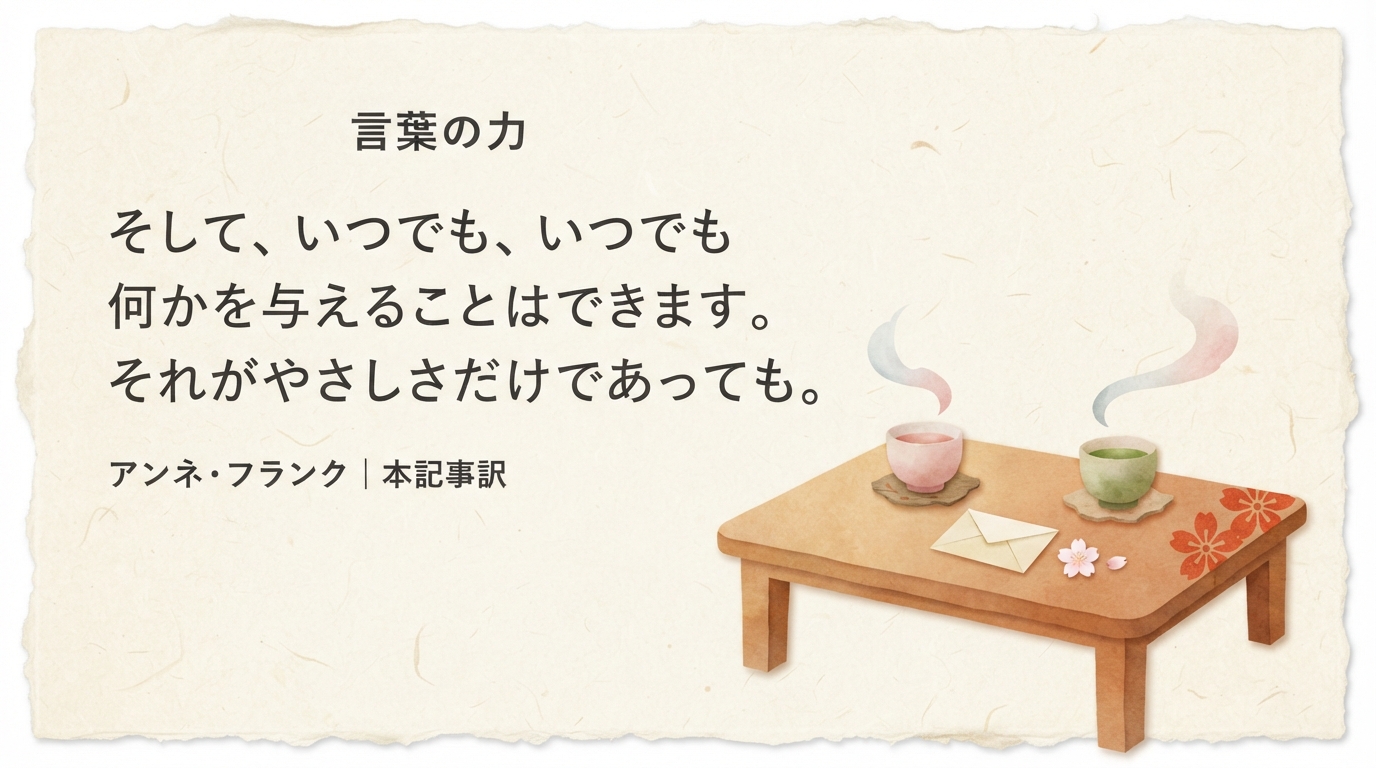
“And you can always, always give something, even if it is only kindness!”

Anne Frank, “Give.” The wording and its attribution are documented in Snopes’ examination of the quotation.

We may want to help someone and still feel that we do not have enough to offer.

Not enough time. Not much money to spare. No special knowledge.

While we wait to have something more impressive, the day passes.

Anne Frank’s words bring the idea of giving closer to ordinary life. What follows is my own reflection.

Help does not have to solve everything

We may not be able to resolve someone’s entire problem, but there may still be something we can do.

Listen without interrupting. Thank someone for a specific thing they did. Ask how they are doing without assuming that we already know.

A small gesture can give someone a little room to breathe. Kindness does not always require a grand act.

Let the other person help define kindness

What we intend as helpful may not be what someone needs.

They may want to be heard rather than advised. They may need quiet rather than repeated questions.

Instead of rushing to do something for them, we can ask, “What would be helpful right now?”

Offering help and giving someone space can both be ways of respecting them.

Kindness does not require exhausting yourself

We do not have to accept every request.

We can explain that today is difficult, offer what we can manage, or suggest another person or approach.

This article is not an invitation to give until nothing remains for yourself.

What could you offer someone today?

“Thank you—that helped.”
“Thank you for telling me.”
“I cannot do all of it, but I can help with this part.”

Kindness need not be a gift reserved for special occasions. There may be a place for it in an ordinary day.