言葉の力|上杉鷹山「なせば成る」——先延ばしの仕事を、今日少しだけ動かす

※本記事にはアフィリエイト広告が含まれます。

やらなければいけない仕事ほど、なぜか机の上を片づけたくなる。

資料を作る前にメールを確認して、メールの前に予定を確認して、気づけばお昼。「準備はしていた」と、自分にだけ通じる説明をしたくなる日があります。

難しそうな仕事は、手をつける前がいちばん大きく見えるのかもしれません。

今日の名言

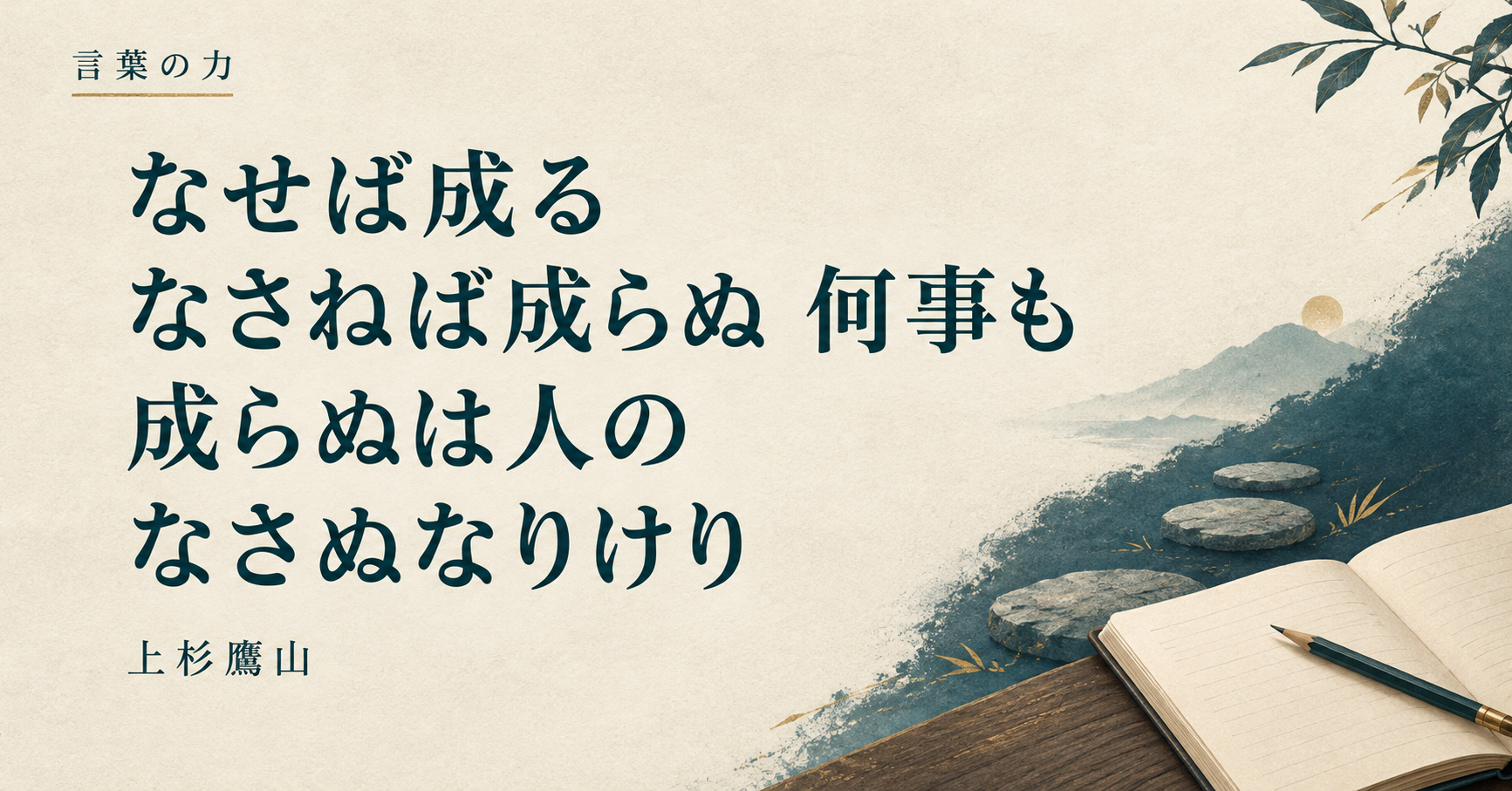
なせば成る なさねば成らぬ 何事も
成らぬは人のなさぬなりけり

上杉鷹山

出典:米沢市「なせば成る!上杉鷹山公の歴史」。鷹山が隠居所へ移った際、当時の嗣子・顕孝に仕える家臣へ示した心得の「壁書」に記されていた言葉として紹介されています。

ここからは、この言葉から考えたこと

「できるかどうか」の前に、一度触ってみる

この言葉は、行動することの大切さを強く伝えています。ただし、ここでは「努力すれば何でも必ず成功する」「できない人は努力不足だ」と、他人や自分を追い込むためには使いません。

日常に持ち帰るなら、まだ始めていないことについて、頭の中だけで不可能と決めていないか。その確認に使いたいと思います。

たとえば、来週までに必要な資料。「完成させる」と考えると重い。でも、「ファイルを開いて、見出しを三つ書く」ならどうでしょう。

書いてみると、案外すぐ埋まる部分があるかもしれません。反対に、必要な情報が足りないと分かることもあります。どちらも、考えているだけのときには見えなかったことです。

「始める」を、作業の名前に変える

「そろそろ本気を出す」は、予定表に書いても実行しにくい言葉です。何をすれば本気を出したことになるのか、自分でも判定できません。

そこで、やることを目に見える動きへ変えてみます。資料作成なら、最初のページに目的を書く。片づけなら、机の上の空き箱を一つ捨てる。勉強なら、問題を一問だけ読む。

小さすぎるようでも、今日はそこからで構いません。

始めてから「これは一人では難しい」と分かれば、相談する材料もできます。「できません」だけでなく、「ここまでは分かりましたが、この条件を確認したいです」と伝えられるからです。

今日の行動|先延ばしを一つ、動作にする

気になっていることを一つ選び、最初の動きを具体的に書いてみてください。「転職について考える」なら、「求人を一件開く」。「家計を見直す」なら、「今月の明細を開く」。今日は、結論まで出さなくてもいい。

「なせば成る」を、大きな結果を約束する言葉ではなく、まだ触れていない仕事へ手を伸ばすきっかけにする。机をきれいにするのは、そのあとでも間に合いそうです。

今の気持ちから探す:一歩踏み出すのがこわいときに

あわせて読みたい

老子:遠くへ進みたい日は、足元の一歩から
鳥井信治郎「やってみなはれ」——準備が終わるのを、いつまで待とう

出典

米沢市「なせば成る!上杉鷹山公の歴史」。引用と、その後の独自の考察を分けて掲載しています。

暮らしにも、小さなきっかけを

自分では後回しにしがち。でも、もらうとうれしい暮らしの道具などを、楽天ROOMで紹介しています(*^^*)。必要なものを探すときに、よかったらのぞいてみてください。

公開前チェック〈編集用・公開前に削除〉

下書き限定。公開・予約日時は未設定。既存一覧で人物の重複を確認済み。共通タグ3個と関連タグを設定。人物タグ「上杉鷹山」は未作成・未設定のため追加確認が必要。カテゴリを確認する。英語版の作成後に日英相互リンクを追加する。関連記事の公開状態と各リンク、スマホ表示、引用表記・権利を確認する。検索需要は未検証。具体例は例示であり、運営者の実体験ではない。本文を最終確認し、この編集用欄を削除してから本人が公開・予約を判断する。

アイキャッチ未生成・未設定。制作指定:横長1200×630px。以前のシリーズ同様、かわいすぎない上品で遊び心のあるエディトリアルイラスト。深い青緑と生成り、控えめな金色。右下に開いた仕事のノートと一本の鉛筆、小さな一歩を連想させる踏み石。人物の肖像は不要。最も大きく載せる名言は「なせば成る なさねば成らぬ 何事も 成らぬは人のなさぬなりけり」。人物名「上杉鷹山」、シリーズ名「言葉の力」は小さく配置。名言は本文と同一で改行のみ調整可。省略・言い換え・句読点の追加はしない。背景より文字を優先し、十分な余白を設ける。画像生成後に文字と人物名を一文字ずつ照合する。現時点で生成画像の照合は未実施。

The Power of Words | Uesugi Yozan: Give That Postponed Task a Small Beginning

Disclosure: This article includes affiliate links.

Why does a difficult task suddenly make tidying your desk feel so urgent?

Before starting the report, you check your email. Before answering the email, you check your calendar. Somehow it is lunchtime. You tell yourself you were preparing—which is technically a kind of activity.

A task can look largest before you have touched it.

Words for today

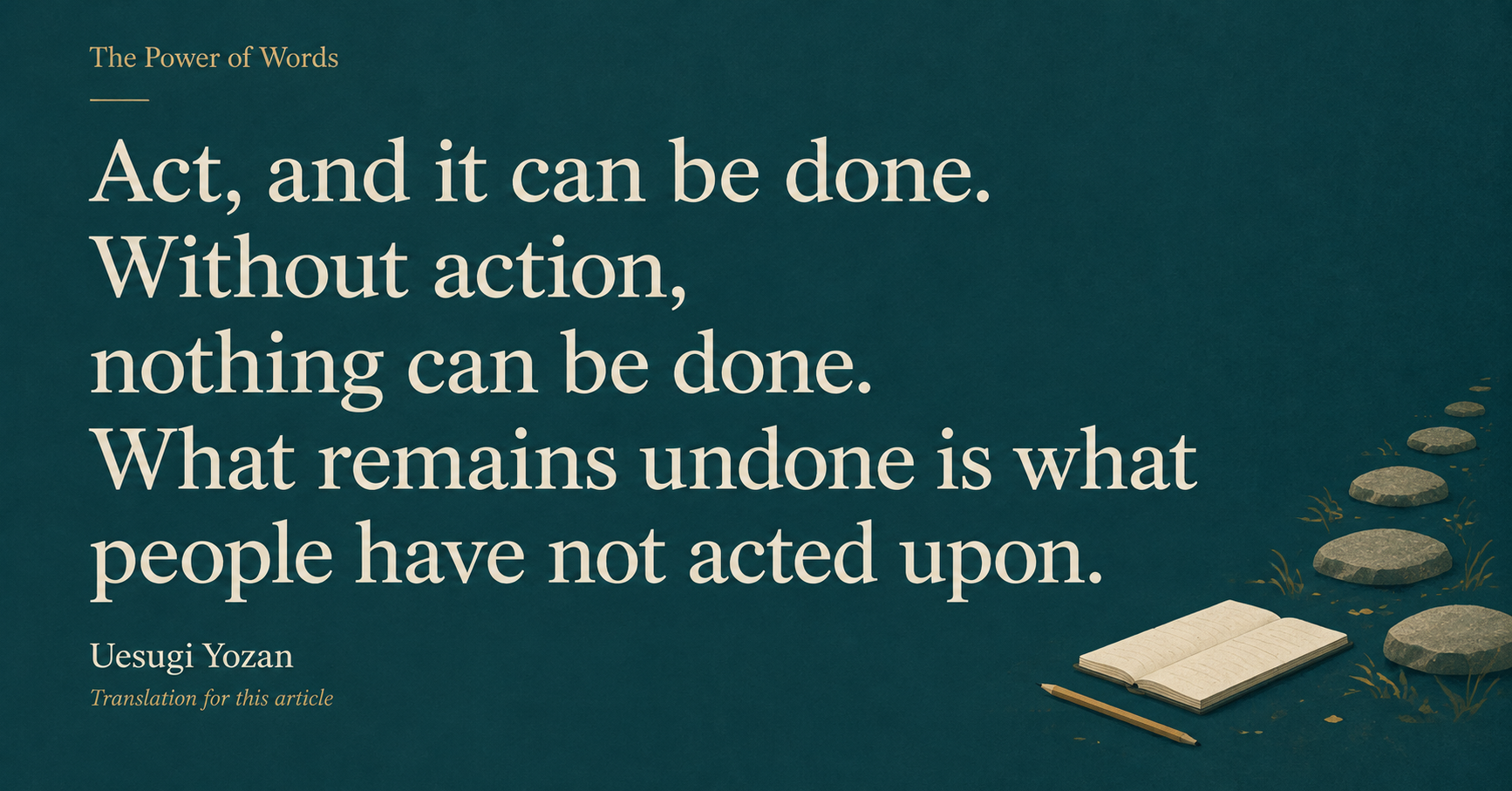
Act, and it can be done. Without action, nothing can be done. What remains undone is what people have not acted upon.

Uesugi Yozan — translated for this article

Original: なせば成る なさねば成らぬ 何事も 成らぬは人のなさぬなりけり. Yonezawa City’s account identifies these words in written guidance Yozan gave to retainers serving his heir, Akitaka, when Yozan moved to his retirement residence. The English wording above is this article’s translation, not an official English version.

An everyday reflection on these words

Touch the task before deciding it is impossible

The quotation places strong emphasis on action. Here, however, we will not use it to claim that effort guarantees success or that every unsuccessful person simply failed to try. The following is our own everyday application, not a complete account of Yozan’s intentions.

Instead, ask whether you have already declared something impossible without beginning it.

Consider a report due next week. Finishing it feels heavy. Opening the file and writing three headings is more concrete.

You might discover a section you can write immediately. Or you might find that essential information is missing. Either discovery gives you something that thinking alone did not.

Give beginning the name of an action

Get serious is difficult to put into a calendar. How would you know when you had done it?

Try naming a visible action instead. For a report, write its purpose at the top of the first page. For tidying, remove one empty box. For studying, read one question.

Small does not mean pointless.

If beginning reveals that you need help, you also gain a clearer question. Instead of saying only that you cannot do it, you can explain what you understand and which condition needs checking.

One thing for today: name your first move

Choose one postponed task and write its first physical action. Thinking about a new job becomes opening one listing. Reviewing your budget becomes opening this month’s statement.

You do not have to reach a final decision today. Let these words prompt a beginning rather than promise a result.

The desk can probably wait until afterward.

How are you feeling? Explore more words for courage.

Related reading

Laozi: A Long Journey Begins Where You Stand
Shinjiro Torii: Before Preparation Becomes a Place to Hide
日本語版を読む

Source

Yonezawa City: Uesugi Yozan’s history (Japanese). The quotation, this article’s translation, and the original reflection are presented separately.

A little inspiration for everyday living

In my Rakuten ROOM, I share everyday items we might put off buying for ourselves but would be happy to receive as gifts. Feel free to browse when you need something. (*^^*)

Shopping from outside Japan? Rakuten Global Express offers international forwarding from Japan. Please check supported destinations, shipping fees, and item restrictions before using the service.

Pre-publication checklist — remove before publishing

Draft only; no publication or schedule requested. Three common English tags and relevant existing tags applied. The Uesugi Yozan person tag remains to be created and assigned after confirmation. Check the category. Add the reciprocal English link to Japanese post 282 after this draft receives an ID. Verify related articles’ publication status, all links, quotation rights, translation, and mobile layout. Search demand has not been validated. Everyday scenes are illustrative, not the site owner’s claimed experiences. Review and remove these editorial notes before the owner decides to publish.

Featured image not generated or assigned. Prompt: landscape 1200×630; sophisticated, quietly playful adult editorial illustration, deep teal, warm ivory, muted gold; notebook, pencil and a small stepping stone at lower right; no portrait. Largest text must be exactly: Act, and it can be done. Without action, nothing can be done. What remains undone is what people have not acted upon. Smaller text: Uesugi Yozan; The Power of Words; Translation for this article. Change line breaks only; no shortening, paraphrasing or punctuation changes. Prioritize quotation readability and generous margins. The image quotation must match the English article, not the Japanese original or headline. Inspect the generated image letter by letter before use; image verification is not yet performed.

言葉の力|孔子:間違えた自分を責め続けるより、直せるところを一つ

今日の言葉

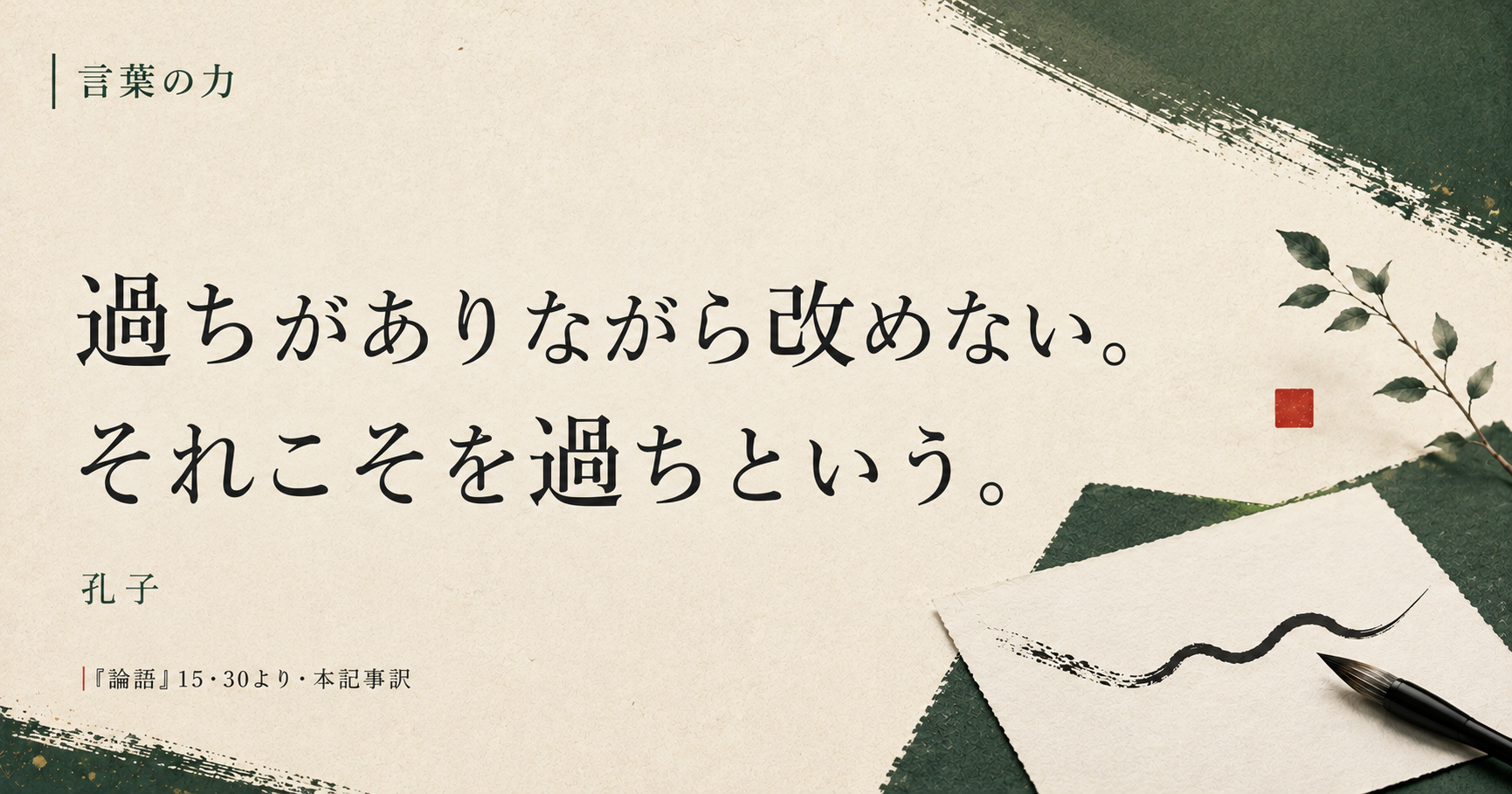
過而不改、是謂過矣。

出典:『論語』衛霊公篇15・30。孔子の言葉として記録されています。

現代語訳〈本記事訳〉:過ちがありながら改めない。それこそを過ちという。

ここからは、この言葉から考えたこと

昼間の失敗が、夜になって何度も浮かんでくることがあります。

確認を一つ忘れた。相手の話を最後まで聞かずに返事をした。言わなくてもよい一言を、口にしてしまった。

もうその場面は終わっているのに、頭の中だけで何度もやり直してしまう。思い返すたびに、「どうして自分は」と、自分への言葉が厳しくなっていく。

そんな夜、この『論語』の一節は、少し違う方向へ目を向けるきっかけになります。

ここからは、失敗した人を裁く言葉としてではなく、これからの行動を選ぶ言葉として読んでみたいと思います。

反省と、自分への判決は違う

「確認が足りなかった」と振り返ることと、「自分は何をしても駄目だ」と決めることは、同じではありません。

前者には、次の確認方法を考える余地があります。後者は、自分全体に大きな札を貼ってしまいます。

一つの出来事を、一人の人間のすべてに広げなくてもよいのではないでしょうか。

必要なのは、自分を長く責めた証拠ではなく、何が起きたのかを確かめること。そして、できる対応を選ぶことだと思います。

直すとは、なかったことにすることではない

謝る。訂正する。影響を受けた人に知らせる。次の手順に確認を一つ加える。

直すための行動は、出来事によって違います。すぐに解決しないことも、相手の気持ちがすぐには戻らないこともあるでしょう。

だからこそ、「謝ったのだから、もう終わり」と相手に区切りを求めないことも大切です。

自分にできる対応を続けることと、自分を責め続けることは別です。責任を引き受けながらも、自分への言葉まで乱暴にしなくてよいと思います。

また、自分の責任ではないことまで抱える必要もありません。起きた事実と、自分が直せる範囲を分けて考えたいですね。

今夜は、次の対応を一つ決める

もし夜中に同じ場面を繰り返してしまうなら、紙に一行だけ書いてみる。

「明日、ここを確認する」

「この件は、相手に訂正を伝える」

今すぐ連絡するのが適切でなければ、対応する時間を決めて、今日は休む。それも、明日の行動を大切にする選び方です。

昨日の出来事は消せなくても、そのあとに何をするかは、まだ決まっていません。

間違えなかった自分には戻れなくても、間違いに向き合う自分には、ここからなれます。

今夜は、責める言葉をもう一つ増やす代わりに、直せるところを一つ。その小さな具体性を、明日の自分へ渡しておきませんか。

今の気持ちから探す:人との関係に悩んでいる

出典

Chinese Text Project『論語』衛霊公篇。引用と本記事の現代語訳、その後の独自考察を分けて掲載しています。

※本記事には、アフィリエイト広告を含むリンクがあります。

暮らしにも、小さなきっかけを

言葉と出会って、少し気持ちが変わる。暮らしの道具との出会いにも、そんな小さなきっかけがあるかもしれません。

自分では後回しにしがち。でも、もらうとうれしい暮らしの道具などを、楽天ROOMで紹介しています(*^^*)
よかったら、のぞいてみてください。

Read this article in English →

公開前チェック〈編集用・公開前に削除〉

人物・引用の既存記事重複を照合する。共通タグ3個の名称とIDを確認して設定する。人物・テーマタグ案:孔子/やり直し/誠実。気分別リンクの表示を確認する。対応する英語版の保存後に日英相互リンクを追加する。公開日は既存予約と重ならないように決める(2日目01:27枠の候補。自動予約しない)。

アイキャッチ未作成・未設定。制作指定:夜の机の上に、一か所を丁寧に書き直したノート。消しゴムのかすを強調せず、柔らかなランプの光で再出発を表す。群青と淡い珊瑚色。画像内の言葉「過而不改、是謂過矣。」、小さく「言葉の力」「孔子|『論語』衛霊公篇」。文字の誤り・権利・スマホ表示を確認する。本文の最終校閲と編集用欄の削除後に、本人が公開・予約を判断する。

The Power of Words | Confucius: A Mistake Is Not the Whole of You

Words for today

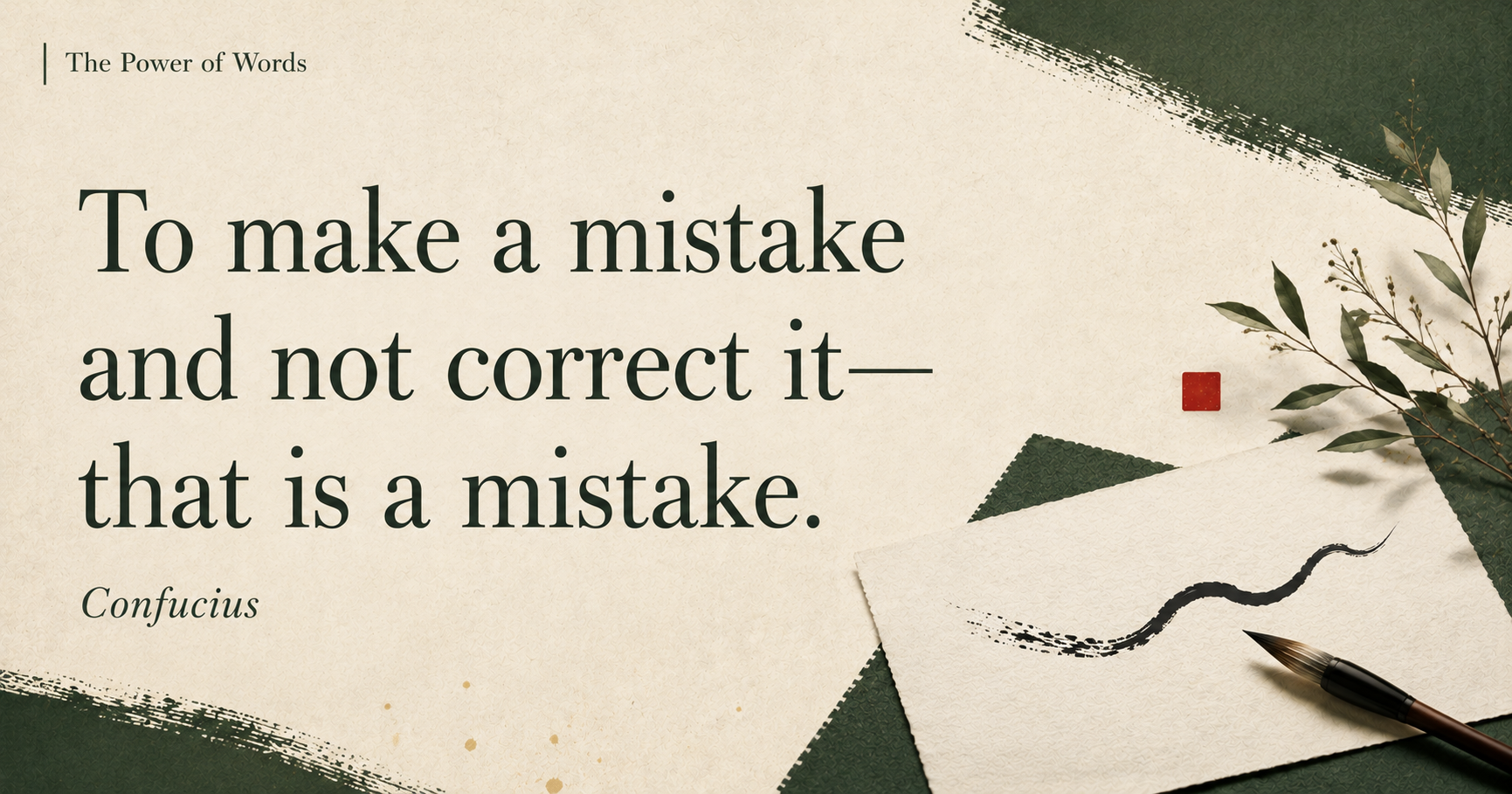
過而不改、是謂過矣。

“To make a mistake and not correct it—that is a mistake.” — Confucius, Analects 15.30. Translation for this article.

Reflection

Sometimes a mistake returns long after the day has ended.

You missed a detail. Interrupted someone. Said something you wish you could take back. The scene repeats until “I made a mistake” becomes “There is something wrong with me.”

For this reflection, let us read the passage as a prompt toward correction, rather than a verdict on a person.

“I did not check carefully enough” leaves room for a different process. “I am useless” turns one event into a judgment about your entire self.

You do not have to make that leap.

What happened? Who was affected? What can you responsibly do now?

Perhaps you need to apologize, correct information, tell someone about an error, or add a check to your routine.

Correction does not erase what happened. An apology also does not require the other person to feel better immediately. Taking responsibility may involve continued attention and patience.

Still, responsibility and endless self-punishment are not the same thing. You can respond seriously without speaking cruelly to yourself.

Nor do you need to accept blame for things outside your responsibility.

Tonight, if the same scene keeps returning, write down one concrete response for tomorrow. If contacting someone now would be inappropriate, choose a suitable time.

Then allow the plan to wait until that time.

You cannot become someone who never made the mistake. But you can decide how to respond to it.

Instead of adding one more accusation, leave yourself one clear next step.

日本語版を読む

Source

Chinese Text Project: The Analects, Wei Ling Gong. The quotation, this article’s translation, and the original reflection are presented separately.

Disclosure: This article includes affiliate links.

A little inspiration for everyday living

A few words can offer a fresh perspective. Sometimes, a thoughtful everyday item can bring a small moment of joy, too.

In my Rakuten ROOM, I share everyday essentials we might put off buying for ourselves but would be happy to receive as gifts. Feel free to take a look! (*^^*)

Shopping from outside Japan? Rakuten Global Express offers international forwarding from Japan. Please check supported destinations, shipping fees, and item restrictions before using the service.

Pre-publication checklist — editorial notes; remove before publishing

Check existing articles for duplicate figures and quotations. Verify and apply the three common tags and the English series tag. Suggested tags: Confucius / Starting Again / Responsibility / en-power-of-words. Verify the English mood-category destination for relationship concerns before adding a link; do not present a Japanese-only collection as an English collection. Confirm that Japanese post 251 and this English post are published together, and add the reciprocal English link to post 251 after this post has an ID. No publication date is set. Intended slot: Day 2, 01:27 JST, subject to the owner’s review and existing schedule.

Featured image not created or assigned. Art direction: a notebook on a desk at night with one passage carefully corrected, soft lamplight, deep blue and pale coral, an atmosphere of beginning again rather than failure. Image quotation: “To make a mistake and not correct it—that is a mistake.” Small text: “The Power of Words · Confucius · Article translation”. Verify spelling, rights, and mobile readability. Review the complete article and remove editorial notes before the owner decides whether to publish or schedule.

言葉の力|マルクス・アウレリウス:進めない日は、進み方を変えてもいい

今日の言葉

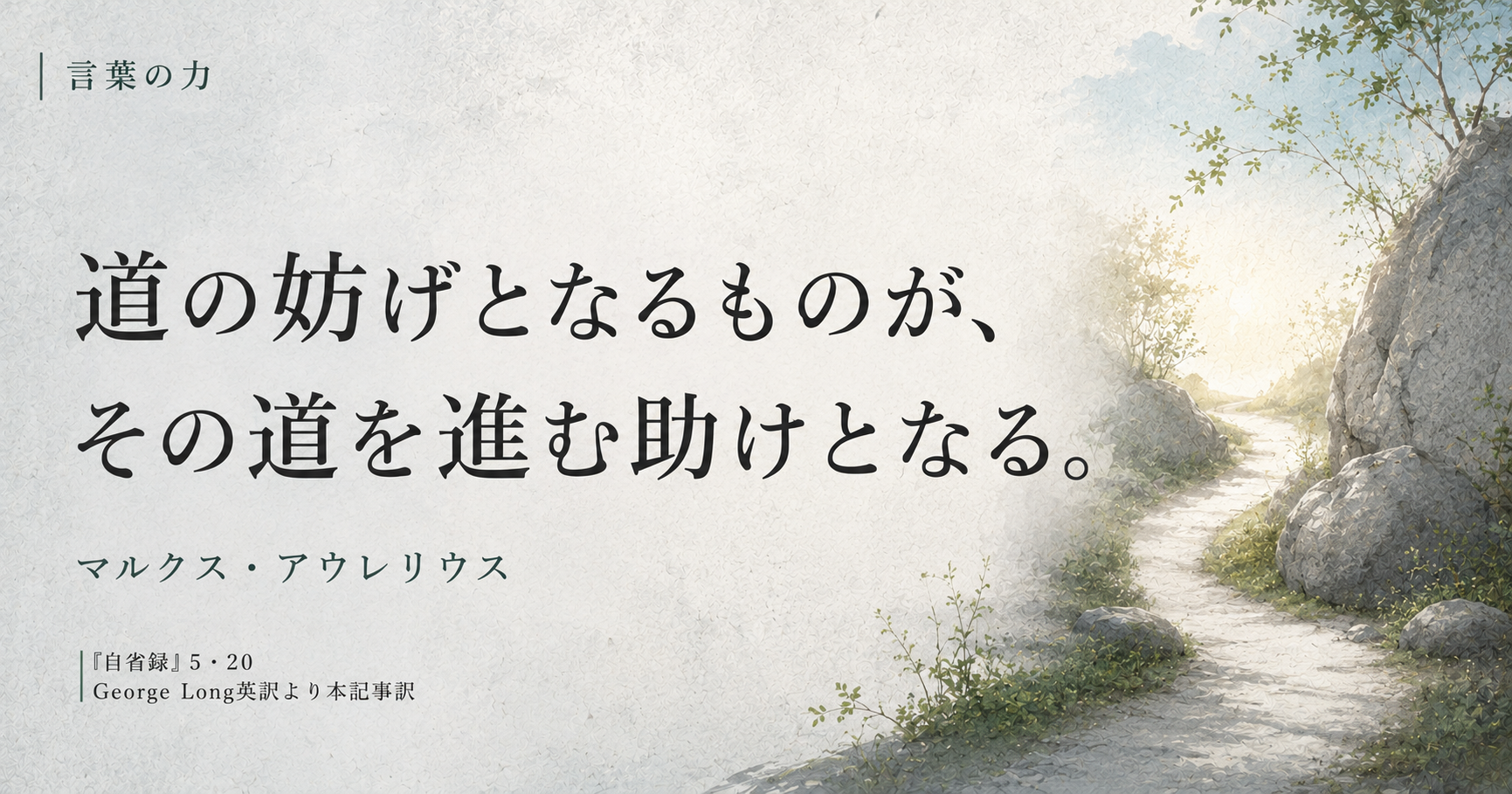
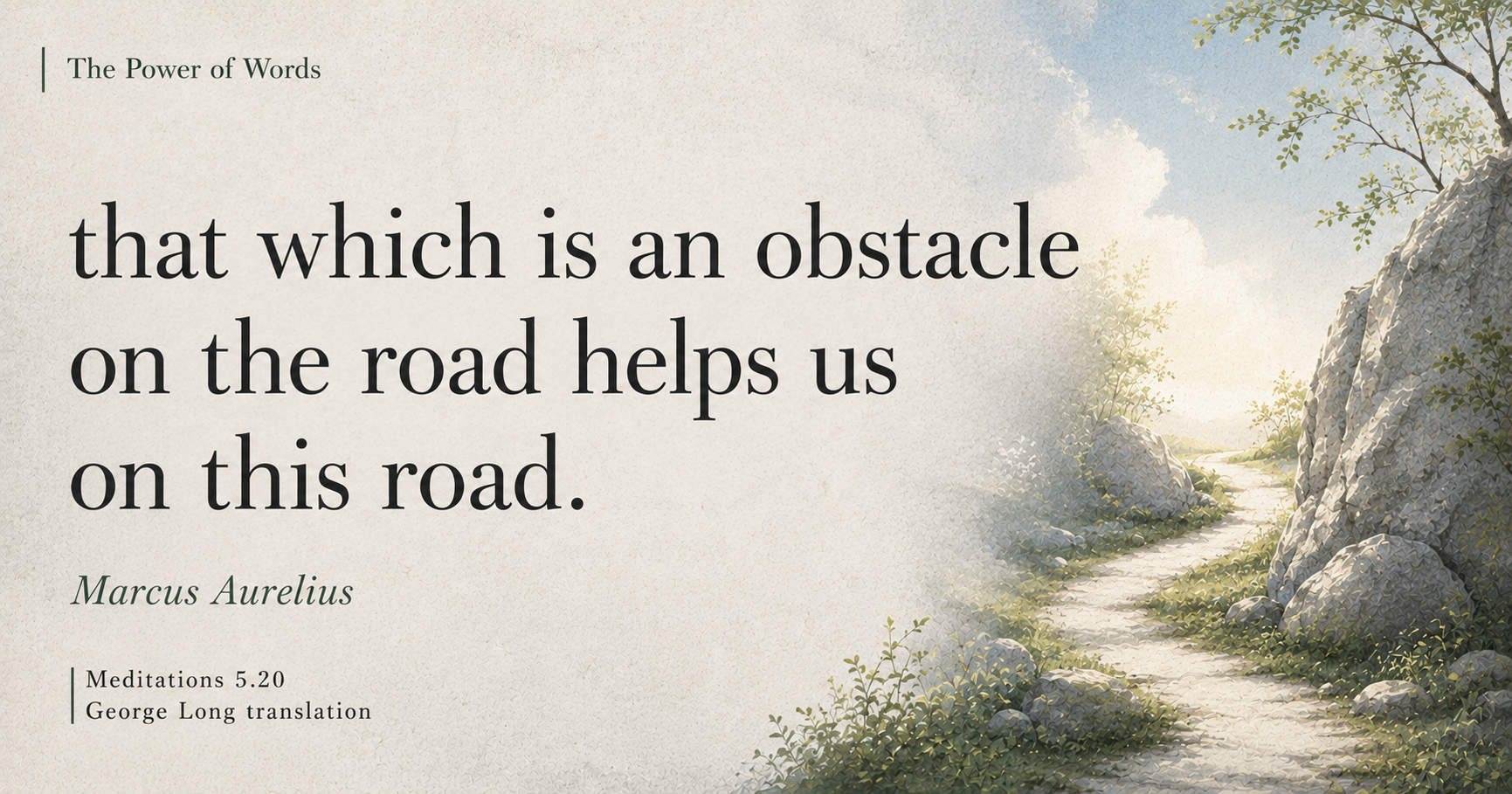
that which is an obstacle on the road helps us on this road.

出典:マルクス・アウレリウス『自省録』第5巻20節、George Long英訳より一部抜粋。MITのInternet Classics Archiveに掲載された本文で確認できます。

日本語訳〈上記英訳からの本記事訳〉:道の妨げとなるものが、その道を進む助けとなる。

ここからは、この言葉から考えたこと

予定どおりに進めようとしているのに、どうしても止まってしまう。

必要な返事が来ない。使うはずの道具が動かない。何度試しても、同じところでつまずいてしまう。

そんなとき、「もう少し頑張れば」と、同じやり方を繰り返したくなることがあります。

それでも状況が変わらないと、自分の力まで否定されたように感じてしまう。

けれど、進めない理由があることと、自分に価値がないことは、別の話です。

『自省録』のこの一節には、妨げに応じて考え方や行動を変える発想が見られます。ここからは、それを日常の行き詰まりに重ねて考えてみます。

同じ道を押し通すことだけが、前進ではない

目の前の扉が開かないとき、強く押し続ける以外の選択もあります。

開く条件を調べる。別の入口を探す。詳しい人に相談する。一度離れて、順番を組み直す。

最初の予定から外れると、遠回りをしているように感じるかもしれません。でも、その途中で得た情報が、次の判断を助けることもあるでしょう。

「この条件では難しい」と分かることも、状況を理解する一部です。

できなかった結果を、自分への評価だけに使わず、方法を選び直す材料として扱ってみる。今回は、その視点を持ち帰りたいと思います。

何でも、よかったことにしなくていい

ただし、苦しかった出来事を無理に「成長のためだった」と言い換える必要はありません。

理不尽な扱いや、危険な状況まで、耐えて役立てなければならないわけではない。

離れること、助けを求めること、続けないと決めることも、自分を守るための選択です。

障害をどう受け止めるかは自分で考えられても、障害そのものが消えるとは限りません。他人や環境の問題まで、自分の心構えだけで解決しようとしなくてよいのです。

次の一手を変える

今、止まっていることがあるなら、一つ問いを変えてみませんか。

「どうしてできないのだろう」から、「何を変えれば、次の判断ができるだろう」へ。

期限を相談する。必要な情報を整理する。確認する相手を変える。今日は休んで、明日もう一度考える。

その選択が、すぐに成果へつながらなくても構いません。少なくとも、自分を責めるだけの場所からは動けます。

まっすぐ進めない日は、向きを変えてもいい。

目標を大切にすることと、最初に決めた方法を守り続けることは、必ずしも同じではありません。道を選び直す柔らかさも、自分なりの前進に含めてよいのだと思います。

今の気持ちから探す:頑張っても、報われない気がする

出典

MIT Internet Classics Archive: The Meditations, Book Five, translated by George Long(第20節)。引用、日本語訳、その後の独自考察を分けて掲載しています。

※本記事には、アフィリエイト広告を含むリンクがあります。

暮らしにも、小さなきっかけを

言葉と出会って、少し気持ちが変わる。暮らしの道具との出会いにも、そんな小さなきっかけがあるかもしれません。

自分では後回しにしがち。でも、もらうとうれしい暮らしの道具などを、楽天ROOMで紹介しています(*^^*)
よかったら、のぞいてみてください。

Read this article in English →

公開前チェック〈編集用・公開前に削除〉

人物・引用の既存記事重複を照合する。共通タグ3個の名称とIDを確認して設定する。人物・テーマタグ案:マルクス・アウレリウス/柔軟さ/行き詰まり。気分別リンクの表示を確認する。対応する英語版の保存後に日英相互リンクを追加する。公開日は既存予約と重ならないように決める(2日目12:07枠の候補。自動予約しない)。

アイキャッチ未作成・未設定。制作指定:岩を避けて緩やかに曲がる小道。道の先に明るい空間。石灰色・淡い青・草木の緑を使用し、困難を威圧的に描かない。画像内の言葉「道の妨げとなるものが、その道を進む助けとなる。」、小さく「言葉の力」「『自省録』5・20|George Long英訳より本記事訳」。文字の誤り・権利・スマホ表示を確認する。本文の最終校閲と編集用欄の削除後に、本人が公開・予約を判断する。

The Power of Words | Marcus Aurelius: You Can Change the Way Forward

Words for today

that which is an obstacle on the road helps us on this road.

— Marcus Aurelius, Meditations 5.20, translated by George Long; excerpt.

Reflection

You have a plan, but something keeps stopping it.

A reply does not arrive. A tool fails. Another attempt ends at the same point. Soon, a problem with the process begins to feel like a judgment about you.

Yet an obstacle is not a measure of your worth.

In this passage, Marcus describes the mind’s capacity to adapt its response to what blocks its activity. For everyday life, that offers a useful question: must the goal and the original method always stay together?

When a door will not open, pushing harder is not your only option.

You can investigate the conditions, look for another entrance, ask someone with relevant knowledge, or reconsider the order of your tasks.

Learning that an approach does not work under certain conditions is information. It need not become an accusation.

This does not mean every painful experience must be called a blessing. You do not have to endure danger or mistreatment to turn it into personal growth. Leaving, seeking support, and choosing not to continue can be responsible decisions.

Nor can every external problem be solved by adjusting your attitude.

Still, where a choice remains, you may be able to change the next move.

Instead of asking only, “Why can’t I do this?” try, “What would help me make the next decision?”

Clarify what is missing. Discuss the deadline. Consult someone else. Rest before reconsidering.

You can care about a destination without remaining loyal to the first route you chose.

Changing direction does not have to mean giving up.

日本語版を読む

Source

MIT Internet Classics Archive: The Meditations, Book Five, translated by George Long, section 20. The reflection above is original commentary, separate from the quotation.

Disclosure: This article includes affiliate links.

A little inspiration for everyday living

A few words can offer a fresh perspective. Sometimes, a thoughtful everyday item can bring a small moment of joy, too.

In my Rakuten ROOM, I share everyday essentials we might put off buying for ourselves but would be happy to receive as gifts. Feel free to take a look! (*^^*)

Shopping from outside Japan? Rakuten Global Express offers international forwarding from Japan. Please check supported destinations, shipping fees, and item restrictions before using the service.

Pre-publication checklist — editorial notes; remove before publishing

Check existing articles for duplicate figures and quotations. Verify and apply the three common tags and the English series tag. Suggested tags: Marcus Aurelius / Adaptability / Obstacles / en-power-of-words. Verify the English mood-category destination for feeling that your efforts are not paying off before adding a link; do not present a Japanese-only collection as an English collection. Confirm that Japanese post 254 and this English post are published together, and add the reciprocal English link to post 254 after this post has an ID. No publication date is set. Intended slot: Day 2, 12:07 JST, subject to the owner’s review and existing schedule.

Featured image not created or assigned. Art direction: a path gently curving around a rock toward an open, bright space, limestone gray, pale blue and natural greens; do not depict the obstacle as threatening. Image quotation: “that which is an obstacle on the road helps us on this road.” Small text: “The Power of Words · Marcus Aurelius · Translated by George Long”. Verify spelling, rights, and mobile readability. Review the complete article and remove editorial notes before the owner decides whether to publish or schedule.

The Power of Words | Laozi: A Long Journey Begins Where You Stand

Words for today

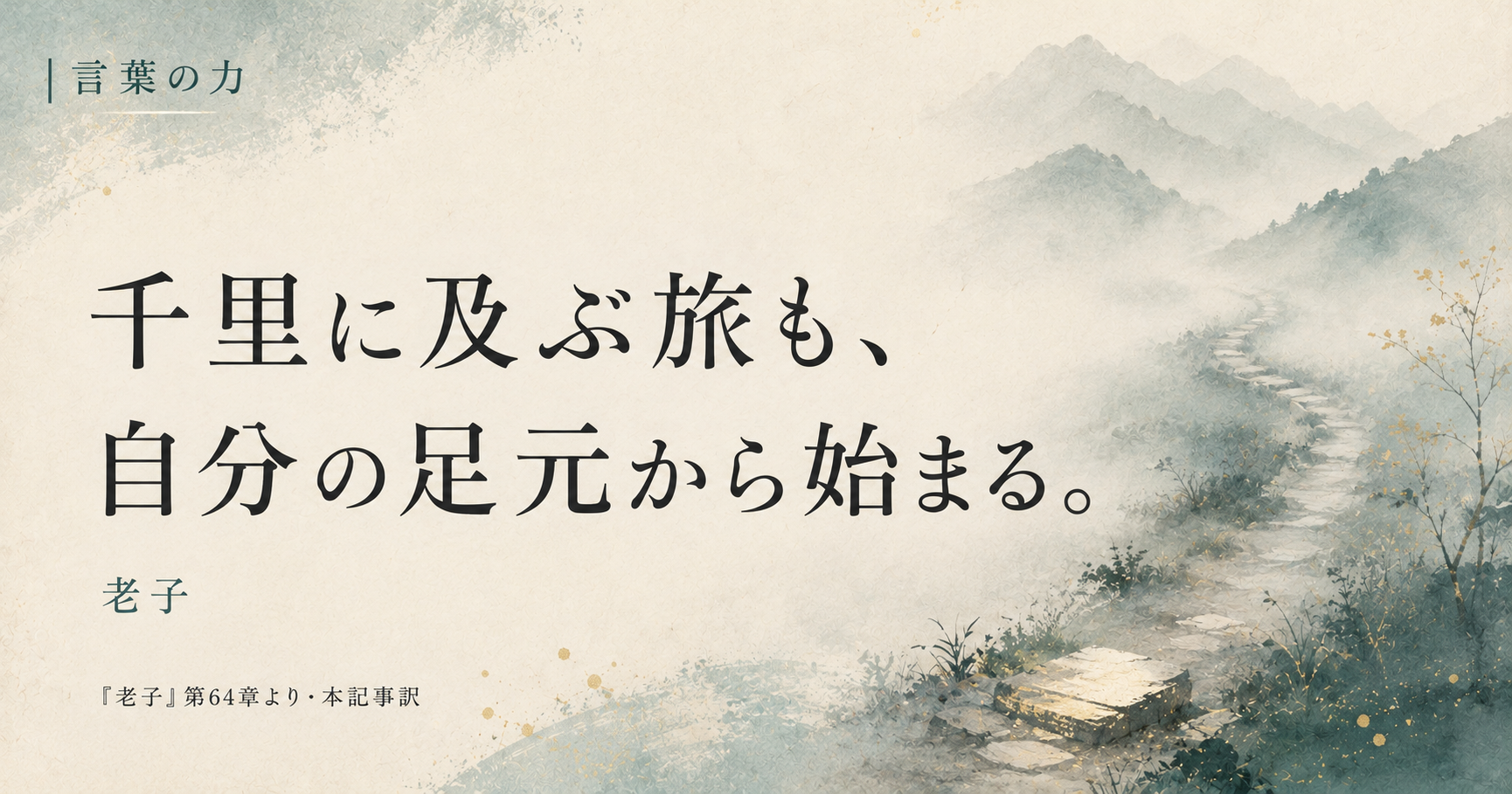
千里之行、始於足下。

“A journey of a thousand li begins beneath your feet.” — Dao De Jing, Chapter 64, traditionally attributed to Laozi. Translation for this article. The original uses li, a Chinese unit of distance.

Reflection

Sometimes you know what you want to do, yet beginning feels difficult.

You want to study, organize your home, or try something new at work. Then you think about everything the goal requires—and find yourself carrying the weight of the entire journey before taking a step.

This passage invites us to bring our attention back to where we stand.

If your goal is to read a book, today’s task does not have to be finishing it. Open it and read a paragraph. If you want a tidier home, begin with one object on your desk. If you need to prepare a proposal, write down one question it must answer.

A small beginning may seem insignificant. Yet touching the task can reveal something that thinking alone cannot: what you understand, what you need, and what might come next.

There is no need to turn this into another demand to be productive every day.

Your starting point changes. Some days you have energy; other days you need rest. Preparing your tools, asking for help, or choosing a sensible time to begin may be the right step for you.

Someone else’s pace does not have to determine yours.

Today, instead of asking, “How will I accomplish all of this?” try asking, “What small part can I touch?”

Leave a note. Read a page. Gather one thing you need. Make it easier for tomorrow’s version of you to continue.

A distant hope becomes connected to daily life through something close enough to do now.

日本語版を読む

Source

Chinese Text Project: Dao De Jing, Chapter 64. The reflection above is original commentary, separate from the quotation.

Disclosure: This article includes affiliate links.

A little inspiration for everyday living

A few words can offer a fresh perspective. Sometimes, a thoughtful everyday item can bring a small moment of joy, too.

In my Rakuten ROOM, I share everyday essentials we might put off buying for ourselves but would be happy to receive as gifts. Feel free to take a look! (*^^*)

Shopping from outside Japan? Rakuten Global Express offers international forwarding from Japan. Please check supported destinations, shipping fees, and item restrictions before using the service.

Pre-publication checklist — editorial notes; remove before publishing

Check existing articles for duplicate figures and quotations. Verify and apply the three common tags and the English series tag. Suggested tags: Laozi / First Steps / Courage / en-power-of-words. Verify the English mood-category destination before adding a link; do not link to a Japanese-only collection as an English collection. Confirm that Japanese post 247 and this English post are published together, and add the reciprocal English link to post 247 after this post has an ID. No publication date is set. Intended slot: Day 1, 01:27 JST, subject to the owner’s review and existing schedule.

Featured image not created or assigned. Art direction: a misty mountain path at dawn, a softly lit stepping stone in the foreground, blue-green and ivory colors. Image quotation: “A journey of a thousand li begins beneath your feet.” Small text: “The Power of Words · Laozi · Article translation”. Verify spelling, rights, and mobile readability. Review the complete article and remove editorial notes before the owner decides whether to publish or schedule.

言葉の力|老子:遠くへ進みたい日は、足元の一歩から

今日の言葉

千里之行、始於足下。

出典:『老子』第64章。老子に伝統的に帰される文献に収められた言葉です。日本語でいう「千里の道も一歩から」のもとになった表現です。

現代語訳〈本記事訳〉:千里に及ぶ旅も、自分の足元から始まる。

ここからは、この言葉から考えたこと

やりたいことはあるのに、なかなか手をつけられない。そんな日があります。

勉強を始めたい。部屋を整えたい。新しい仕事に挑戦したい。けれど、必要な時間や覚えることを考えるうちに、「今の自分には難しいかもしれない」と感じてしまう。

始める前から、目的地までの距離を全部背負ってしまうのですね。

『老子』のこの一節は、そんなとき、視線を遠くから足元へ戻してくれるように思います。

一歩目に、完成形はいらない

たとえば、本を一冊読むことが目標なら、今日必要なのは読み終えることではありません。まず本を開き、一段落だけ読む。それも立派な始まりです。

片づけなら、家全体ではなく机の上の一つ。仕事の準備なら、完璧な資料ではなく、確認したいことを一行だけ書く。

それだけでは何も変わらない、と感じるかもしれません。でも、「まだ始めていない」と「少し触れてみた」の間には、小さくても違いがあります。

実際に触れれば、分からないことも、意外とできることも見えてきます。考えているだけでは見えなかった次の一歩が、そこで初めて分かることもあるでしょう。

足元には、今日の自分の事情もある

ただし、この言葉を「どんな日も前進しなければ」と受け取る必要はないと思います。

疲れている日、時間がない日、気持ちが追いつかない日。出発地点は、毎日同じではありません。

今日は道具を出すだけ。相談する相手を決めるだけ。明日のために休むだけ。

それが自分にとって必要な準備なら、無理に大きな歩幅を選ばなくてもよいのではないでしょうか。

遠くの誰かが速く歩いていても、その人の一歩と自分の一歩を同じにする必要はありません。今いる場所から進むには、今の自分に合う大きさがあるはずです。

今日の一歩を、一つだけ

やりたいことを思い浮かべたら、「達成するには?」の前に、「今日、何に触れられる?」と問いかけてみる。

検索を一つする。メモを残す。必要なものを一つそろえる。

小さすぎるくらいで構いません。明日の自分が続きを始めやすい形にして、今日はそこで終えてもよいのです。

遠くへ進む力は、遠くばかりを見ることから生まれるとは限りません。

足元に置ける一歩を見つけること。それが、まだ形になっていない願いと、今日の暮らしをつなぐ最初の接点になるのかもしれません。

今の気持ちから探す:一歩踏み出すのがこわい

出典

Chinese Text Project『道徳経』第64章/誠文堂新光社「守微第六十四」

※本記事には、アフィリエイト広告を含むリンクがあります。

暮らしにも、小さなきっかけを

言葉と出会って、少し気持ちが変わる。暮らしの道具との出会いにも、そんな小さなきっかけがあるかもしれません。

自分では後回しにしがち。でも、もらうとうれしい暮らしの道具などを、楽天ROOMで紹介しています(*^^*)
よかったら、のぞいてみてください。

Read this article in English →

公開前チェック〈編集用・公開前に削除〉

人物・引用の既存記事重複を照合する。共通タグ3個の名称とIDを確認して設定する。人物・テーマタグ案:老子/はじめの一歩/勇気。気分別リンクの表示を確認する。対応する英語版の保存後に日英相互リンクを追加する。公開日は既存予約と重ならないように決める(1日目01:27枠の候補。自動予約しない)。

アイキャッチ未作成・未設定。制作指定:朝霧の山道。手前の一枚の踏み石に柔らかな光。青緑と生成りを基調に、遠景は淡くする。画像内の言葉「千里之行、始於足下。」、小さく「言葉の力」「老子|『老子』第64章」。文字の誤り・権利・スマホ表示を確認する。本文の最終校閲と編集用欄の削除後に、本人が公開・予約を判断する。

言葉の力|フランクリン:うまく言えない日も、誠実な行動は残る

今日の言葉

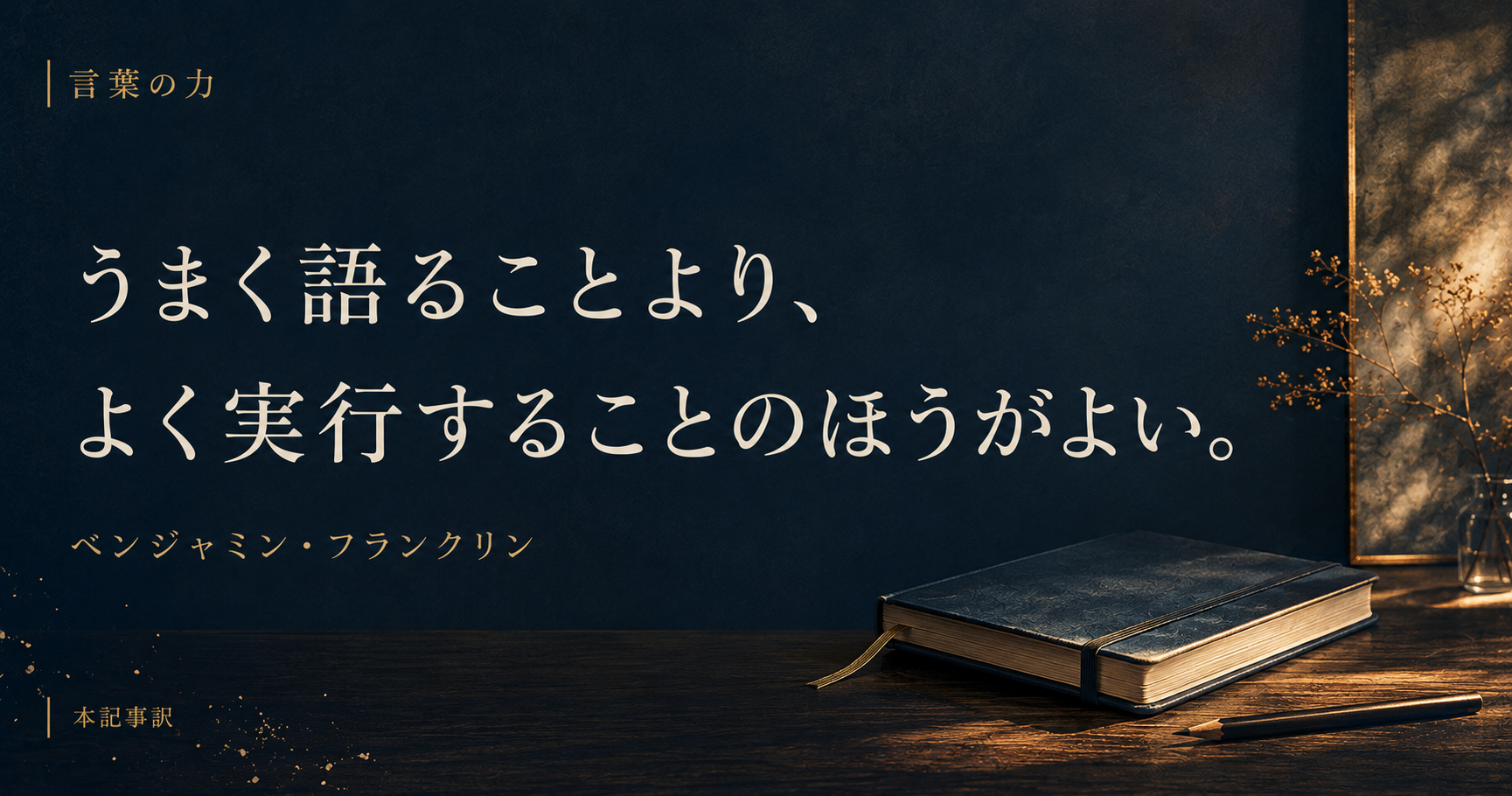
Well done is better than well said.

出典:ベンジャミン・フランクリン『Poor Richard』1737年版。米国国立公文書館のFounders Onlineで原文を確認できます。

日本語訳〈本記事訳〉:うまく語ることより、よく実行することのほうがよい。

ここからは、この言葉から考えたこと

会議が終わったあと、「もっと分かりやすく話せたらよかった」と思うことはありませんか。

周りの人はすらすら説明できるのに、自分は言葉に詰まってしまう。感謝を伝えたいときも、気の利いた一言が見つからない。

そんなとき、話すのが得意ではない自分を、必要以上に小さく感じてしまうことがあります。

けれど、人に届くものは、言葉の上手さだけではないはずです。

フランクリンの短い言葉から、今回は「話せない分を努力で埋めよう」ではなく、「すでにしている誠実な行動にも目を向けよう」と考えてみたいと思います。

目立たない仕事にも、受け取る人がいる

頼まれたことを忘れずに返す。次の人が使いやすいよう、道具を元の場所へ戻す。分からないまま進めず、確認を一つ入れる。

どれも、大きな拍手をもらうような行動ではないかもしれません。

それでも、受け取った人には「助かった」が残ります。見えにくいところで誰かの負担が減ったり、安心して次の作業へ進めたりする。

華やかな説明がなくても、暮らしや仕事を支える行動はあります。

自分では当たり前すぎて、数えていなかったこと。その中に、自分なりの誠実さが含まれているのではないでしょうか。

言葉がいらない、という意味ではなく

もちろん、「行動しているのだから、説明しなくても伝わる」と決めつけるのは別の話です。

予定が遅れるなら連絡する。迷惑をかけたなら謝る。助けてもらったなら、お礼を伝える。

相手が安心するために必要な言葉もあります。黙って引き受けすぎて、自分だけが苦しくなる必要もありません。

言葉と行動は、勝ち負けをつけるものではなく、互いを確かめ合うものとして扱いたいですね。

「大切に思っています」という言葉に、小さな気遣いを添える。「対応します」という返事に、できる範囲と時期を添える。

立派な宣言より、相手が確かめられる小さな実行を。そのくらいの受け止め方でよいのだと思います。

今日、自分がしたことを一つ数える

帰り道、反省ばかりが浮かんだら、一つだけ思い出してみてください。

返事をした。確認した。片づけた。難しいことを、難しいと伝えた。

それは本当に「何もできなかった日」でしょうか。

うまく話せなかった場面があっても、一日のすべてが失敗になるわけではありません。

言葉が少し不器用でも、誠実にしたことは消えません。今日は、その一つまで見落とさずに帰れたら十分なのかもしれません。

今の気持ちから探す:つい、人と比べてしまう

出典

Founders Online, National Archives: Poor Richard, 1737

※本記事には、アフィリエイト広告を含むリンクがあります。

暮らしにも、小さなきっかけを

言葉と出会って、少し気持ちが変わる。暮らしの道具との出会いにも、そんな小さなきっかけがあるかもしれません。

自分では後回しにしがち。でも、もらうとうれしい暮らしの道具などを、楽天ROOMで紹介しています(*^^*)
よかったら、のぞいてみてください。

Read this article in English →

公開前チェック〈編集用・公開前に削除〉

人物・引用の既存記事重複を照合する。共通タグ3個の名称とIDを確認して設定する。人物・テーマタグ案:ベンジャミン・フランクリン/誠実/行動。気分別リンクの表示を確認する。対応する英語版の保存後に日英相互リンクを追加する。公開日は既存予約と重ならないように決める(1日目12:07枠の候補。自動予約しない)。

アイキャッチ未作成・未設定。制作指定:整えられた木製の作業机。閉じた手帳と一本の鉛筆。琥珀色と紺を基調に、静かな午後の光。画像内の言葉「Well done is better than well said.」、小さく「言葉の力」「Benjamin Franklin|1737」。文字の誤り・権利・スマホ表示を確認する。本文の最終校閲と編集用欄の削除後に、本人が公開・予約を判断する。

The Power of Words | Benjamin Franklin: Your Quiet Actions Still Count

Words for today

Well done is better than well said.

— Benjamin Franklin, Poor Richard, 1737.

Reflection

After a meeting, you may find yourself thinking, “I wish I had explained that better.”

Other people seem fluent and confident. You hesitate, lose your place, or struggle to find the right words. It becomes easy to overlook everything else you brought to the day.

For this reflection, Franklin’s words are an invitation to notice your actions—not a demand to compensate for imperfect speech by working harder.

You remembered to reply. You checked a detail rather than guessing. You returned a tool so the next person could find it.

These actions may attract little attention. Still, someone benefits from them. A task becomes easier. An uncertainty is resolved. A person has one less thing to worry about.

Quiet usefulness deserves recognition too.

This does not mean words are unnecessary. If you are running late, communicate. If you have caused harm, apologize. If someone has helped you, thank them. Nor should you silently accept more work than you can manage.

Words and actions can support each other.

A promise becomes clearer when you explain what you can do and when. Appreciation becomes tangible when you add a thoughtful gesture.

On your way home, try remembering one thing you did with care.

Perhaps you responded, checked, organized, or honestly said that you needed help. Does that really add up to a day in which you did nothing?

An awkward conversation does not erase the rest of your efforts.

Your words may not have been polished. Your care was still real.

日本語版を読む

Source

Founders Online, National Archives: Poor Richard, 1737. The reflection above is original commentary, separate from the quotation.

Disclosure: This article includes affiliate links.

A little inspiration for everyday living

A few words can offer a fresh perspective. Sometimes, a thoughtful everyday item can bring a small moment of joy, too.

In my Rakuten ROOM, I share everyday essentials we might put off buying for ourselves but would be happy to receive as gifts. Feel free to take a look! (*^^*)

Shopping from outside Japan? Rakuten Global Express offers international forwarding from Japan. Please check supported destinations, shipping fees, and item restrictions before using the service.

Pre-publication checklist — editorial notes; remove before publishing

Check existing articles for duplicate figures and quotations. Verify and apply the three common tags and the English series tag. Suggested tags: Benjamin Franklin / Integrity / Action / en-power-of-words. Verify the English mood-category destination for comparing yourself to others before adding a link; do not present a Japanese-only collection as an English collection. Confirm that Japanese post 249 and this English post are published together, and add the reciprocal English link to post 249 after this post has an ID. No publication date is set. Intended slot: Day 1, 12:07 JST, subject to the owner’s review and existing schedule.

Featured image not created or assigned. Art direction: a tidy wooden work desk, a closed notebook and a single pencil, amber and navy colors, quiet afternoon light. Image quotation: “Well done is better than well said.” Small text: “The Power of Words · Benjamin Franklin · 1737”. Verify spelling, rights, and mobile readability. Review the complete article and remove editorial notes before the owner decides whether to publish or schedule.