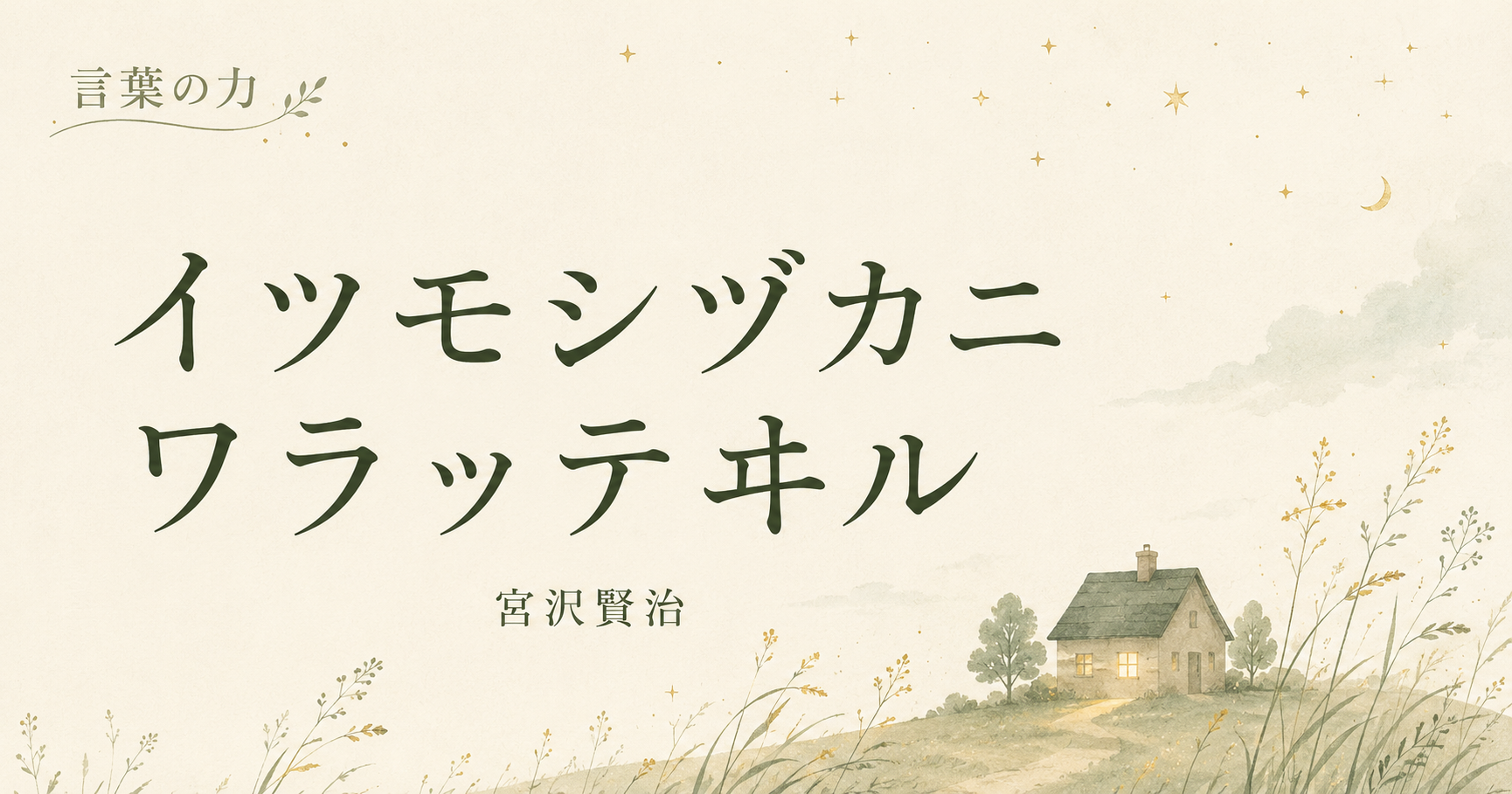
言葉の力|宮沢賢治「イツモシヅカニワラッテヰル」——いつも笑えなくても、やわらかく戻れる場所を

※本記事にはアフィリエイト広告が含まれます。

「イツモシヅカニワラッテヰル」

宮沢賢治「〔雨ニモマケズ〕」より

朝から少し、言い方が強くなってしまった。

急いでいたし、考えることも多かった。理由はあるけれど、あとになって、自分の声だけが頭の中で再生されます。

もっと普通に言えたな。

そう思うと、一日の最初につまずいたような気持ちになることがあります。

そんなとき、この静かな一節を思い出します。

笑顔を、もう一つの義務にしない

「イツモシヅカニワラッテヰル」。

詩には、賢治が「サウイフモノニ/ワタシハナリタイ」と記す願いもあります。

ここからは、私自身の受け止め方です。

この言葉を、「どんなときも笑顔でいなければならない」と自分に言い聞かせるためには使いたくありません。

疲れているときも、困っているときもあります。笑えない日まで、笑顔の出来栄えを採点したら、少し苦しい。

むしろ、余裕をなくした自分が、戻ってきたい姿として持っておく。

それくらいの距離で、この言葉に触れていたいと思います。

一度きつく言ったら、その日が終わるわけではない

朝の言葉を取り消すことはできなくても、そのあとに別の言葉を足すことはできます。

「さっきは、言い方がきつかったね」
「急いでいて、ごめん」
「もう一度、聞かせて」

大げさな反省会にしなくても、短い一言で向き直ることはできます。

相手がすぐに笑ってくれるとは限りません。それでも、自分の態度を整え直すことには意味があると思うのです。

機嫌のよさより、扱い方のやさしさ

いつも明るく、話が面白く、誰にでも気が利く。

そんな人になれたら素敵ですが、毎日その全部を用意するのは大変です。

今日は、返事を少し丁寧にする。相手が話し終えるまで待つ。疲れているなら、無理に会話を続けず、そのことを伝える。

笑顔そのものではなく、相手と自分を雑に扱わないことから始めてもいいのでしょう。

今日はずっと穏やかではなかった。

それでも、次の一言は選べる。

この詩の一節を、失敗しないための規則ではなく、やわらかく戻ってくるための目印にしたいと思います。

引用・詩の出典:青空文庫:宮澤賢治「〔雨ニモマケズ〕」
今、どんな気分?

人との関係に悩んでいる——同じ気持ちに寄り添う言葉を読む

The Power of Words | Kenji Miyazawa: A Gentle Place to Return To

Disclosure: This article contains affiliate advertising.

“Always smiling quietly.”

Kenji Miyazawa

Translated for this article from “イツモシヅカニワラッテヰル” in Miyazawa’s “〔雨ニモマケズ〕.” This is not an official English translation.

You spoke a little sharply this morning.

You were busy. There were reasons. Still, your own voice keeps replaying in your mind: “I could have said that differently.”

Do not make smiling another obligation

The poem also expresses the wish to become such a person.

My own reading is not that we must smile regardless of how we feel.

Some days are difficult. Grading our smiles on those days would only add another burden.

Instead, I want to hold the image as somewhere to return when I have lost my patience.

One sharp moment does not have to define the day

We cannot remove what we said, but we can add something different.

“I sounded harsh earlier.”
“I was rushing. I’m sorry.”
“Could you tell me again?”

The other person may not respond warmly straight away. Even so, we can take responsibility for how we speak next.

Begin with gentleness, not cheerfulness

Answer carefully. Let someone finish. If you are tired, say so rather than forcing a conversation.

We do not need to be entertaining or endlessly upbeat to treat others—and ourselves—with care.

Today was not perfectly calm.

The next sentence is still yours to choose.

Quotation and poem source: Aozora Bunko: Kenji Miyazawa, “〔雨ニモマケズ〕” (Japanese).

How are you feeling today?

Struggling with relationships? Explore more words for connection.

Shopping from outside Japan? Rakuten Global Express offers international forwarding from Japan. Please check supported destinations, shipping fees, and item restrictions before using the service.

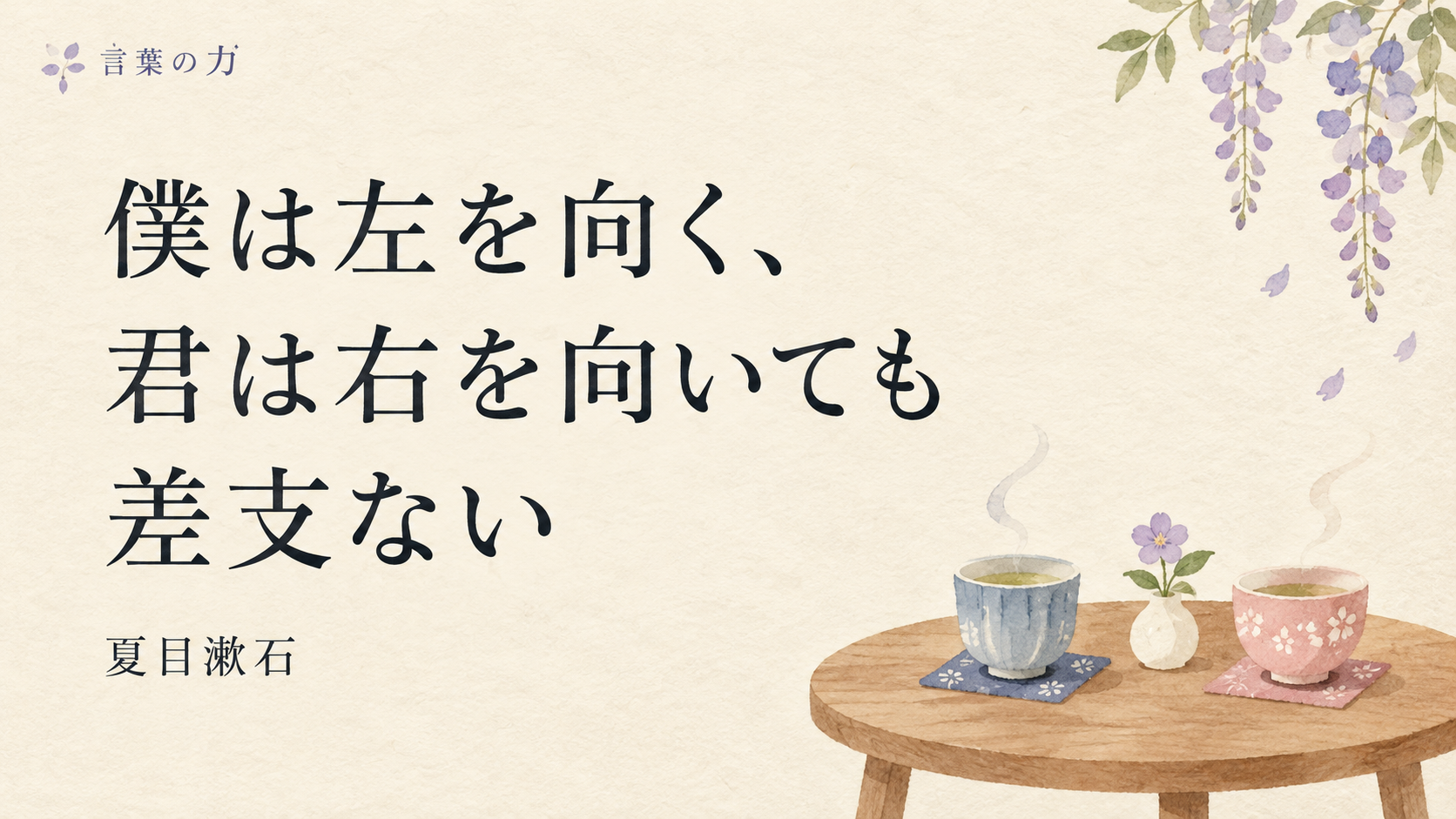
言葉の力|夏目漱石「僕は左を向く、君は右を向いても差支ない」——違う意見を、すぐに距離へ変えない

※本記事にはアフィリエイト広告が含まれます。

「僕は左を向く、君は右を向いても差支ない」

夏目漱石「私の個人主義」より

前後では、他への影響に触れながら、自分にも他人にも自由を認めることが述べられています。

自分がよかったと思ったものを、相手はそうでもないと言う。

映画でも、休日の過ごし方でも、仕事の進め方でも。

ただ好みが違っただけなのに、少しだけ、自分まで否定されたような気がすることがあります。

「そうなんだ」と言いながら、心の中では小さな説明会が始まる。

いや、でも、ここがよくてね。

気づけば、感想を話していたはずが、説得に変わっているのです。

同じ感想でなくても、話は続けられる

漱石の文章にある「僕は左を向く、君は右を向いても差支ない」という表現を、日常の会話に重ねてみます。

ここからは私自身の受け止め方です。

同じものを好きになってもらえるとうれしい。

でも、それだけを会話の成功にしなくてもいいのでしょう。

「どのあたりが合わなかった?」
「そういう見方もあるんだね」

相手の感想を変えるためではなく、違う見方を知るために聞いてみる。

一致しないままでも、話が深くなることはあるはずです。

自分の好きを、説明しすぎなくてもいい

反対に、自分の好きなものを分かってもらえないときもあります。

そんなとき、相手が納得するまで、自分の好きを弁護し続けなくてもいい。

「私はここが好きなんだ」。

そこまで伝えて、いったん置くこともできます。

相手に同じ感想を求めないことは、自分の気持ちを引っ込めることとは違います。

自分の好きを大切にしながら、相手の違いも残しておく。その両方を持ちたいのです。

尊重することと、何でも受け入れることは別

もちろん、違いを認めることは、相手を傷つける行為まで、そのまま認めることではありません。

共同作業には約束も必要ですし、困ることには境界線を引いてよいと思います。

そのうえで、好みや考えが違うだけの場面まで、勝ち負けにしなくてもいい。

今日、誰かと意見が分かれたら、「違うんだな」のあとに、少し間を置いてみる。

すぐに説得しない。すぐに嫌われたと決めない。

同じ方向を向いていなくても、同じ場所で話せる。

そんな関係を、大切にしていきたいと思います。

引用・背景の出典:青空文庫:夏目漱石「私の個人主義」

今、どんな気分?

人との関係に悩んでいる——同じ気持ちに寄り添う言葉を読む

The Power of Words | Natsume Soseki: Different Opinions Do Not Have to Become Distance

Disclosure: This article contains affiliate advertising.

“I may face left, and you may face right.”

Natsume Soseki

Translated for this article from an excerpt of Soseki’s “私の個人主義.” This is not an official English translation. The surrounding passage discusses freedom for oneself and others, with a qualification concerning effects on others.

You recommend a film you loved. The other person was not impressed.

It is only a difference in taste. Yet it can feel as if they rejected a small part of you.

Soon, sharing your enjoyment becomes a presentation designed to change their mind.

Here is my own everyday reflection on Soseki’s words.

Agreement is not the only successful ending

It feels good when someone enjoys what we enjoy.

But a conversation can continue without matching conclusions.

“What didn’t work for you?”
“I hadn’t seen it that way.”

Ask to understand, rather than to win agreement.

Your enjoyment does not need endless defending

You can also say, “This is the part I love,” and leave it there.

Not demanding agreement does not mean withdrawing your own feelings.

There can be room for your enjoyment and their different response.

Respect still leaves room for boundaries

Respecting differences does not require accepting harmful behavior. Shared work needs agreements, and difficulties may need clear boundaries.

But a difference in taste does not always need a winner.

Next time opinions diverge, pause before persuading—or assuming you have been disliked.

You can face different directions and still remain in conversation.

Quotation and background source: Aozora Bunko: Natsume Soseki, “私の個人主義” (Japanese).

How are you feeling today?

Struggling with relationships? Explore more words for connection.