The Power of Words | Natsume Soseki: Different Opinions Do Not Have to Become Distance

Disclosure: This article contains affiliate advertising.

“I may face left, and you may face right.”

Natsume Soseki

Translated for this article from an excerpt of Soseki’s “私の個人主義.” This is not an official English translation. The surrounding passage discusses freedom for oneself and others, with a qualification concerning effects on others.

You recommend a film you loved. The other person was not impressed.

It is only a difference in taste. Yet it can feel as if they rejected a small part of you.

Soon, sharing your enjoyment becomes a presentation designed to change their mind.

Here is my own everyday reflection on Soseki’s words.

Agreement is not the only successful ending

It feels good when someone enjoys what we enjoy.

But a conversation can continue without matching conclusions.

“What didn’t work for you?”
“I hadn’t seen it that way.”

Ask to understand, rather than to win agreement.

Your enjoyment does not need endless defending

You can also say, “This is the part I love,” and leave it there.

Not demanding agreement does not mean withdrawing your own feelings.

There can be room for your enjoyment and their different response.

Respect still leaves room for boundaries

Respecting differences does not require accepting harmful behavior. Shared work needs agreements, and difficulties may need clear boundaries.

But a difference in taste does not always need a winner.

Next time opinions diverge, pause before persuading—or assuming you have been disliked.

You can face different directions and still remain in conversation.

Quotation and background source: Aozora Bunko: Natsume Soseki, “私の個人主義” (Japanese).

How are you feeling today?

Struggling with relationships? Explore more words for connection.
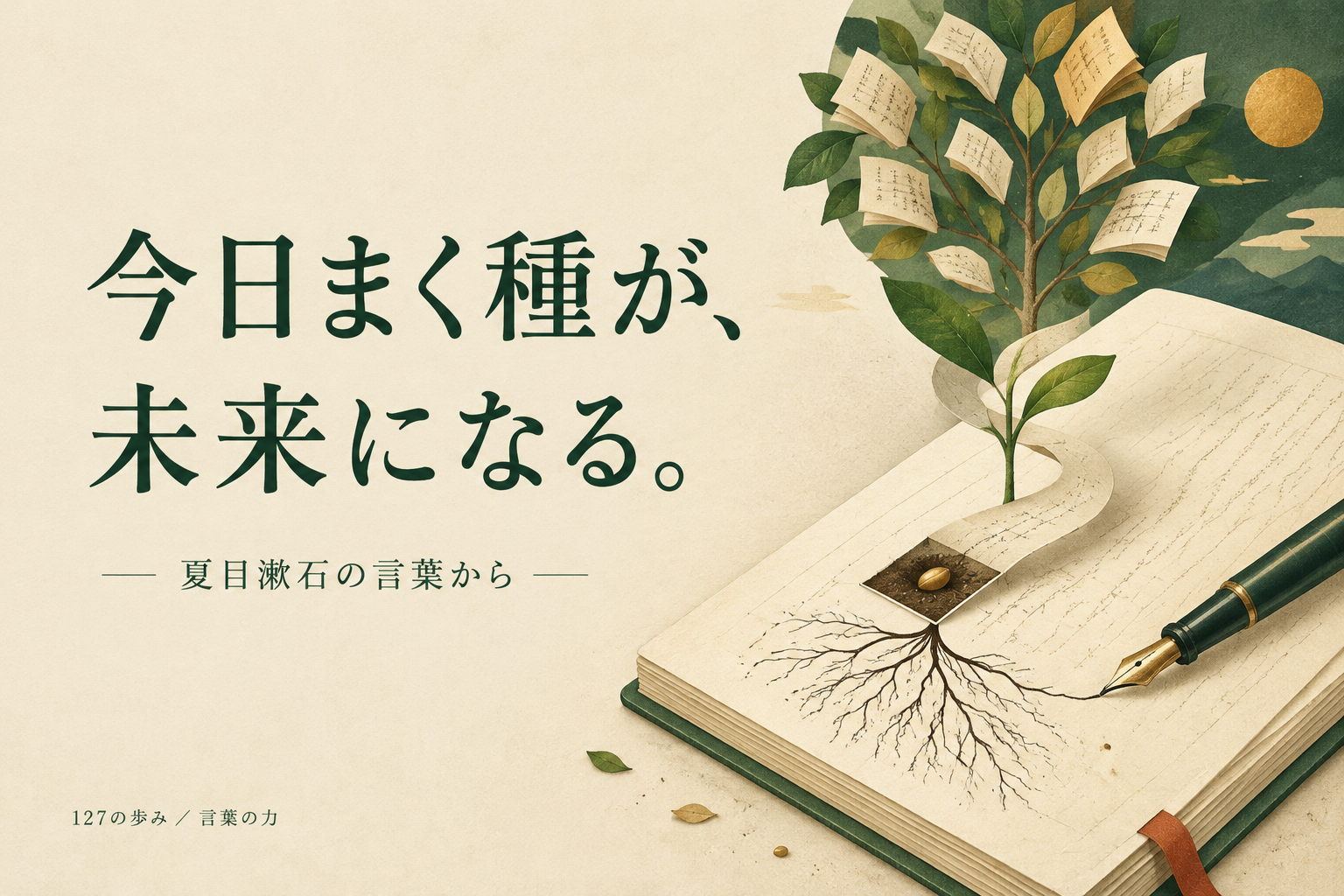
The Power of Words | Natsume Soseki: The Seeds You Sow Today

日本語で読む | English

Disclosure: This article contains affiliate advertising.

“The seeds you sow in the present will eventually appear as the future you are to reap.”

Natsume Soseki, diary entry dated March 21, 1901, as quoted in Sarai (Japanese). English translation prepared for this article; not an official translation.

When we think about the future, it is easy to place our hopes in “someday.”

Someday, when I have more time. Someday, when life feels less demanding. Someday, when I feel more confident.

We imagine we will do better then. Yet what our future selves receive is not unrelated to what we do today.

These words from Natsume Soseki connect the distant future with the day right in front of us.

What are the seeds we sow today?

The Sarai article presents this sentence as a passage from Soseki’s diary entry of March 21, 1901.

The seeds we sow now eventually emerge as the future we receive. I want to apply this metaphor not only to great efforts, but also to the small choices we make every day.

Look up one thing you do not understand. Keep a promise. Listen until someone has finished speaking. Start a task that has been on your mind.

Even if these actions seem unremarkable at the time, they may grow into knowledge we can use later or relationships with other people.

Acting for the future is not something reserved for special days. An ordinary day may offer opportunities to sow seeds, too.

Not seeing a sprout does not mean nothing is happening

When we begin something, we often want to see results straight away.

We study, but still struggle to answer. We write an article, but fewer people read it than we hoped. We take care with our work, but receive no response.

Then we start to wonder whether our efforts mean anything.

But expecting a harvest on the very day we sow a seed may be asking too much, too soon. Before results become visible, there may be time needed to learn, grow accustomed to something, or reach another person.

This is my own reflection on how these words might relate to daily life, not a claim about the circumstances or intentions behind Soseki’s original statement.

We do not have to judge the entire value of today’s actions by today’s results. Leaving that room may help us think more calmly about how to continue.

Do not make the future entirely your own responsibility

At the same time, I would avoid reading these words as saying that everything happening now is the fault of our past selves.

Life includes circumstances we cannot choose and events we cannot foresee. The same effort does not always produce the same result.

I prefer to receive these words as an invitation to consider the actions available to us, rather than a guarantee that we will harvest exactly the future we want.

What will we sow? How will we tend it? If a method does not suit us, how might we change it?

Even when we cannot control everything, there may still be a small part of today’s choices we can influence.

The seeds we sow today need not be large. Read one page of a book you have wanted to open. Thank someone. Prepare one thing for your future self tomorrow.

The power of words lies not only in describing distant goals, but also in restoring meaning to the small things we do today.

Rather than simply waiting for the future, prepare one thing to pass on to it.

Let us quietly begin sowing seeds with what we can do right now.