Words for today
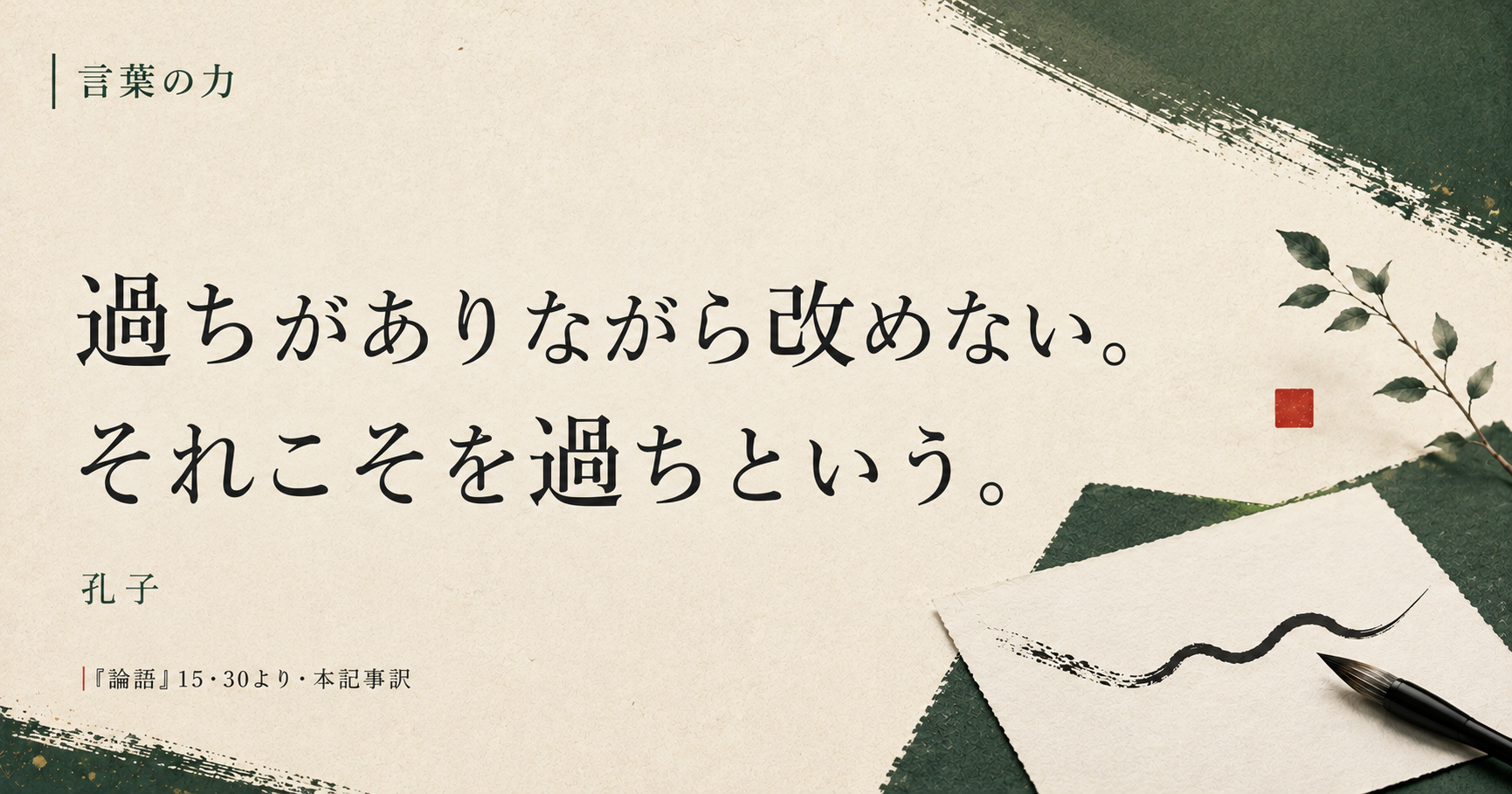
過而不改、是謂過矣。
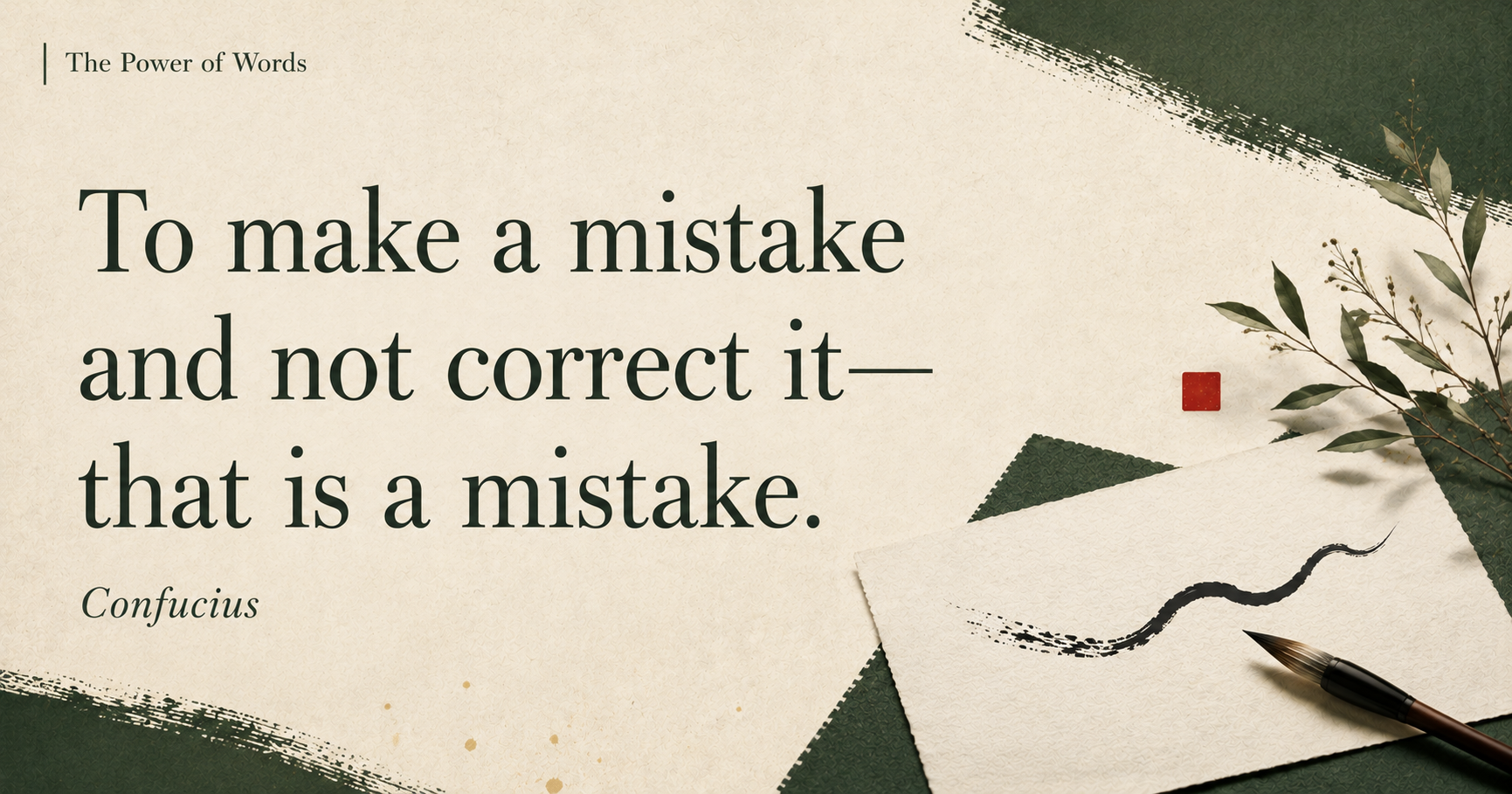
“To make a mistake and not correct it—that is a mistake.” — Confucius, Analects 15.30. Translation for this article.
Reflection
Sometimes a mistake returns long after the day has ended.
You missed a detail. Interrupted someone. Said something you wish you could take back. The scene repeats until “I made a mistake” becomes “There is something wrong with me.”
For this reflection, let us read the passage as a prompt toward correction, rather than a verdict on a person.
“I did not check carefully enough” leaves room for a different process. “I am useless” turns one event into a judgment about your entire self.
You do not have to make that leap.
What happened? Who was affected? What can you responsibly do now?
Perhaps you need to apologize, correct information, tell someone about an error, or add a check to your routine.
Correction does not erase what happened. An apology also does not require the other person to feel better immediately. Taking responsibility may involve continued attention and patience.
Still, responsibility and endless self-punishment are not the same thing. You can respond seriously without speaking cruelly to yourself.
Nor do you need to accept blame for things outside your responsibility.
Tonight, if the same scene keeps returning, write down one concrete response for tomorrow. If contacting someone now would be inappropriate, choose a suitable time.
Then allow the plan to wait until that time.
You cannot become someone who never made the mistake. But you can decide how to respond to it.
Instead of adding one more accusation, leave yourself one clear next step.
日本語版を読む
Source
Chinese Text Project: The Analects, Wei Ling Gong. The quotation, this article’s translation, and the original reflection are presented separately.
Disclosure: This article includes affiliate links.
A little inspiration for everyday living
A few words can offer a fresh perspective. Sometimes, a thoughtful everyday item can bring a small moment of joy, too.
In my Rakuten ROOM, I share everyday essentials we might put off buying for ourselves but would be happy to receive as gifts. Feel free to take a look! (*^^*)
Shopping from outside Japan? Rakuten Global Express offers international forwarding from Japan. Please check supported destinations, shipping fees, and item restrictions before using the service.
Pre-publication checklist — editorial notes; remove before publishing
Check existing articles for duplicate figures and quotations. Verify and apply the three common tags and the English series tag. Suggested tags: Confucius / Starting Again / Responsibility / en-power-of-words. Verify the English mood-category destination for relationship concerns before adding a link; do not present a Japanese-only collection as an English collection. Confirm that Japanese post 251 and this English post are published together, and add the reciprocal English link to post 251 after this post has an ID. No publication date is set. Intended slot: Day 2, 01:27 JST, subject to the owner’s review and existing schedule.
Featured image not created or assigned. Art direction: a notebook on a desk at night with one passage carefully corrected, soft lamplight, deep blue and pale coral, an atmosphere of beginning again rather than failure. Image quotation: “To make a mistake and not correct it—that is a mistake.” Small text: “The Power of Words · Confucius · Article translation”. Verify spelling, rights, and mobile readability. Review the complete article and remove editorial notes before the owner decides whether to publish or schedule.